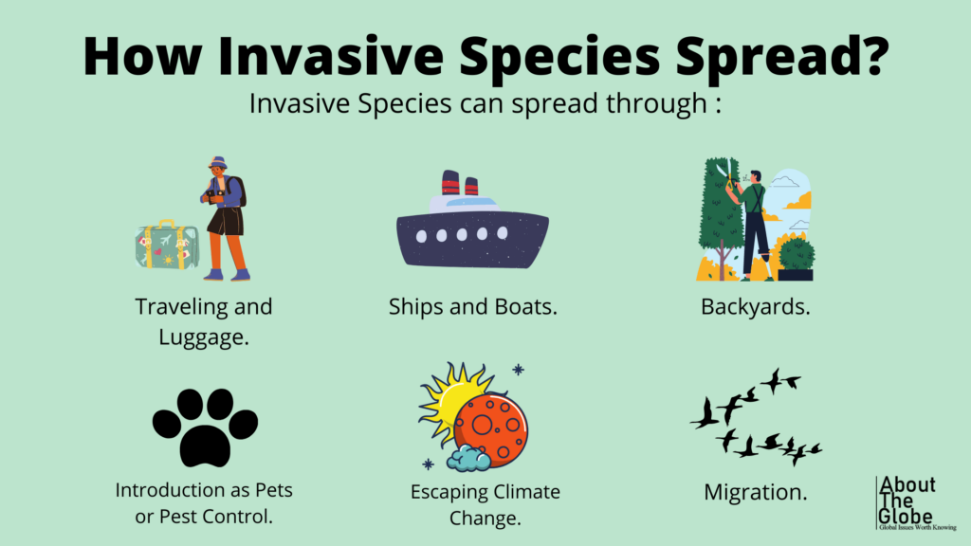
The specter of invasive species looms over ecosystems like an uninvited guest who overstays their welcome—consuming resources, displacing native inhabitants, and rewriting the ecological script with alarming efficiency. In the grand theater of global biodiversity, these biological intruders are not merely passive actors; they are agents of disruption, their spread accelerated by globalization, climate change, and human activity. Yet, in this unfolding crisis, the United Nations stands as a pivotal arbiter, wielding diplomacy, science, and policy as tools to curb the tide of ecological invasion. To understand the UN’s role is to peer into the intricate machinery of international cooperation, where the fate of ecosystems—and the communities dependent on them—hangs in the balance.
The UN’s Multilateral Framework: A Bastion Against Biological Homogenization
The United Nations, through its specialized agencies, has erected a formidable edifice to confront invasive species, one that transcends borders and unites nations under a shared ecological imperative. At the heart of this framework lies the Convention on Biological Diversity (CBD), a landmark treaty that, since its inception in 1992, has galvanized global action. The CBD’s Strategic Plan for Biodiversity 2011–2020 and its successor, the Kunming-Montreal Global Biodiversity Framework, explicitly target invasive species as a critical threat, mandating signatory nations to develop national strategies for prevention, early detection, and rapid response.
But the UN’s influence extends beyond mere rhetoric. The International Plant Protection Convention (IPPC) and the World Organisation for Animal Health (WOAH) serve as sentinels, enforcing sanitary and phytosanitary measures to stem the unintentional spread of invasive organisms through trade and travel. These bodies function as the immune system of global agriculture, quarantining threats before they breach borders. Meanwhile, the United Nations Environment Programme (UNEP) orchestrates regional initiatives, such as the Global Invasive Species Programme, which provides scientific guidance and capacity-building to developing nations—often the most vulnerable to ecological disruption.
Policy as a Shield: The Legal Arsenal Against Ecological Intruders
Legislation, when wielded with precision, can be as potent as any biological control. The UN’s role in shaping international law has crystallized into a tapestry of binding and non-binding instruments that compel—or at least persuade—nations to act. The International Maritime Organization’s (IMO) Ballast Water Management Convention, for instance, targets one of the most insidious vectors of aquatic invasive species: the discharge of ballast water from ships. By mandating treatment systems, the convention seeks to sever the lifeline that connects distant ecosystems, preventing the accidental translocation of species like the zebra mussel or the lionfish.
Yet, the most transformative legal innovation may be the Nagoya Protocol on Access to Genetic Resources and the Fair and Equitable Sharing of Benefits Arising from their Utilization, which indirectly curbs invasive species by regulating bioprospecting and ensuring that the exploitation of native biodiversity does not inadvertently introduce foreign threats. The protocol’s emphasis on prior informed consent and mutually agreed terms forces nations to confront the ethical dimensions of biological exchange, ensuring that the pursuit of scientific or commercial gain does not come at the expense of ecological integrity.
The Science of Surveillance: Early Warning Systems and Data-Driven Defense
In the battle against invasive species, ignorance is the enemy. The UN has thus championed the development of early warning systems and risk assessment frameworks that transform raw data into actionable intelligence. The Global Invasive Species Information Partnership (GISIN), a collaborative network facilitated by UNEP, aggregates data from across the globe, allowing scientists to track the spread of species like the Asian longhorned beetle or the cane toad in real time. These systems are not merely academic exercises; they are the difference between containment and catastrophe.
Moreover, the UN’s support for citizen science initiatives has democratized surveillance, empowering local communities to become frontline defenders. Projects like iNaturalist, which the UN has endorsed in various capacities, rely on crowdsourced observations to map the distribution of invasive species, filling gaps in data-poor regions. This grassroots approach is particularly vital in the Global South, where financial and technical resources are often scarce, but where the impacts of invasion are disproportionately severe.
Climate Change: The Accelerant of Invasion
No discussion of invasive species can ignore the specter of climate change, which acts as both a catalyst and an amplifier of ecological disruption. Rising temperatures, shifting precipitation patterns, and extreme weather events create conditions ripe for the establishment of non-native species. The UN’s Intergovernmental Panel on Climate Change (IPCC) has underscored this interplay, noting that climate-induced range shifts will likely outpace the adaptive capacity of many native species, leaving ecosystems vulnerable to opportunistic invaders.
The UN’s response has been twofold: mitigation and adaptation. Through the Paris Agreement, nations commit to reducing greenhouse gas emissions, thereby slowing the pace of climate change and its concomitant ecological upheaval. Simultaneously, the UN’s Adaptation Fund supports projects that bolster ecosystem resilience, such as the restoration of mangroves to act as natural barriers against coastal invaders or the creation of biotic corridors to facilitate the migration of native species in the face of shifting climates. These strategies recognize that the fight against invasive species cannot be waged in isolation; it must be waged in tandem with the broader struggle against climate disruption.
Economic Incentives: Aligning Profit with Protection
The most insidious aspect of invasive species is their ability to exploit the very systems that sustain human economies. Agricultural trade, for example, is a double-edged sword: it fuels prosperity but also serves as a Trojan horse for pests like the fall armyworm or the khapra beetle. The UN has thus sought to realign economic incentives, ensuring that the costs of invasion are internalized rather than externalized. The World Trade Organization’s (WTO) Agreement on the Application of Sanitary and Phytosanitary Measures provides a mechanism for nations to impose trade restrictions on high-risk commodities, buttressed by scientific evidence.
Yet, the UN’s approach extends beyond regulation. The UN Development Programme (UNDP) has pioneered payment for ecosystem services (PES) schemes, compensating landowners for adopting practices that reduce the risk of invasion—such as maintaining buffer zones or using native plant species in landscaping. These programs transform conservation from a financial burden into an economic opportunity, proving that the protection of biodiversity can be a lucrative endeavor.
The Human Dimension: Equity in the Fight Against Invasion
Invasive species do not discriminate, but their impacts are far from equitable. Indigenous communities, smallholder farmers, and marginalized populations often bear the brunt of ecological disruption, their livelihoods and cultural practices upended by the arrival of foreign species. The UN has thus emphasized the need for just transitions in invasive species management, ensuring that solutions are not imposed from above but co-created with those most affected.
For instance, the UN Permanent Forum on Indigenous Issues has highlighted the role of traditional ecological knowledge in combating invasion. Indigenous communities, with their deep understanding of local ecosystems, often possess the most effective strategies for early detection and control. The UN’s Local Communities and Indigenous Peoples Platform under the CBD provides a formal avenue for this knowledge to be integrated into global policy, bridging the gap between scientific and traditional wisdom.
The Path Forward: Challenges and the Unfinished Agenda
Despite these strides, the UN’s efforts remain hamstrung by a constellation of challenges. Funding gaps persist, particularly in regions where invasive species pose the gravest threats. Political will is inconsistent, with some nations prioritizing short-term economic gains over long-term ecological security. And the pace of invasion continues to outstrip the speed of response, as climate change and globalization conspire to accelerate the spread of non-native species.
Yet, the UN’s role remains indispensable. In a world where borders are porous and ecosystems are interconnected, no single nation can mount an effective defense against invasive species in isolation. The UN’s strength lies in its ability to convene, to standardize, and to elevate the issue from a local nuisance to a global priority. The road ahead demands not only greater investment and cooperation but also a reimagining of humanity’s relationship with the natural world—a recognition that the fight against invasive species is, at its core, a fight for the soul of biodiversity itself.