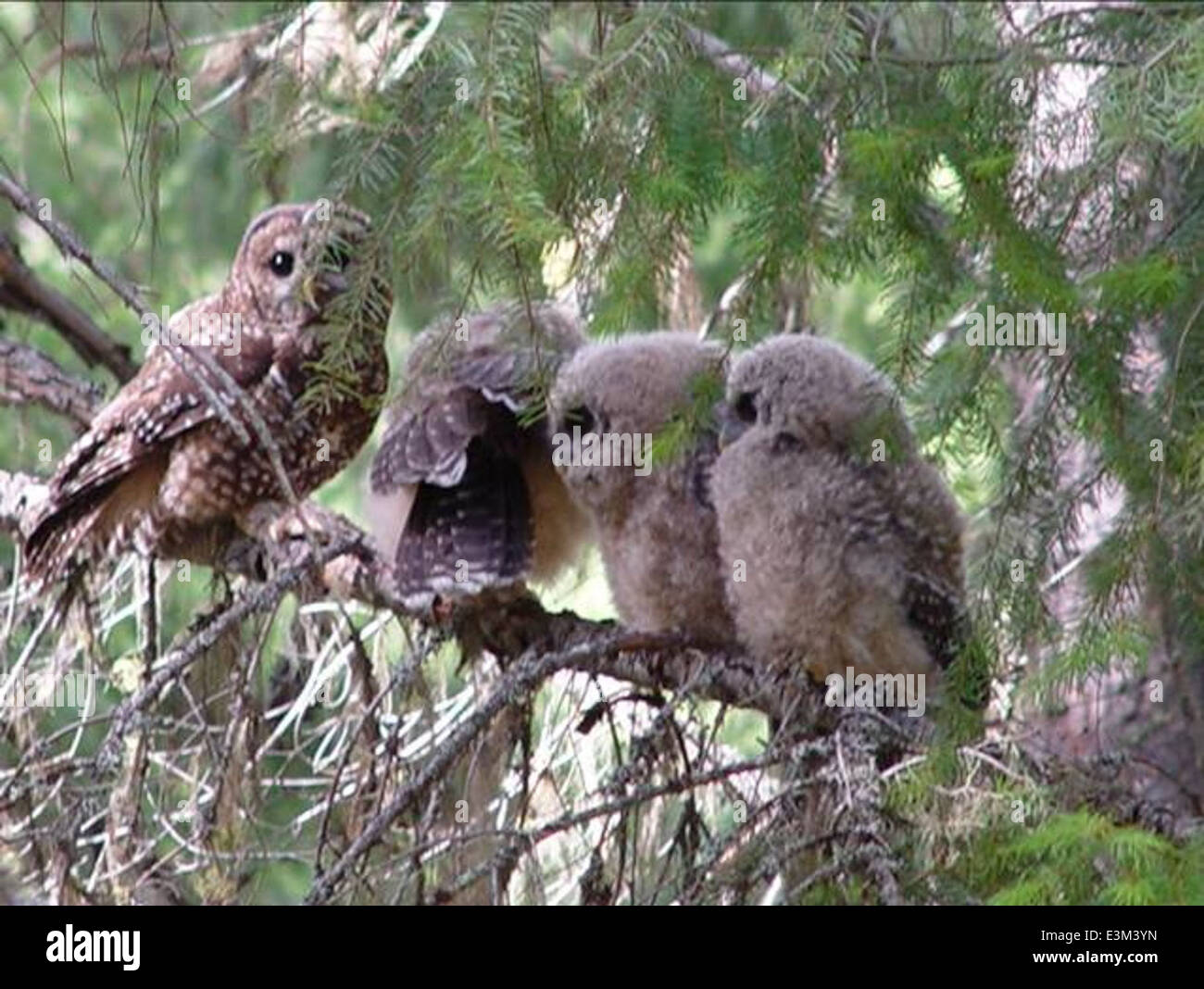
Beneath the hushed canopy of ancient forests, where moonlight filters through the emerald labyrinth of leaves, an unseen tragedy unfolds. The Northern Spotted Owl, a spectacled sentinel of the Pacific Northwest, once glided silently through towering Douglas firs and hemlocks, its haunting four-note call echoing like a whispered secret of the wild. Yet today, its wings carry the weight of a vanishing world. Habitat loss, the silent architect of decline, has carved deep fissures into the ecological tapestry that once cradled this iconic species. It is not just the loss of trees—it is the erosion of an entire ecosystem’s rhythm, a symphony of life that has played for millennia now fading into silence.
The Vanishing Canopy: When the Forest Breathes Its Last
Imagine a cathedral of green, a living cathedral where each tree is a pillar of time, its rings whispering centuries of growth. This is the old-growth forest, a sanctuary where the Northern Spotted Owl thrives. But these cathedrals are being dismantled, not by fire or storm, but by the relentless hands of human industry. Clear-cutting, urban sprawl, and industrial logging have carved the forest into fragmented islands, each too small to sustain the owl’s territorial needs. A single Northern Spotted Owl may require up to 2,000 acres of contiguous, dense forest to hunt, nest, and rear its young. When the canopy thins, when the understory is stripped bare, the owl’s world collapses—not with a roar, but with a whisper, a slow unraveling that goes unnoticed until it is too late.
The owl does not merely lose a home; it loses the very architecture of its survival. Dense foliage provides cover from predators and competitors. Mature trees with hollows offer nesting sites impervious to the elements. A healthy forest floor teems with prey—voles, mice, and insects—each a thread in the food web that sustains the owl. Remove the forest, and you do not just remove trees. You erase the intricate choreography of life that has evolved over eons. The owl, a creature of patience and precision, finds itself adrift in a landscape that no longer recognizes its presence.
The Domino Effect: How One Loss Triggers a Cascade of Collapse
Habitat loss is not a solitary act; it is a catalyst for ecological unraveling. When the forest retreats, so too do the species that depend on it. Prey populations dwindle as their habitats shrink, forcing owls to compete with more adaptable predators like barred owls, which thrive in fragmented landscapes. The barred owl, a relative newcomer to the Northwest, outcompetes the spotted owl for food and nesting sites, accelerating its decline. This is not mere competition—it is a silent invasion, a biological reshuffling where the native yields to the opportunistic.
Even the soil suffers. Old-growth forests store vast amounts of carbon, their roots and fungi forming a subterranean network that regulates climate and water cycles. When the trees fall, the soil erodes, rivers silt up, and the microclimate shifts. The owl’s world becomes drier, hotter, less predictable. Its prey flees or dies. The forest’s memory—encoded in the DNA of its inhabitants—fades like ink on parchment exposed to sunlight. What remains is a hollowed-out landscape, a shadow of what once was, where the owl’s haunting call is met only by the hum of machinery and the distant drone of progress.
The Illusion of Progress: When Development Outpaces Conservation
We tell ourselves stories of progress, of towns expanding, of economies growing, of human ingenuity triumphing over nature. But at what cost? The Northern Spotted Owl is not just a bird; it is an indicator, a living barometer of the health of an entire ecosystem. Its decline is not a footnote in a development report—it is a warning siren, a clarion call that we have pushed too far. Yet we continue to carve into the wilderness, justified by the promise of jobs, housing, and short-term gain. The irony is stark: we are building a world that is increasingly inhospitable to the very creatures that once defined its wild heart.
Conservation efforts, though valiant, often feel like bandages on a gaping wound. Protected areas are established, but they are islands in a sea of development, too small to sustain viable populations. The owl’s territory does not respect human-drawn boundaries. It requires vast, unbroken expanses of forest, a luxury in a world where every acre is eyed for its potential. Even reforestation projects, while noble, cannot replicate the complexity of an old-growth forest. A 50-year-old plantation is not a cathedral. It is a sapling, not a sentinel.
The Cultural Erasure: Losing More Than a Species
To lose the Northern Spotted Owl is to lose a piece of our collective imagination. Indigenous cultures of the Pacific Northwest revere the owl as a symbol of wisdom, a messenger between the physical and spiritual worlds. Its decline is not just an ecological tragedy—it is a cultural one. The stories, the ceremonies, the deep connection to the land that the owl embodies are being erased, replaced by the cold calculus of progress. We are not just losing a species; we are losing a language, a way of understanding our place in the world.
There is a deeper fascination here, one that transcends biology. The owl, with its piercing gaze and nocturnal habits, has long been a creature of myth and mystery. It is the silent observer, the keeper of secrets, the guardian of thresholds. To see it vanish is to witness the erosion of wonder itself. What does it say about us that we allow such a creature to slip into the abyss of extinction? Are we not, in our relentless pursuit of comfort and convenience, erasing the very things that make life worth living?
The Path Forward: Can We Still Turn the Tide?
The story of the Northern Spotted Owl is not yet written in stone. There is still time to act, though the window is narrowing with each passing season. The solution lies not in half-measures, but in a radical reimagining of our relationship with the natural world. We must prioritize conservation over exploitation, protect not just individual species, but entire ecosystems. This means rethinking our economic models, our urban planning, our very definitions of progress. It means recognizing that a forest is not a resource to be mined, but a living entity to be cherished.
It also means confronting the deeper truths that habitat loss reveals. We are not separate from nature; we are a part of it. The owl’s decline is a mirror, reflecting our own fragility, our own dependence on the intricate web of life that sustains us. To save the owl is to save ourselves—to reclaim a world where wild things still thrive, where the night is not silent, and where the haunting call of the spotted owl still echoes through the trees.
The choice is ours. Will we continue down the path of fragmentation and loss? Or will we pause, listen, and remember that we are not the owners of this planet, but its stewards? The forest is waiting. The owl is listening. The time to act is now.