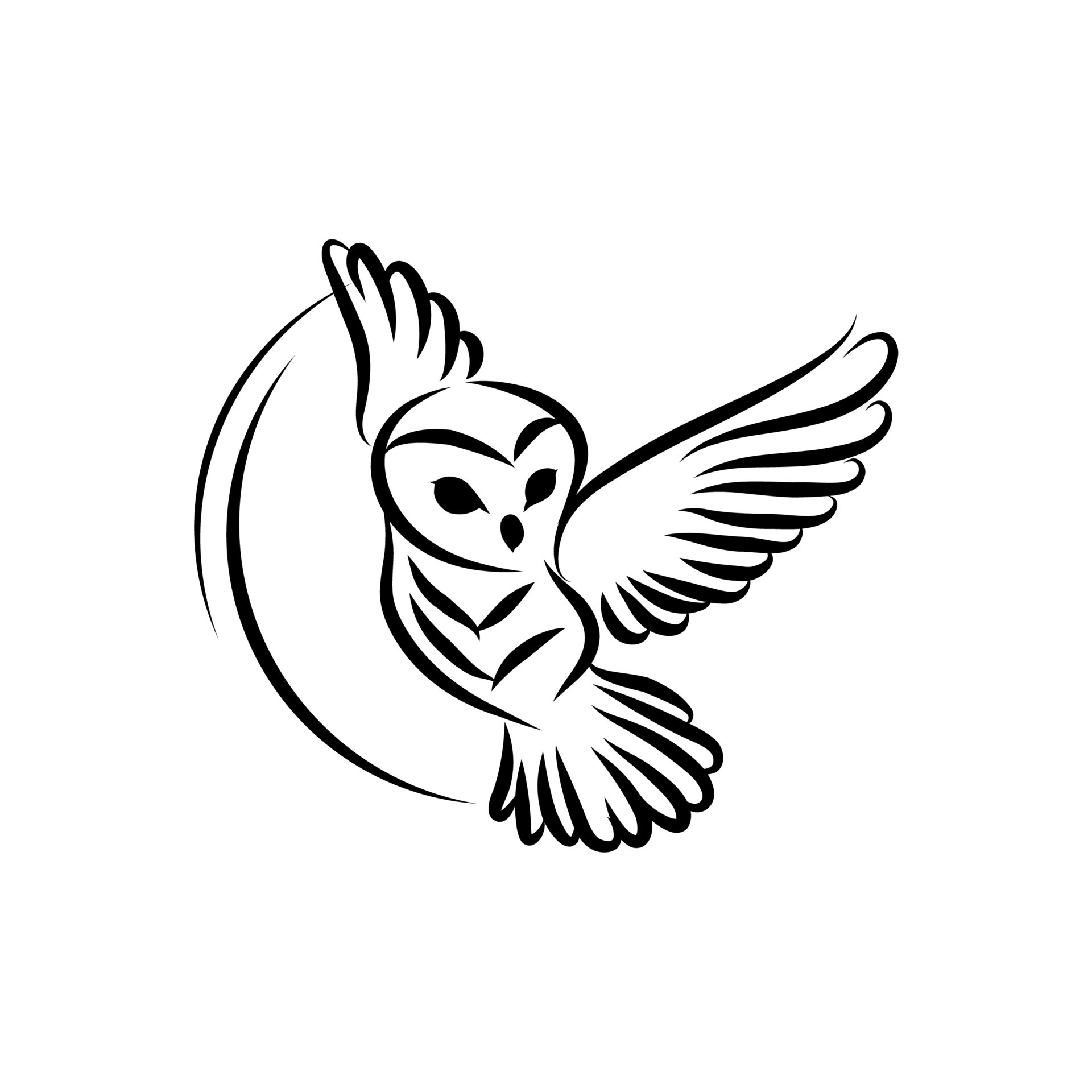
The owl, with its piercing gaze and silent wings, has long been a symbol of wisdom, mystery, and quiet observation. Yet in the modern era, this nocturnal bird has shed its ancient associations to become a staple of logo design, adorning everything from tech startups to artisanal cafes. Why does the owl resonate so deeply in contemporary branding? The answer lies not just in its visual appeal, but in the layers of meaning it carries—layers that brands intuitively tap into to convey identity, trust, and a touch of the extraordinary.
The Owl as a Symbol of Wisdom and Authority
Few creatures are as universally associated with wisdom as the owl. From Athena’s sacred companion in Greek mythology to the scholarly owl perched on textbooks in countless classrooms, the bird has been a beacon of knowledge for millennia. In modern logo design, this symbolism translates seamlessly into brands that prioritize intelligence, expertise, and guidance. Educational platforms, consulting firms, and research institutions often adopt owl imagery to signal their commitment to insight and learning. The owl’s wide, unblinking eyes evoke attentiveness and perception—qualities that resonate with audiences seeking reliable, authoritative voices in a sea of information. When a brand incorporates an owl into its logo, it doesn’t just borrow from tradition; it stakes a claim to credibility, positioning itself as a trusted guide in a complex world.
Mystique and the Allure of the Unknown
There’s something inherently enigmatic about the owl. Its nocturnal habits, cryptic calls, and ability to navigate the dark have fueled folklore and superstition across cultures. In logo design, this mystique becomes a powerful tool for brands that thrive on intrigue, exclusivity, or a hint of the arcane. Luxury brands, for instance, often leverage the owl’s air of mystery to evoke sophistication and inaccessibility. The bird’s silent flight and shadowy presence suggest a world of hidden knowledge or premium experiences reserved for the initiated. Even in the digital realm, tech companies use owl motifs to imply innovation that operates just beyond the ordinary user’s understanding—like a silent observer in the background, guiding the way. The owl doesn’t just represent what is known; it hints at what remains to be discovered, making it a perfect emblem for brands that deal in the cutting edge or the esoteric.
Versatility in Design: From Minimalism to Whimsy
One of the owl’s greatest strengths in modern logo design is its adaptability. Whether rendered in sleek, geometric lines or playful, cartoonish strokes, the owl can be tailored to fit any aesthetic. Minimalist brands favor the owl’s essential silhouette—a pair of eyes, a beak, and perhaps a few feathers—stripped down to its most recognizable elements. This approach aligns with the modern preference for clean, uncluttered design that communicates instantly. Conversely, whimsical or family-oriented brands might exaggerate the owl’s features, transforming it into a friendly mascot with exaggerated eyes and a cheerful demeanor. This versatility ensures that the owl can serve as a chameleon-like symbol, shifting its personality to match the brand’s voice. Whether the goal is to appear cutting-edge, approachable, or timeless, the owl’s form can be molded to fit the narrative without losing its core identity.
The Owl as a Metaphor for Modern Life
In an age dominated by screens and artificial light, the owl’s natural habitat—night—has taken on new metaphorical weight. The bird thrives in darkness, seeing what others cannot, and this resilience has become a metaphor for adaptability in a fast-changing world. Brands that position themselves as innovators or disruptors often draw on this symbolism, using the owl to suggest an ability to thrive in uncertainty. The owl doesn’t just endure the night; it masters it. Similarly, modern consumers are drawn to brands that promise clarity and guidance amid chaos. The owl’s presence in a logo subtly reassures audiences that the brand is equipped to navigate the complexities of contemporary life, whether it’s through data analysis, financial planning, or creative problem-solving. In this way, the owl becomes more than a mascot; it’s a silent promise of competence in an unpredictable world.
Cultural Resonance: From Ancient Totems to Digital Icons
The owl’s journey from ancient totem to digital icon is a testament to its enduring cultural resonance. In many indigenous traditions, the owl is a guardian of secrets, a messenger between worlds, or a protector of the unseen. These layered meanings have seeped into the collective unconscious, making the owl a symbol that feels both timeless and deeply personal. When a brand adopts the owl, it taps into this shared cultural lexicon, evoking emotions and associations that transcend language. For some, the owl might conjure childhood memories of storybooks; for others, it might represent the quiet wisdom of elders. This emotional connectivity is invaluable in branding, where the goal is to create a bond that goes beyond the transactional. The owl, with its rich tapestry of meanings, offers brands a shortcut to emotional engagement—a way to be remembered not just for what they do, but for how they make people feel.
The Owl in the Digital Age: A Silent Observer
In an era where digital surveillance and data tracking are ubiquitous, the owl’s role as a silent observer takes on a new dimension. The bird’s ability to see without being seen aligns with the modern consumer’s ambivalence toward technology—we rely on systems that watch over us, yet we crave privacy and autonomy. Brands that leverage the owl in their logos often position themselves as intermediaries in this digital landscape, offering guidance without intrusion. Whether it’s a cybersecurity firm promising to protect data or a social media platform claiming to connect people discreetly, the owl’s presence suggests a balance between visibility and discretion. It’s a delicate dance, and the owl, with its centuries-old reputation as a watcher of the unseen, is the perfect partner in this narrative. The bird doesn’t just observe; it enables, offering a sense of security in a world where transparency and opacity are constantly negotiated.
Conclusion: The Owl as a Timeless Brand Ally
The owl’s enduring appeal in modern logo design is no accident. It is a symbol that has evolved with humanity, absorbing new meanings while retaining its core essence. From wisdom to mystery, adaptability to cultural depth, the owl offers brands a multifaceted tool to communicate their values and aspirations. In a world where first impressions are often visual, the owl stands out—not just for its striking appearance, but for the stories it can tell without words. It is a silent ambassador, a guardian of secrets, and a beacon of insight, all rolled into one. As long as brands seek to convey trust, innovation, and a touch of magic, the owl will remain perched at the forefront of their visual identities, watching, waiting, and whispering promises of what’s to come.