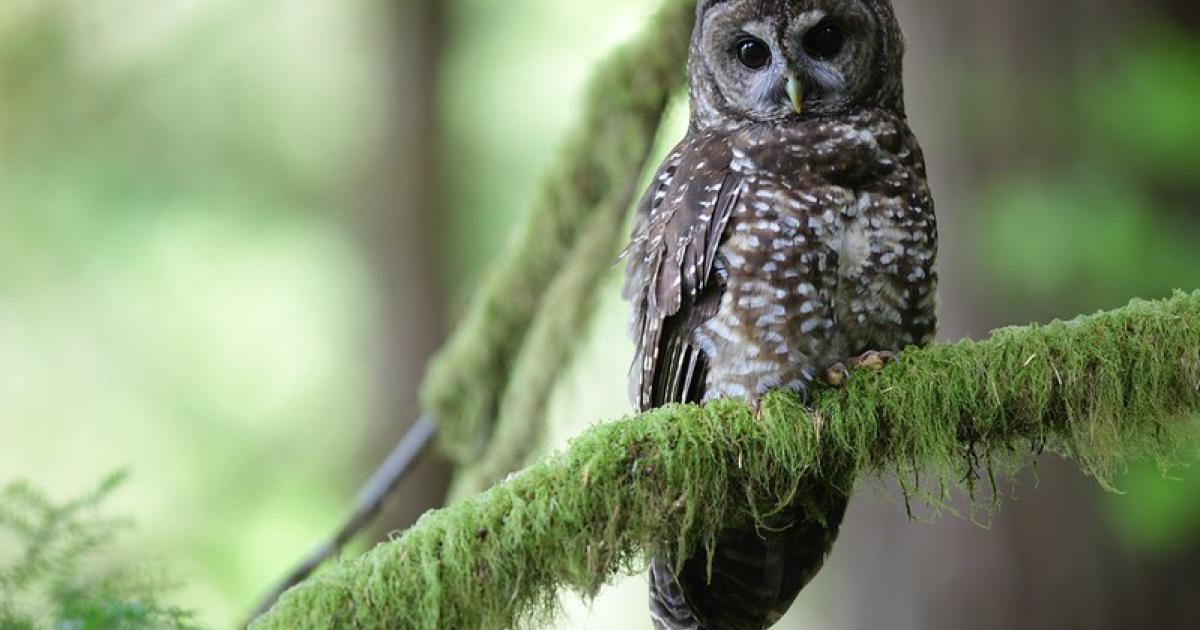
Have you ever wondered what it takes to spot one of the Pacific Northwest’s most elusive avian treasures? The spotted owl, with its somber mottled feathers and haunting calls, holds an almost mythical status among bird enthusiasts and nature lovers alike. But here’s the rub: finding these creatures amid dense old-growth forests is no simple feat. Is the pursuit merely a tempting challenge, or can one truly hope to witness these shy woodland sentinels in their natural habitat? Let’s embark on a journey through the verdant gems of the Pacific Northwest, unveiling the supreme locales where the elusive spotted owl might just reveal itself to the vigilant visitor.
The Enchanting Old-Growth Forests of the Cascades
Deep within the rugged spine of the Cascade Range lies a labyrinth of ancient trees and shadowy understory, the quintessential habitat for the northern spotted owl. These old-growth forests, with towering firs and moss-laden branches, offer an intricate sanctuary that few other birds can claim. It’s a realm where silence reigns, interrupted only by the occasional flutter of wings or the resonant hoot echoing through the twilight. The dense canopy and multilayered structure create an ecological tapestry perfect for the owls’ nesting and hunting. Visitors who venture into protected areas around Mount Rainier National Park or the Gifford Pinchot National Forest can experience this prime habitat firsthand, often with the aid of sharp-eared guides attuned to the owls’ subtle calls.
Coastal Old-Growth Refuges: Mystique Wrapped in Mist
Along the fog-drenched coastlines of Oregon and Washington, there exist pockets of ancient forest where the spotted owl’s presence is almost legendary. These coastal old-growth refuges, shrouded in mist and saturated with the scent of salt and spruce, are among the most rewarding yet challenging spots to glimpse these cryptic birds. The interplay of marine fog and dense foliage crafts a microclimate that sustains a rich biodiversity, providing ample prey and shelter for the owls. Areas such as the Siuslaw National Forest and the Olympic Peninsula’s Hoh Rainforest stand out as seductive havens. However, the thick underbrush and often wet terrain demand patience and perseverance, rewarding the intrepid with the thrill of a rare encounter.
Riparian Corridors: The Lush Highways Through Spotted Owl Territory
In the dance of ecosystems, riparian corridors emerge as verdant lifelines threading through the broader forest, serving as critical hunting grounds and movement pathways for spotted owls. These lush corridors, defined by streams and rivers bordered with dense vegetative cover, harbor an abundance of small mammals and birds that comprise the owl’s diet. The Willamette Valley and parts of the Columbia River Gorge feature such riparian habitats where the mix of water, vegetation, and terrain cultivates an inviting environment for spotted owls, particularly during breeding seasons. For seekers, walking these corridors at dawn or dusk—when the owls are most vocal and active—can unveil mesmerizing encounters within the dappled shadows.
Conservation Lands and Wildlife Refuges: Sanctuaries of Hope
Beyond the wild forests, designated conservation lands and wildlife refuges represent bastions of hope for the spotted owl’s persistence. These protected tracts, often a patchwork of managed ecosystems, are pivotal in combating habitat loss and the encroachment of competing species such as the barred owl. Sites like the H. J. Andrews Experimental Forest in Oregon serve as living laboratories where restoration efforts intersect with public education. Here, the presence of spotted owls signals the triumph of dedicated stewardship and the delicate balance of ecosystem management. For the public, these refuges offer guided tours, interpretive trails, and observation platforms designed to optimize owl sightings while minimizing disturbance, thereby transforming the challenge of spotting into an accessible and rewarding endeavor.
A Glimpse at the Challenges: Barred Owls and Habitat Fragmentation
While the allure of spotting these nocturnal gems is undeniable, one must grapple with the profound challenges they face. The invasive barred owl has been a formidable competitor, often outnumbering and displacing spotted owls due to its adaptability and aggressive behaviors. Moreover, widespread habitat fragmentation resulting from logging and urban development has splintered the continuous old-growth expanses into vulnerable enclaves. Yet, recent conservation efforts involving the strategic removal of barred owls have shown promising signs of slowing the spotted owl’s decline and improving encounters for enthusiasts. Understanding these ecological battlegrounds adds a layer of intrigue and urgency to every spotting expedition—each sighting becomes not simply a natural encounter but a symbol of resilience and ecological balance.
Timing and Tips: Maximizing Your Chance to See Spotted Owls
Timing can make or break one’s experience beneath the towering canopies. Spotted owls predominantly thrive in low light conditions—dawn, dusk, and overcast days are prime windows. Listening for their distinctive four-note hooting call, often reminiscent of a mournful whistle, can guide hopeful observers to their vicinity. Silence and patience are paramount; sudden movements or loud noises may send the owls into retreat. Equipping oneself with binoculars, a field guide, and perhaps nocturnal listening devices can transform a hopeful outing into a triumphant sighting. Joining local birdwatching groups or guided walks can also enrich the experience, providing both expertise and camaraderie on the owl trail.
The Undeniable Allure of the Spotted Owl Experience
There is an almost poetic magnetism in the pursuit of spotted owls—a merging of patience, wilderness exploration, and an intimate connection with one of North America’s quintessential forest symbols. Each forest trail, each whispering grove in the Pacific Northwest, offers the possibility of a fleeting gaze or a resonant call that echoes long after it fades. The challenge, far from discouraging, amplifies the reward, forging memories equaled only by the rare beauty of these woodland phantoms. In chasing the spotted owl, one discovers more than a bird; one encounters the soul of the forest itself.