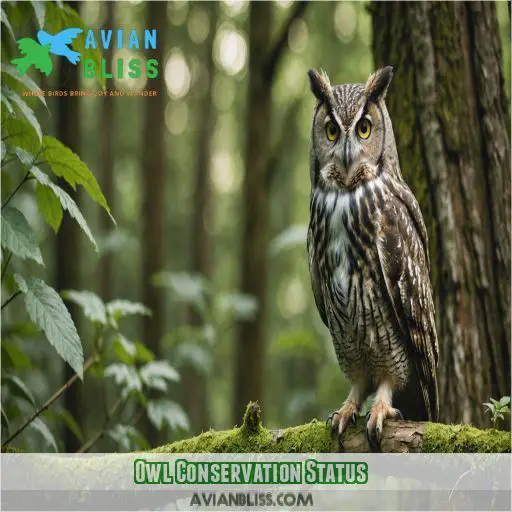
In the emerald labyrinths of South America, where the Amazon exhales its ancient breath and the Andes cradle mist-laden cloud forests, owls navigate a world increasingly fractured by human hands. These nocturnal sentinels, with their piercing gaze and silent wings, are not merely creatures of folklore or symbols of wisdom—they are vital threads in the ecological tapestry, indicators of environmental health, and guardians of biodiversity. Yet, as chainsaws roar through centuries-old trees and agricultural frontiers encroach upon untouched wilderness, South America’s owl populations face an existential crisis. Deforestation and habitat loss are not abstract threats; they are relentless, systemic forces reshaping ecosystems, displacing species, and unraveling the delicate balance that has sustained life for millennia. This article delves into the plight of South America’s owls, exploring the multifaceted dimensions of their decline, the species most imperiled, the human-driven forces behind their displacement, and the urgent, creative solutions that could yet restore their wings to the skies.
The Silent Vanishing: How Deforestation Disrupts Owl Ecologies
Deforestation in South America is not a uniform process—it is a mosaic of destruction, each fragment a story of loss. In the Amazon, the world’s largest tropical rainforest, selective logging and large-scale agricultural expansion (particularly for soy and cattle) carve out vast clearings that fragment owl habitats into isolated islands. Species like the Strix huhula (Black-banded Owl) and Megascops choliba (Tropical Screech-Owl) rely on dense, undisturbed canopies for nesting and hunting. When trees fall, so too does their prey—rodents, insects, and small birds—disrupting the food web that sustains these raptors. The edge effects of deforestation, where sunlight penetrates and microclimates shift, further degrade the interior forest conditions these owls require. Even species adapted to secondary growth, such as the Asio flammeus (Short-eared Owl), suffer as their grassland habitats are converted to monocultures, leaving them with nowhere to hunt or nest.
The consequences are not merely ecological but behavioral. Owls are creatures of habit, their hunting patterns and breeding cycles finely tuned to the rhythms of their environment. When forests are razed, owls must either adapt—often unsuccessfully—or perish. Those that linger in fragmented landscapes face heightened predation from invasive species like feral cats and rats, which thrive in human-altered environments. The loss of old-growth trees eliminates the cavities these owls depend on for shelter, forcing them into competition with other cavity-nesters or leaving them exposed to the elements. In the Andes, where cloud forests are being cleared for coffee and potato plantations, species like the Glaucidium jardinii (Andean Pygmy-Owl) are pushed to ever-higher elevations, where they encounter unfamiliar predators and dwindling resources. The result is a silent vanishing, a gradual attrition of owl populations that goes unnoticed by all but the most attuned observers.
Species on the Brink: The Most Endangered Owls of South America
South America is home to over 200 owl species, a staggering diversity that reflects the continent’s ecological richness. Yet, among these, several stand perilously close to the edge of extinction, their survival hanging by a thread. The Megascops marshalli (Marshall’s Screech-Owl), endemic to the cloud forests of Peru and Bolivia, is one such species. With fewer than 1,000 individuals remaining, its survival hinges on the preservation of its high-altitude habitat, which is increasingly targeted for mining and agriculture. Similarly, the Bubo virginianus nacurutu (Southern Horned Owl), a subspecies found in the Gran Chaco region, faces habitat loss due to soy expansion and cattle ranching, pushing it toward local extirpation.
In Brazil, the Strix huhula (Black-banded Owl) is a ghost of the Atlantic Forest, a once-vibrant ecosystem now reduced to less than 15% of its original extent. This species, with its haunting calls echoing through the canopy, is a symbol of the Atlantic Forest’s tragic decline. Meanwhile, in the Cerrado, the Glaucidium brasilianum (Ferruginous Pygmy-Owl) struggles as its savanna habitat is converted to agribusiness, leaving it vulnerable to nest parasitism by invasive species. These owls are not just casualties of habitat loss—they are canaries in the coal mine, warning of the broader collapse of South America’s ecosystems. Their decline is a clarion call for conservation action, a reminder that every species, no matter how small or seemingly insignificant, plays a role in the web of life.
The Human Footprint: Agricultural Expansion and Infrastructure Development
The engines of South America’s owl crisis are not mysterious—they are the same forces driving global biodiversity loss: agriculture, logging, mining, and infrastructure. The Amazon, often called the “lungs of the Earth,” is being cleared at an alarming rate, with over 10,000 square kilometers lost annually in recent years. Soy and cattle industries, fueled by global demand, are the primary drivers, converting forests into pastures and plantations. In the Gran Chaco, one of South America’s last great wildernesses, deforestation for beef production has accelerated, fragmenting habitats for owls like the Asio flammeus (Short-eared Owl), which depends on open grasslands. The construction of roads and hydroelectric dams further exacerbates the problem, fragmenting habitats and creating barriers to movement for wide-ranging species.
Mining, too, leaves a trail of destruction. In the Andes, gold and copper mining operations poison waterways and strip mountainsides bare, displacing owls like the Bubo magellanicus (Magellanic Horned Owl), which relies on clean rivers for hunting. The human footprint extends beyond direct habitat destruction. Pesticides used in agriculture accumulate in owl prey, leading to bioaccumulation and reproductive failures. Light pollution from expanding urban areas disorients nocturnal species, disrupting their hunting patterns and breeding cycles. Even ecotourism, if not managed sustainably, can disturb sensitive owl populations. The message is clear: South America’s owls are not just losing their homes—they are losing the very fabric of the world they inhabit.
Conservation in Action: Strategies to Protect South America’s Owls
Despite the grim prognosis, there is hope. Conservationists across South America are deploying innovative strategies to protect owl populations and restore their habitats. One of the most effective approaches is the creation of protected areas and biological corridors, which allow owls to move between fragmented habitats. In Brazil, the Atlantic Forest’s remnants are being stitched together through reforestation projects and legal protections, providing a lifeline for species like the Strix huhula. Similarly, in Peru, the creation of the Cordillera Azul National Park has safeguarded critical cloud forest habitat for the Megascops marshalli.
Community-based conservation is another powerful tool. In the Gran Chaco, indigenous communities are leading efforts to restore degraded lands and promote sustainable agriculture, ensuring that owls like the Asio flammeus retain their grassland habitats. Education and outreach programs, such as those run by the Proyecto Ecológico de la Amazonía, teach local farmers about the importance of owls as natural pest controllers, fostering coexistence between humans and wildlife. Nest box programs, where artificial cavities are installed in degraded forests, have shown promise in supporting cavity-nesting species like the Glaucidium brasilianum.
Technology is also playing a role. Camera traps and acoustic monitoring devices are being used to track owl populations, providing data that informs conservation strategies. In Colombia, researchers are using GPS tracking to study the movements of the Megascops choliba, identifying critical habitats that require protection. Meanwhile, policy changes, such as the expansion of the Amazon Fund and the implementation of stricter environmental laws, are beginning to curb deforestation rates. The challenge now is to scale these efforts, to ensure that conservation is not just a patchwork of isolated projects but a continent-wide movement to restore the skies of South America.
The Cultural and Ecological Significance of Owls
Owls are more than just ecological indicators—they are cultural icons, woven into the myths, legends, and traditions of South America’s indigenous peoples. For the Quechua of the Andes, the Bubo magellanicus is a messenger between the human world and the spirit realm, its hoots a bridge to the divine. In the Amazon, the Strix huhula is both a guardian and a harbinger, its presence signaling the health of the forest. These cultural connections offer a powerful incentive for conservation. When owls are seen not just as animals but as symbols of identity and heritage, their protection becomes a matter of cultural survival as well as ecological necessity.
Ecologically, owls are keystone species, their presence regulating prey populations and maintaining the balance of ecosystems. Their decline can trigger cascading effects, from rodent outbreaks to the spread of disease. In agricultural landscapes, owls act as natural pest controllers, reducing the need for chemical pesticides and promoting sustainable farming. Their role in seed dispersal, particularly for species that rely on their pellets for germination, further underscores their importance. To lose owls is to lose a vital component of South America’s ecological infrastructure, a loss that would reverberate through forests, grasslands, and human communities alike.
A Call to Action: What Can Be Done to Save South America’s Owls?
The fight to save South America’s owls is not a solitary endeavor—it is a collective responsibility that demands action at every level. For policymakers, this means enforcing existing environmental laws, investing in sustainable agriculture, and expanding protected areas. For corporations, it means adopting ethical supply chains that do not contribute to deforestation. For local communities, it means embracing conservation-friendly practices and advocating for their rights to land and livelihoods. For individuals, it means supporting organizations that protect owls and their habitats, reducing consumption of products linked to deforestation, and spreading awareness about the plight of these magnificent birds.
Education is key. By fostering a deeper understanding of owls and their ecological roles, we can cultivate a generation of stewards who see these birds not as curiosities but as vital partners in the struggle for a sustainable future. Citizen science projects, where volunteers monitor owl populations, can engage communities in conservation while providing critical data. Even small actions, like planting native trees or installing nest boxes, can make a difference. The message is simple: every voice counts, every action matters. The skies of South America are not yet silent—but they are under siege. The time to act is now, before the last owl’s wings fade into memory.