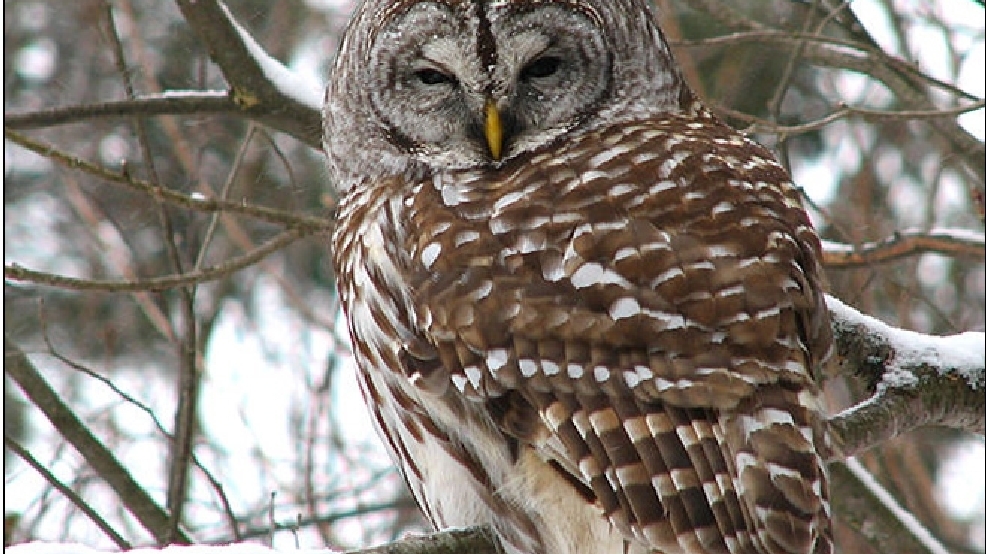
The Pacific Northwest, a region famed for its emerald forests and mist-shrouded mountains, has become an unexpected battleground in the quiet war between native and invasive species. At the heart of this ecological drama is the barred owl, a charismatic raptor whose once-limited range has expanded dramatically over the past century. What began as a subtle shift in habitat has evolved into a full-blown invasion, reshaping the region’s avian hierarchy and prompting urgent conservation measures. This is the story of how the barred owl’s relentless march across the landscape has unfolded—a timeline of adaptation, competition, and consequence.
The Early Whispers: Barred Owls’ Arrival in the Pacific Northwest
The barred owl’s incursion into the Pacific Northwest was not an overnight phenomenon but a gradual infiltration, like the creeping advance of ivy over a stone wall. Historically, the barred owl’s domain was the dense woodlands of the eastern United States, where its haunting, eight-note call—often transcribed as “Who cooks for you? Who cooks for you-all?”—echoed through the trees. By the late 19th century, however, a combination of habitat alteration and climate shifts began nudging these owls westward. Logging operations in the Midwest and Great Plains created fragmented forests that, while not ideal, were navigable for a species as adaptable as the barred owl. The construction of the transcontinental railroad in the 1860s may have also facilitated their movement, as human activity inadvertently carved corridors through the wilderness.
By the early 20th century, sightings of barred owls in the Pacific Northwest were no longer anomalies but signs of an emerging trend. These owls, with their distinctive horizontal barring on the chest and vertical streaks on the belly, thrived in the region’s temperate rainforests, where the moisture-laden air and towering conifers mirrored the conditions of their ancestral home. Unlike their western counterparts, the spotted owl—a reclusive, old-growth specialist—the barred owl was a generalist, capable of nesting in a variety of tree cavities and even abandoned woodpecker holes. This versatility would prove to be its greatest advantage.
The Silent Surge: Population Explosion and Ecological Ripples
As the decades passed, the barred owl’s presence in the Pacific Northwest transitioned from curiosity to commonplace, and then to dominance. By the 1970s, researchers began documenting a sharp uptick in barred owl numbers, a trend that accelerated in the following decades. The reasons were manifold: the barred owl’s diet is omnivorous, feasting on everything from voles and shrews to insects and even other birds. This dietary flexibility allowed it to exploit niches left vacant by more specialized predators. Additionally, the barred owl’s aggressive nature—it is known to displace other raptors from their territories—gave it a competitive edge over species like the northern goshawk and the great horned owl.
The ecological ripple effects were profound. The northern spotted owl, a federally threatened species, found itself in direct competition with the barred owl for food and nesting sites. Studies revealed that where barred owls established territories, spotted owl populations declined by as much as 50% in some areas. The barred owl’s adaptability also meant it could thrive in landscapes fragmented by human activity, while the spotted owl, dependent on undisturbed old-growth forests, struggled to keep pace. This David-and-Goliath dynamic underscored a harsh truth: the barred owl’s success was not just a matter of chance but a testament to its evolutionary resilience.
The Tipping Point: Conservation in Crisis
By the turn of the 21st century, the barred owl’s invasion had reached a critical juncture. Conservationists, once focused on preserving the northern spotted owl, now faced a more complex dilemma: how to protect a native species from an invasive one without resorting to drastic measures. The U.S. Fish and Wildlife Service, in collaboration with state agencies, began experimenting with barred owl removal programs in key spotted owl habitats. The goal was not eradication—an impossible task given the owl’s widespread presence—but rather population control, to give the spotted owl a fighting chance. These efforts sparked fierce debate, with some arguing that human intervention was a necessary evil, while others viewed it as an unnatural disruption of ecological balance.
The ethical quandaries were as tangled as the old-growth forests themselves. Barred owls are not inherently malicious; they are simply following the age-old imperative to survive and reproduce. Yet their presence was accelerating the decline of a species already teetering on the edge of extinction. The situation forced scientists to confront uncomfortable questions: Was the barred owl truly an invasive species, or merely a beneficiary of human-induced environmental change? Could coexistence be achieved through habitat restoration, or was active management the only viable path forward? The answers remained elusive, but the urgency of the crisis was undeniable.
The Unseen Battles: Barred Owls and the Web of Life
Beyond the headlines and policy debates, the barred owl’s invasion has set in motion a cascade of changes that ripple through the Pacific Northwest’s ecosystems. These owls, with their nocturnal prowls and piercing gaze, are not just competitors but predators that disrupt the delicate balance of the food web. Small mammal populations, already under pressure from habitat loss, now face an additional predator whose hunting efficiency is unmatched. Meanwhile, the barred owl’s presence has altered the behavior of other birds, some of which have adapted by shifting their nesting times or choosing more concealed locations to avoid detection.
Even the region’s flora has felt the impact. Barred owls are known to cache food—hiding prey in tree crevices for later consumption—a behavior that inadvertently aids in seed dispersal. While this may seem like a minor footnote, it highlights how deeply interconnected these ecological dramas can be. The barred owl’s influence extends far beyond its immediate prey, subtly reshaping the very fabric of the forest. For those who listen closely, the nighttime chorus of the Pacific Northwest now carries a new layer of complexity, a symphony of survival where every note is a testament to adaptation—or extinction.
The Future: A Region in Flux
As we stand on the precipice of the 2030s, the Pacific Northwest’s forests remain a stage for one of the most consequential ecological sagas of our time. The barred owl’s story is far from over; if anything, it is entering a new chapter where the lines between native and invasive blur, and the definition of conservation is constantly rewritten. Some envision a future where barred owls and spotted owls coexist through carefully managed landscapes, where old-growth forests are preserved not just for their ecological value but as sanctuaries for both species. Others foresee a more interventionist approach, where targeted removals continue in a bid to restore balance.
What is certain is that the barred owl’s invasion has forced us to rethink our relationship with nature. It has shown us that ecosystems are not static but dynamic, and that the arrival of a new species—whether by natural migration or human-assisted spread—can have consequences that echo for generations. The Pacific Northwest’s forests, with their ancient trees and whispered secrets, now hold a mirror to our own role in shaping the natural world. Will we learn to coexist with the barred owl, or will we continue to tilt the scales in favor of the species we deem worthy of survival? The answer may well determine the fate of one of America’s most iconic landscapes.