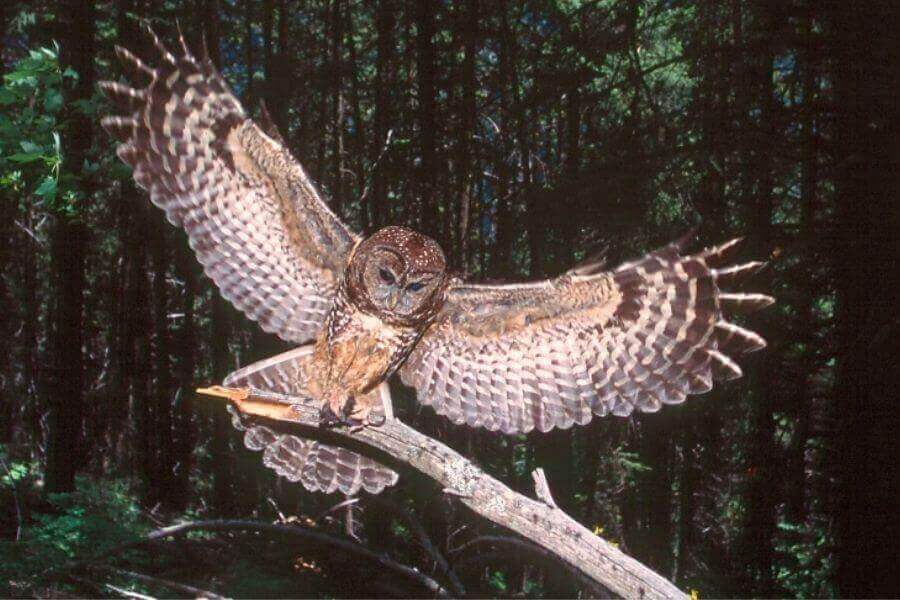
The Spotted Owl, an enigmatic sentinel of the Pacific Northwest’s twilight forests, carries with it an air of mystique and reverence. Its diet, like a clandestine script written in the shadows of towering evergreens, reveals a tapestry of ecological interactions that underscore the delicate balance of this verdant biome. To unravel what the Spotted Owl consumes is to peer into a world where stealth and precision choreograph every silence and movement, a world where survival is etched in the cadence of predator and prey.
The Ecological Niche of the Spotted Owl
The Spotted Owl is more than a mere avian predator; it is an integral thread woven into the fabric of old-growth forest ecosystems. Occupying a niche akin to a nocturnal symphony conductor, it orchestrates the population dynamics of its prey species, ensuring forest vitality through an unspoken ecological governance. Its dietary habits speak volumes about the health of the forest systems it inhabits, making its foraging patterns a metric of environmental integrity.
Small Mammals: The Staples of Spotted Owl Sustenance
At the heart of the Spotted Owl’s diet lies a reliance on an array of small mammals, which serve as the primary culinary currency. Flying with spectral grace through dim, moss-laden understories, the owl hunts mainly nocturnal rodents and shrews. The Northern Flying Squirrel emerges as a prized delicacy, prized not just for its abundance but also for the nutritional bounty it provides. This arboreal rodent, with its soft fur and dexterous movements, becomes both prey and emblem of forest complexity.
Other small mammalian fare includes woodrats, known locally as packrats, which contribute to the owl’s protein-rich menu. These creatures scurry among leaf litter and downed logs, weaving an interactive dance with the owl’s predatory prowess. The careful selection of prey reflects the owl’s adaptability, revealing a predator intricately attuned to the nuances of its habitat’s small mammal community.
Avian Opportunism: Birds on the Menu
Though less frequently documented, birds also find their way into the Spotted Owl’s diet—a testament to its opportunistic foraging behavior. Various species of small songbirds, and occasionally larger birds, fall victim to the owl’s silent talon. This indicates a diet not rigidly fixed, but rather a flexible palette adjusted by availability and season. Such adaptability is a hallmark of the owl’s ecological genius, allowing it to thrive amidst fluctuating food landscapes.
Amphibians and Invertebrates: The Subtle Supplements
Beneath the canopy, where moist shadows linger, amphibians and invertebrates constitute a discreet yet meaningful portion of the Spotted Owl’s diet. Frogs might be gleaned from riparian edges, and sizable insects are opportunistically snatched, especially in times when mammalian prey becomes scarce. This dietary elasticity—embracing less conspicuous fauna—swells the owl’s survival toolkit, rendering it an omnivorous virtuoso rather than a mere rodent hunter.
Hunting Techniques: The Silent Artistry of a Nocturnal Predator
The Spotted Owl’s diet cannot be fully appreciated without understanding its hunting acumen. With wings designed for ghost-like silence, this raptor is a master of stealth. It perches patiently, a vigilant sentinel surveying the forest floor before executing a near-silent plunge. Its acute auditory perception, capable of detecting the flutter of a leaf or the faint rustle of a rodent in the dark, complements its keen eyesight.
The owl’s approach to hunting is akin to a carefully scripted ballet, where each motion is deliberate and economical. This precision hunting strategy ensures minimal energy expenditure and maximal prey capture success—an evolutionary masterpiece perfected over millennia.
Seasonal Variations and Dietary Shifts
The Pacific Northwest is a realm of shifting seasons, and the Spotted Owl’s diet adapts accordingly. During the autumn and winter months, when many small mammals retreat into states of reduced activity or hibernation, the owl emphasizes species that remain active, such as certain voles and non-hibernating rodents. In spring and summer, with a resurgence of amphibians and insects, these become more prominent supplemental prey.
These seasonal shifts in diet not only exemplify the owl’s remarkable adaptability but also reflect the pulsating rhythms of forest life—each species ascending and receding with the annual cadence of growth and dormancy.
Conservation Implications: The Diet as a Window into Habitat Health
The Spotted Owl’s dietary preferences illuminate larger conservation narratives. Because the owl depends on mature forests teeming with diverse small mammals and other prey, its presence and feeding success signal a thriving ecosystem. Conversely, dwindling prey availability—often a symptom of habitat fragmentation and degradation—can precipitate a decline in owl populations.
Hence, protecting the Spotted Owl’s food base becomes synonymous with preserving ancient forests and sustaining the complex web of life therein. Conservation efforts must therefore nurture not just the owls but the entire matrix of biodiversity that supports their hunting and feeding ecology.
The Spotted Owl’s Unique Appeal: Predator, Sentinel, and Symbol
Intrinsically tied to the dietary tapestry of the Pacific Northwest is the Spotted Owl’s unique appeal as both a predator and an ecological indicator. It’s a creature enshrouded in the romance of the forest twilight—the echo of its hooting a haunting melody, cloaked in the mystique of moss and fog. Its diet, varied yet selective, speaks of ancient survival strategies continuously honed through epochs.
This owl reminds us that the story of the forest is written not only in trees and streams but also in the nuanced interplay of predator and prey. Through understanding what the Spotted Owl eats, we glimpse the pulse of an ecosystem both fragile and resilient—a natural masterpiece worthy of our deepest admiration and protection.