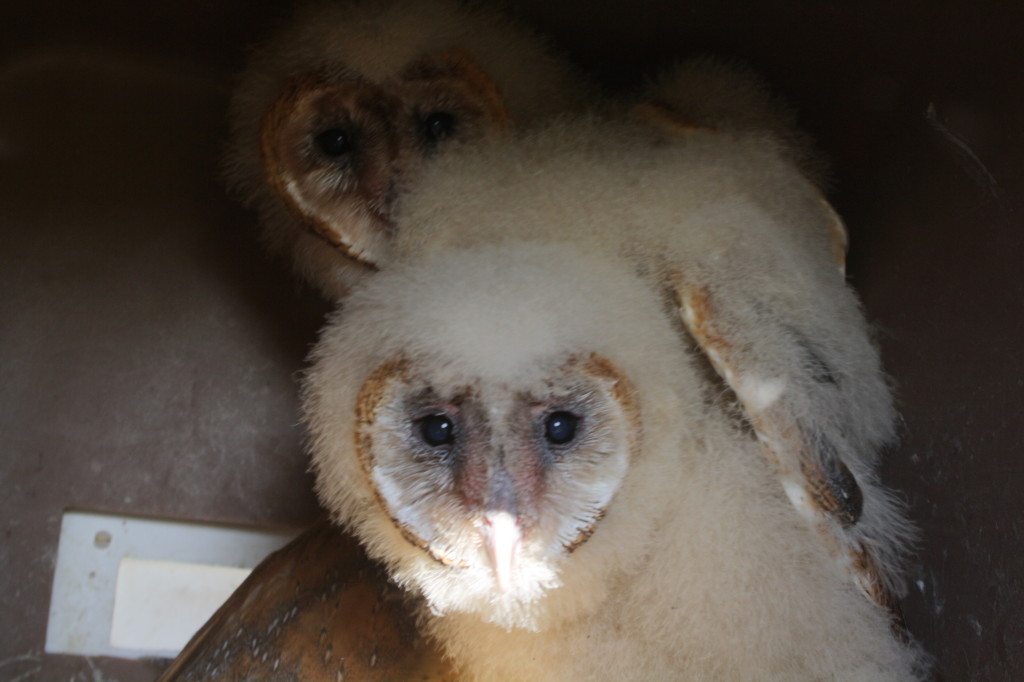
The night belongs to the owl. As twilight surrenders to darkness, these avian specters glide through the air with a grace that defies gravity, their presence announced not by the rustle of feathers or the thrum of wings, but by an eerie, almost supernatural silence. It’s a phenomenon that has captivated humans for millennia—how can something so large and powerful move without sound? The answer lies not in magic, but in the meticulous engineering of nature, a masterclass in aerodynamics hidden in plain sight within the humble owl feather.
The Vanishing Act: Why Silence Matters in the Night
To understand the marvel of silent flight, we must first grasp the stakes. For an owl, sound is the difference between a meal and starvation. Unlike diurnal hunters that rely on speed or strength, owls are ambush predators, dependent on the element of surprise. A single rustle of a feather against the air could alert a mouse to danger, turning a potential feast into a missed opportunity. Evolution, in its relentless efficiency, has sculpted the owl’s plumage into a near-perfect acoustic dampener. But this isn’t merely about muffling noise—it’s about redefining what noise *is* in the first place.
The owl’s silent flight is not an absence of sound, but a deliberate erasure of it. Where other birds produce the familiar *whoosh* of air displacement, owls generate something far more subtle: a whisper of air so faint it barely registers as disturbance. This is achieved through a combination of structural innovations that work in concert, each feather a cog in a silent machine. It’s a reminder that nature’s most profound adaptations are often the ones we never hear coming.
The Serration Effect: The Sawtooth Secret of the Leading Edge
At the forefront of the owl’s silent arsenal is the leading edge of its wing, where the primary feathers meet the air. Unlike the smooth, tapered edges of most bird wings, an owl’s flight feathers are adorned with a series of minute, comb-like structures known as *serrations*. These aren’t random imperfections—they’re precision-engineered airfoils, each one a tiny vortex generator that disrupts the formation of turbulent airflow.
When air rushes over a smooth surface, it adheres tightly, creating a laminar flow that eventually breaks down into chaotic turbulence, producing sound. The owl’s serrations, however, introduce micro-vortices that bleed off energy before it can coalesce into noise. It’s as if the owl’s wing is lined with thousands of tiny silencers, each one smoothing out the rough edges of aerodynamics. This phenomenon, known as *vortex shedding*, is so effective that it reduces the sound of airflow by up to 10 decibels compared to a typical bird’s wing—a difference that could mean the difference between a successful hunt and a failed one.
But the serrations don’t just dampen noise—they also enhance lift. By controlling turbulence, they allow the owl to maintain stable flight at lower speeds, a critical advantage when stalking prey in dense foliage. It’s a dual-purpose adaptation, a testament to nature’s ability to kill two birds with one stone—or in this case, catch two mice with one wingbeat.
The Velvet Touch: The Plumage That Absorbs Sound
If the serrations are the owl’s first line of defense against noise, its plumage is the second. Beneath the visible feathers lies a dense layer of downy *filoplumes*—fine, hair-like structures that create a velvety texture unlike any other bird’s. This isn’t mere fluff; it’s a sophisticated acoustic dampener, a living soundproofing material that absorbs vibrations before they can escape into the air.
The secret lies in the structure of these filaments. Unlike the stiff quills of other birds, owl filoplumes are soft and flexible, their surfaces covered in tiny, overlapping barbules that trap air like a sponge. When sound waves hit this layer, they’re not reflected back into the environment—they’re dissipated as heat through friction. It’s a process known as *viscous damping*, and it’s so effective that the owl’s plumage can absorb up to 95% of the sound generated by wingbeats.
This isn’t just a passive trait, either. Owls can adjust the density of their plumage in real-time, fluffing it up when they need to muffle sound or flattening it for maximum stealth. It’s a dynamic system, one that allows the bird to adapt to different hunting conditions with the flick of a wing. In the world of silent flight, adaptability is power—and the owl wields it with effortless precision.
The Camouflage of Sound: Blending Into the Night’s Acoustic Landscape
Silent flight isn’t just about avoiding detection—it’s about becoming part of the environment. Owls don’t just disappear visually; they vanish acoustically, their presence masked by the ambient sounds of the night. This is where the owl’s adaptations take on a deeper, almost philosophical dimension. By eliminating their own noise, they don’t just avoid alerting prey—they become invisible within the natural symphony of the dark.
Consider the forest at night. The rustle of leaves, the chirp of crickets, the distant hoot of another owl—these are the sounds that define the acoustic landscape. An owl that produces even a fraction of the noise of a hawk or eagle would stand out like a drum in a library. But the silent owl? It’s a ghost, a fleeting shadow that leaves no trace in the air it moves through. It’s not just hunting; it’s *haunting*.
This acoustic camouflage has another, subtler benefit: it allows owls to communicate without giving away their position. A loud wingbeat could reveal a mate’s location to a rival or a predator. By flying silently, owls maintain the secrecy of their social structures, ensuring that their calls—whether for mating, territory, or alarm—are the only sounds that carry through the night. It’s a reminder that silence, in nature as in life, is often the most powerful form of communication.
The Evolutionary Arms Race: Why Silence Breeds Success
The owl’s silent flight is a masterpiece of evolutionary engineering, but it didn’t arise in a vacuum. It’s the result of an ancient arms race between predator and prey, a relentless cycle of adaptation and counter-adaptation that has shaped the natural world for millions of years. Prey animals evolved keen hearing to detect the approach of predators, forcing owls to refine their stealth. In turn, owls developed ever-more sophisticated methods of concealment, leading to the intricate feather structures we see today.
This arms race isn’t just about survival—it’s about specialization. The owl’s silent flight is a niche adaptation, one that allows it to exploit a unique ecological role. While hawks and eagles rely on speed and agility, owls thrive in the shadows, where silence is the ultimate weapon. It’s a reminder that evolution doesn’t favor the strongest or the fastest, but the most *adapted*—those who can turn their weaknesses into strengths.
And yet, the owl’s adaptations raise a tantalizing question: if silent flight is so advantageous, why don’t all birds use it? The answer lies in trade-offs. The same structures that allow owls to fly silently—serrated feathers, dense plumage, specialized wing shapes—also make their flight less efficient at higher speeds. Owls are not built for pursuit; they are built for ambush. Their wings are broad and rounded, optimized for slow, controlled flight rather than the rapid dives of a peregrine falcon. It’s a trade-off that highlights the beauty of evolutionary compromise: no adaptation is perfect, but each is perfectly suited to its purpose.
The Human Fascination: What Silent Flight Teaches Us
Long after the owl has vanished into the night, its silent flight lingers in our collective imagination. It’s a phenomenon that transcends biology, touching on something deeper in the human psyche—the awe we feel when confronted with the impossible made real. There’s a primal thrill in the idea of a creature that moves through the world unseen, a silent guardian of the dark. It’s no wonder that owls have been revered as symbols of wisdom, mystery, and even death across cultures.
But the owl’s silent flight is more than just a marvel—it’s a lesson. In a world where noise is often equated with power, the owl reminds us that true mastery lies in subtlety. It’s a lesson that resonates far beyond the natural world, from the quiet efficiency of a well-designed machine to the unspoken strength of a person who chooses their words carefully. The owl doesn’t shout; it listens. And in doing so, it hears everything.
Perhaps that’s why we’re so fascinated by silent flight. It’s not just about how owls hunt—it’s about how they *exist*. In a single, soundless wingbeat, they embody the perfect balance of power and grace, of stealth and presence. They are the engineers of the night, the architects of invisibility, and in their quiet mastery, they teach us that the most profound innovations are often the ones we never hear coming.