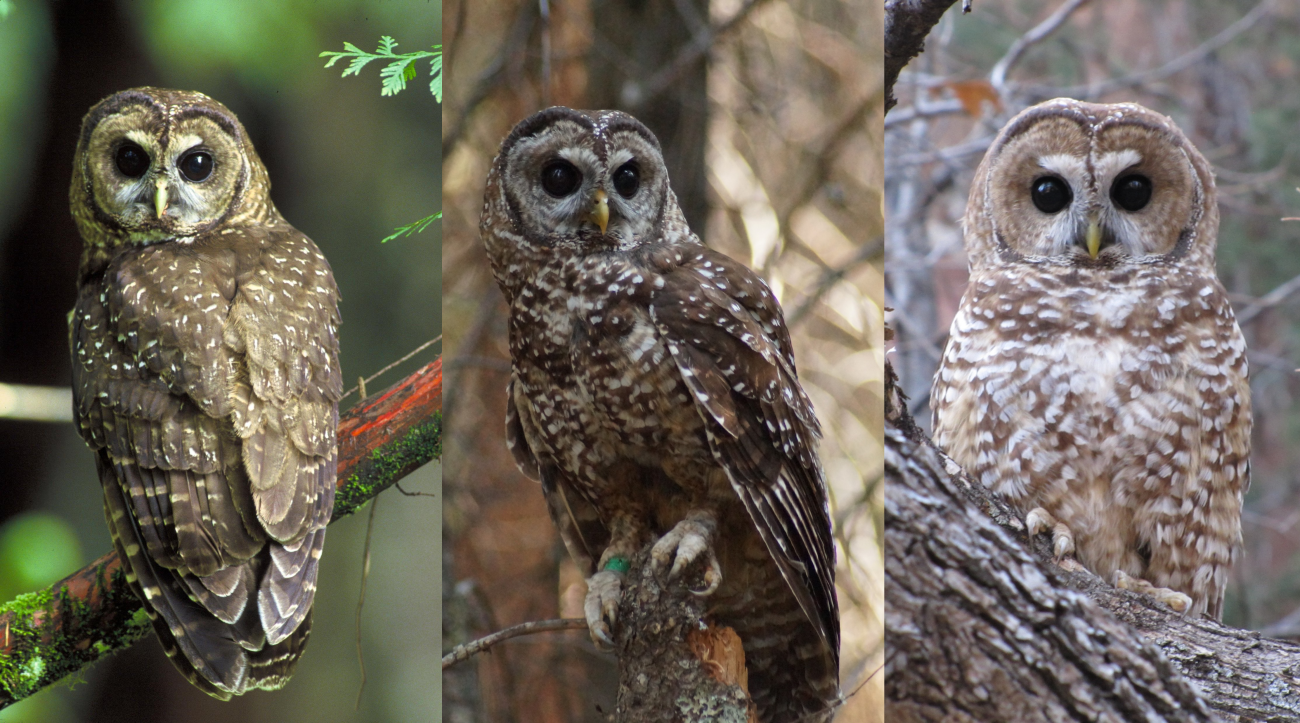
The California Spotted Owl (Strix occidentalis occidentalis) is not merely a bird—it is a living emblem of the ancient forests that once stretched like emerald veins across the Golden State. Yet, this enigmatic subspecies, with its hauntingly beautiful plumage and cryptic nocturnal habits, now teeters on the precipice of extinction. Its decline is not an isolated tragedy but a symptom of systemic failures: unchecked industrial logging, climate-induced habitat fragmentation, and a wilful blindness to the intricate web of life that sustains us all. To understand the plight of the California Spotted Owl is to confront uncomfortable truths about human hubris, the fragility of biodiversity, and the urgent need for ecological justice.
The Silent Symphony of the Ancient Canopy
Few creatures embody the mystique of old-growth forests as profoundly as the California Spotted Owl. Its presence is often announced not by sight, but by the eerie, tremolo-like call that echoes through the cathedral-like groves of ponderosa pine, white fir, and black oak. This subspecies, with its mottled brown and white plumage, is a master of camouflage, blending seamlessly into the dappled shadows of its habitat. Yet, its true genius lies in its role as an ecological linchpin—a silent sentinel whose survival hinges on the health of an entire ecosystem.
These owls are not mere predators; they are architects of ecological balance. By preying on small mammals like woodrats and flying squirrels, they regulate populations that, if left unchecked, could spiral into overgrazing and forest degradation. Their nesting habits, often favoring the hollows of ancient trees, further underscore their dependence on forests that have stood for centuries. To lose the California Spotted Owl is to unravel the delicate tapestry of an ecosystem that has evolved over millennia—a loss that reverberates far beyond the individual bird.
The Ax and the Ashes: Human Encroachment on a Fragile World
The most glaring threat to the California Spotted Owl is the relentless march of industrial logging. For decades, old-growth forests—critical nesting and foraging grounds for these owls—have been systematically felled under the guise of economic progress. The irony is stark: while the timber industry touts job creation and economic growth, it simultaneously erodes the very ecosystems that sustain life, including our own. The owl’s decline is not an accident but a direct consequence of prioritizing short-term profit over long-term ecological integrity.
Climate change exacerbates this crisis. Rising temperatures and prolonged droughts have intensified wildfires, turning once-lush forests into charred wastelands. The California Spotted Owl, already confined to dwindling patches of suitable habitat, now faces an existential threat from the very elements it once navigated with ease. The irony is bitter: the same industries that have contributed to climate change now demand that we adapt to its consequences, all while continuing to degrade the habitats that could mitigate its worst effects.
The Invisible Chains: Legal Battles and Political Apathy
The fight to save the California Spotted Owl has been a protracted and often disheartening battle, marked by legal skirmishes, bureaucratic inertia, and a disheartening lack of political will. Despite being listed as a “species of special concern” in California, the owl lacks the full protections afforded to endangered species under the Endangered Species Act. This half-hearted approach reflects a broader pattern of environmental neglect, where conservation efforts are consistently undermined by lobbying from industries that prioritize extraction over preservation.
The U.S. Fish and Wildlife Service’s 2020 decision to deny the owl federal endangered status was a particularly egregious example of this failure. The decision was met with outrage from scientists and conservationists, who pointed to mounting evidence of the owl’s rapid decline. Yet, the political calculus remained unchanged: the voices of industry lobbyists carried more weight than the silent pleas of a subspecies on the brink. This pattern of prioritizing economic interests over ecological necessity is a damning indictment of our collective failure to confront the biodiversity crisis.
The Ghosts of Forests Past: A Call to Ecological Reckoning
The plight of the California Spotted Owl is not just a story of environmental degradation—it is a mirror held up to human society, reflecting our deepest contradictions. We marvel at the owl’s beauty, yet we destroy the forests that give it life. We mourn its decline, yet we continue to enable the forces that drive it toward extinction. This cognitive dissonance is the crux of the crisis: we have become so disconnected from the natural world that we fail to recognize our own complicity in its unraveling.
Yet, there is hope. The California Spotted Owl’s survival is not yet a lost cause. Conservation efforts, though often underfunded and underappreciated, have demonstrated that habitat restoration and sustainable forestry practices can yield positive results. The key lies in shifting the narrative from one of exploitation to one of reciprocity—a recognition that our fates are intertwined with those of the creatures we share the planet with. This requires not just policy changes but a fundamental reimagining of our relationship with nature.
The Owl as Oracle: What Its Fate Foretells
The California Spotted Owl is more than a species in peril—it is an oracle, whispering warnings about the future we are hurtling toward. Its decline is a harbinger of the broader biodiversity crisis, a crisis that threatens not just individual species but the very foundations of life on Earth. If we fail to heed its call, we doom ourselves to a world where the echoes of the forest are replaced by the silence of extinction.
To save the California Spotted Owl is to save ourselves. It is a test of our capacity for empathy, our willingness to confront uncomfortable truths, and our courage to demand a different path forward. The owl’s haunting call should not be the death knell of a subspecies but a rallying cry for a new era of ecological stewardship. The time to act is now—before the last shadows of the ancient forest fade into oblivion.