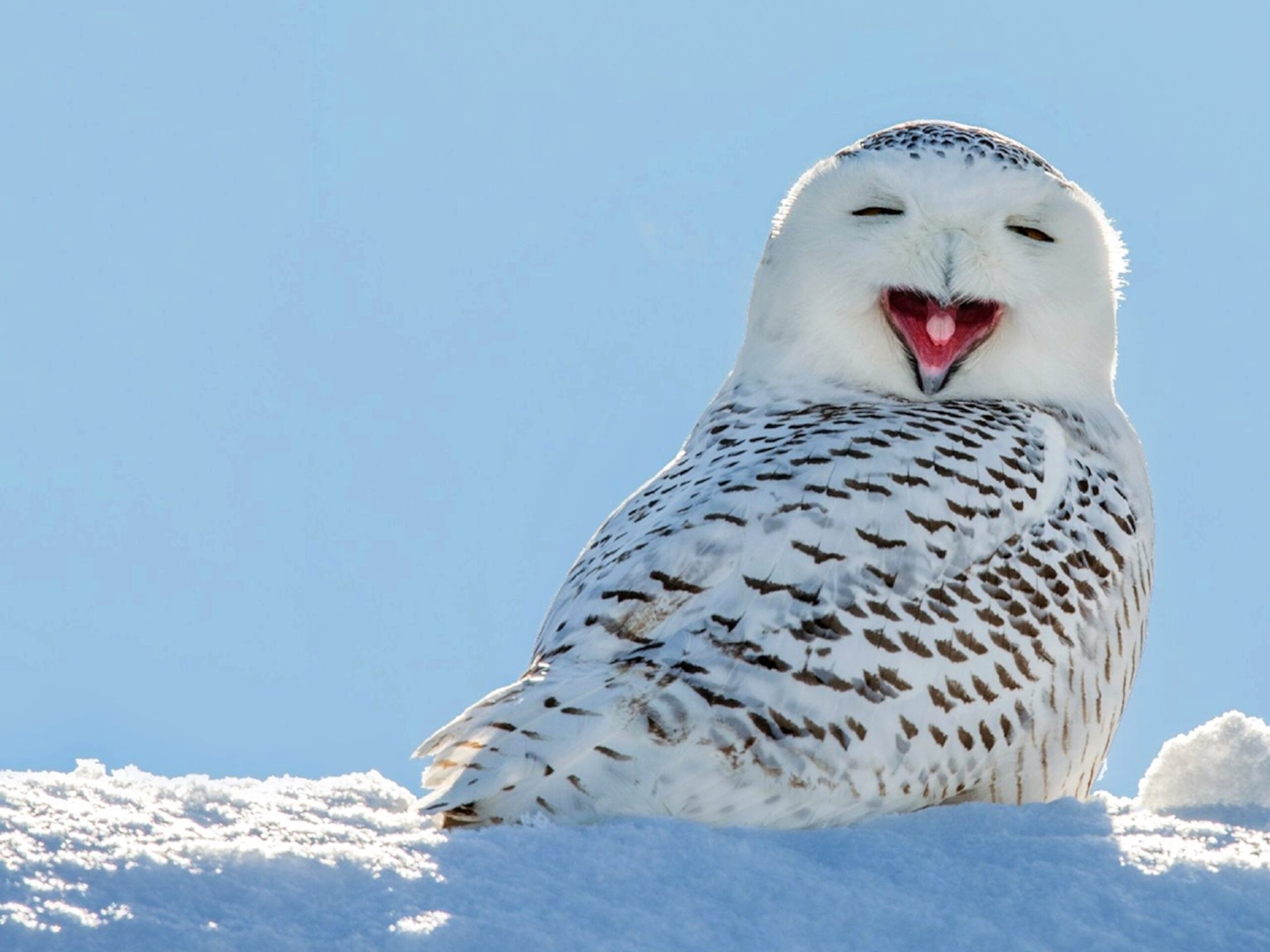
What if I told you that the Arctic’s most enigmatic predator, the snowy owl, could be an unsung hero—or perhaps a mischievous trickster—in the delicate ballet of fish populations beneath the ice? At first glance, these silent, snow-dusted sentinels seem more like characters from a winter fairy tale than ecological linchpins. Yet, their presence ripples through the Arctic’s frozen ecosystems in ways that are as surprising as they are profound. The snowy owl’s relationship with fish isn’t one of direct predation, but rather a labyrinthine web of interactions that challenge our understanding of predator-prey dynamics. So, let’s embark on a journey beneath the ice, where the owl’s shadow looms large, and the fate of Arctic fish hangs in a precarious balance.
The Owl’s Silent Watch: A Predator’s Aura Over the Tundra
The snowy owl is not your average bird of prey. Clad in feathers that whisper of the Arctic’s harshest winds, it commands the tundra with an almost regal indifference. Unlike its diurnal counterparts, this owl thrives in the endless daylight of the polar summer, its golden eyes scanning the horizon for movement. But here’s the twist: snowy owls don’t fish. They don’t dive into icy waters like ospreys or kingfishers. Their diet is a smorgasbord of lemmings, voles, and the occasional ptarmigan. So, how could they possibly influence fish populations?
The answer lies not in what they eat, but in what they *don’t* eat—and in the ripple effects of their presence. Snowy owls are apex predators, and their hunting grounds overlap with those of smaller predators that *do* target fish. When an owl stakes its claim on a territory, it doesn’t just claim the ground; it claims the food web. Smaller predators, wary of the owl’s dominance, may alter their behavior, leading to cascading changes in the ecosystem. It’s a classic case of “trophic cascade,” where one predator’s presence reshapes the entire landscape of fear.
Beneath the Ice: The Hidden World of Arctic Fish
Beneath the snowy owl’s watchful gaze, the Arctic’s icy rivers and lakes teem with life. Arctic char, whitefish, and grayling glide through waters that are colder than a winter’s breath. These fish are the backbone of the ecosystem, serving as both predator and prey. But their world is one of extremes—thin ice, shifting currents, and the ever-present threat of freezing solid. In this unforgiving environment, even the smallest disruption can send shockwaves through the food web.
Enter the snowy owl. While it doesn’t directly prey on fish, its presence alters the behavior of the fish’s predators. For instance, foxes and gulls, which might otherwise feast on fish eggs or juveniles, may redirect their efforts to hunting lemmings instead, simply because the owl has made the tundra too perilous for them. This indirect pressure could, in theory, give fish populations a reprieve—at least temporarily. But nature, ever the mischievous architect, doesn’t stop there. The owl’s influence extends beyond mere behavioral shifts; it seeps into the very fabric of the Arctic’s seasonal rhythms.
The Seasonal Tango: How Owls and Ice Shape Fish Survival
The Arctic is a land of perpetual motion, where seasons blur into one another like watercolors on wet paper. Snowy owls are migratory, arriving in the Arctic tundra when the ice is still thick and the land is blanketed in snow. Their arrival coincides with the breeding season of lemmings, their primary prey. But as the ice begins to melt and the tundra thaws, the owls’ hunting grounds shift. This seasonal dance has a curious effect on fish populations.
During the owl’s peak hunting season, smaller predators that might otherwise prey on fish are kept at bay. But as the owls depart, these predators—foxes, gulls, even other birds of prey—return with a vengeance. The result? A feast-or-famine cycle for Arctic fish. In years when owl populations are high, fish may enjoy a temporary respite. In years when owls are scarce, the pressure on fish populations intensifies. It’s a delicate balance, one that hinges on the owl’s unpredictable comings and goings.
But here’s the kicker: climate change is throwing this balance into disarray. As temperatures rise and ice melts earlier, the timing of the owl’s migration is shifting. What if the owls arrive too late, missing the lemming boom? What if the ice thins too quickly, leaving fish vulnerable to predators that would otherwise be kept in check? The owl’s indirect influence on fish populations is becoming increasingly fragile, a house of cards built on the shifting sands of a warming Arctic.
The Unseen Hand: Owls and the Arctic’s Delicate Food Web
To understand the snowy owl’s impact on fish, we must zoom out and see the bigger picture. The Arctic’s food web is a masterpiece of interconnectedness, where every species plays a role—even those that don’t directly interact. Snowy owls, by virtue of their dominance, act as ecological engineers. They don’t just hunt; they shape the behavior of other predators, which in turn affects the behavior of prey, and so on down the line.
Consider the Arctic fox, a cunning opportunist that preys on both lemmings and fish. When snowy owls are abundant, foxes may avoid open tundra, where owls hunt, and instead focus on coastal areas where fish are plentiful. This spatial shift can lead to localized overfishing, as foxes concentrate their efforts on vulnerable fish populations. Conversely, when owl numbers are low, foxes may spread out across the tundra, reducing pressure on fish in any one area. It’s a paradox: the owl’s presence can both protect and endanger fish, depending on the season and the broader ecological context.
The challenge, then, is to unravel this complexity. How do we measure the owl’s indirect effects? How do we predict the cascading consequences of a warming Arctic? These questions are not just academic—they are urgent. As the climate changes, the snowy owl’s role in the Arctic’s food web may become even more critical—or even more precarious.
The Future Beneath the Ice: Challenges and Uncertainties
The Arctic is warming at a rate faster than almost anywhere else on Earth. Ice that once blanketed the tundra for months now retreats weeks earlier each year. Snowy owls, adapted to a world of endless winter, are struggling to keep pace. Their migration patterns are shifting. Their prey is disappearing. And beneath the ice, fish populations face a future that is as uncertain as it is unpredictable.
What happens when the owl’s indirect influence wanes? Will fish populations rebound, or will they face unchecked predation? Will the Arctic’s delicate balance collapse under the weight of climate change? These are not just hypotheticals; they are the questions that keep ecologists up at night. The snowy owl, it turns out, is not just a symbol of the Arctic’s wild beauty—it is a barometer of its health.
Yet, there is hope. The Arctic is resilient. Fish populations have survived ice ages and warming periods before. The snowy owl, too, has weathered the storms of time. But survival is not guaranteed. It requires vigilance, understanding, and a willingness to confront the challenges that lie ahead. The owl’s shadow may stretch long over the tundra, but beneath the ice, the real drama is playing out—and it’s a story we are only beginning to understand.