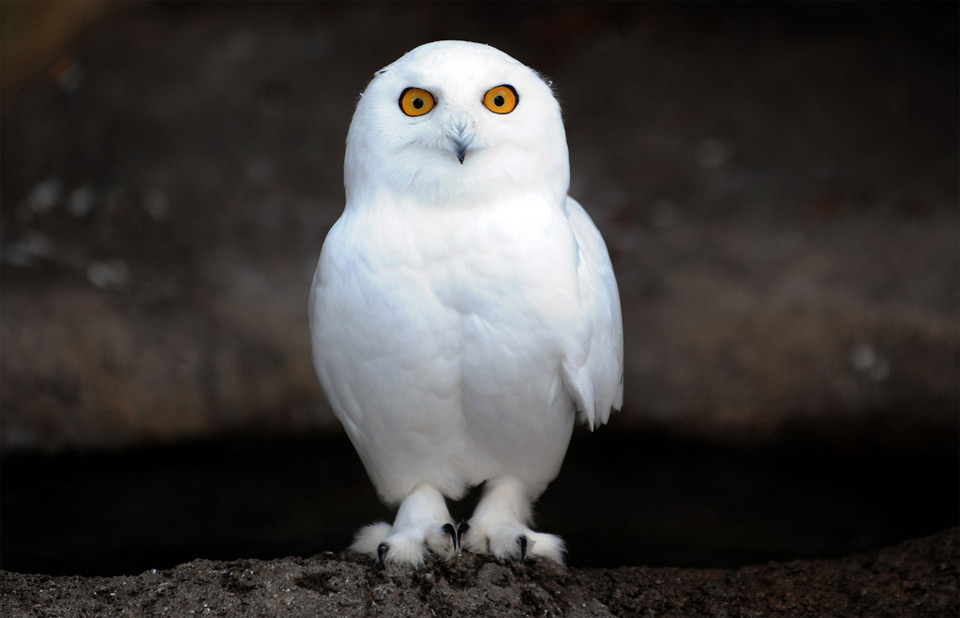
There’s something hauntingly beautiful about a snowy owl perched on a fence post at dusk, its golden eyes piercing the twilight like twin lanterns in a storm. These Arctic wanderers, clad in feathers of frost and moonlight, have long captivated the human imagination—symbols of resilience, mystery, and untamed wilderness. Yet beneath their regal demeanor lies a darker narrative, one of starvation, collisions, and the relentless pressures of a changing world. Irruptions, those dramatic southward surges of snowy owls beyond their usual Arctic haunts, are not mere spectacles of nature’s whims. They are desperate migrations, survival strategies gone awry, revealing the fragility of even the most majestic creatures when faced with ecological upheaval.
The Irruption Enigma: When the North Sends Its Ghosts South
Every few years, snowy owls descend upon temperate landscapes in numbers that defy expectation. These irruptions, often triggered by food scarcity in the Arctic, send hundreds of owls streaming southward in search of sustenance. What begins as a survival tactic quickly becomes a spectacle—birdwatchers flock to fields and shorelines, cameras in hand, while farmers and pilots curse the sudden influx of feathered intruders. But these migrations are not joyrides. They are last-resort odysseys, where the weakest perish en route, and the survivors arrive emaciated, their once-plump bodies reduced to skeletal silhouettes.
The causes of irruptions are complex. A crash in lemming populations—a primary prey for snowy owls—often sets the stage. When the Arctic’s buffet of small mammals dwindles, owls must venture farther afield. Climate change exacerbates this cycle, melting ice and disrupting ecosystems in ways that leave both predator and prey scrambling. The result? A domino effect of starvation, where owls that would normally perish in the Arctic now arrive in temperate zones, only to face new, equally deadly challenges.
Starvation: The Silent Predator of the Snowy Owl
Starvation is the invisible scourge stalking snowy owls during irruptions. Unlike the dramatic predation of a great horned owl or the swift strike of a goshawk, starvation is a slow, insidious killer. Arriving in unfamiliar territories, owls struggle to adapt their hunting strategies. Their Arctic diet of lemmings and voles is replaced by mice, rabbits, or even insects—prey that demands different skills. Many fail. Their talons, honed for snatching prey from snowdrifts, falter when faced with a scurrying field mouse. Their keen eyes, accustomed to spotting movement against a white backdrop, are blinded by the dappled chaos of autumn fields.
The consequences are dire. Emaciated owls become easy targets for disease, parasites, and opportunistic predators. Some are found dead in fields, their bodies too weak to fight off even a minor infection. Others linger in a state of torpor, too lethargic to hunt, their once-mighty wings now too heavy to lift. Conservationists often intervene, rehabilitating starving owls in captivity, but the harsh truth remains: starvation is a numbers game, and for every owl that survives, dozens perish in silence.
Collisions: The Invisible Menace of Human Dominance
Even when starvation doesn’t claim them, snowy owls face another, more insidious threat: collisions. These collisions are not the stuff of dramatic wildlife documentaries—no roaring engines, no splintering metal—but rather the quiet, tragic result of owls navigating a world reshaped by humans. Power lines, wind turbines, and vehicles become deathtraps for owls accustomed to the open skies of the Arctic. Their broad wings, built for gliding over endless tundra, are ill-suited for dodging the lattice of wires crisscrossing farmlands or the spinning blades of turbines.
The statistics are sobering. Studies reveal that snowy owls are among the most collision-prone raptors during irruptions. A single wind farm can claim dozens of owls in a season, their bodies discovered at the base of turbines, their wings splayed in final, futile attempts to escape. Power lines, too, are silent killers. Owls perched on poles or wires misjudge distances, their talons tangling in live currents or their bodies colliding with oncoming traffic. The irony is cruel: these owls, symbols of wildness, are felled by the very infrastructure that defines modern landscapes.
Habitat Loss: The Arctic’s Vanishing Act
Beyond starvation and collisions, snowy owls face the slow erosion of their Arctic homeland. Climate change is melting sea ice at an alarming rate, shrinking the habitats of seals and other prey that owls rely on during the lean Arctic winter. As the ice recedes, so too does the owls’ ability to hunt effectively. The result is a double-edged sword: fewer prey in the Arctic means more owls venturing south, but the south offers no respite—only new dangers. Wetlands drained for agriculture, forests cleared for development, and coastlines paved over for industry leave owls with fewer places to rest, hunt, or nest.
The loss of habitat is not just a physical erosion but a cultural one. The Arctic, once a vast and untouchable wilderness, is now a battleground of melting glaciers and shifting ecosystems. For snowy owls, this means a world that is increasingly hostile, where the boundaries between survival and extinction blur. Conservation efforts, from habitat restoration to captive breeding programs, offer a glimmer of hope, but the scale of the problem is daunting. The Arctic is not just a place; it’s a lifeline, and its unraveling threatens to pull the snowy owl into the abyss.
The Human Connection: Why We Can’t Look Away
Despite the grim realities, snowy owls continue to captivate us. There’s a paradox in our fascination—a species both revered and endangered, both resilient and vulnerable. Perhaps it’s their stark beauty, the way their white plumage mirrors the Arctic’s endless winter. Or maybe it’s the sense of wonder they inspire, the reminder that even in a world dominated by humans, pockets of wildness persist. Whatever the reason, our obsession with snowy owls is more than aesthetic. It’s a reflection of our own relationship with nature—a mix of awe, guilt, and the desperate hope that we might still do something to save them.
Yet, for all our admiration, we must also confront the uncomfortable truth: snowy owls are not just victims of circumstance. They are harbingers, warning us of the fragility of ecosystems and the consequences of unchecked human expansion. Their irruptions are not just migrations; they are distress signals, echoing through the silence of a changing world. To ignore them is to ignore the cracks in our own foundations. To save them is to acknowledge that their survival is intertwined with our own.