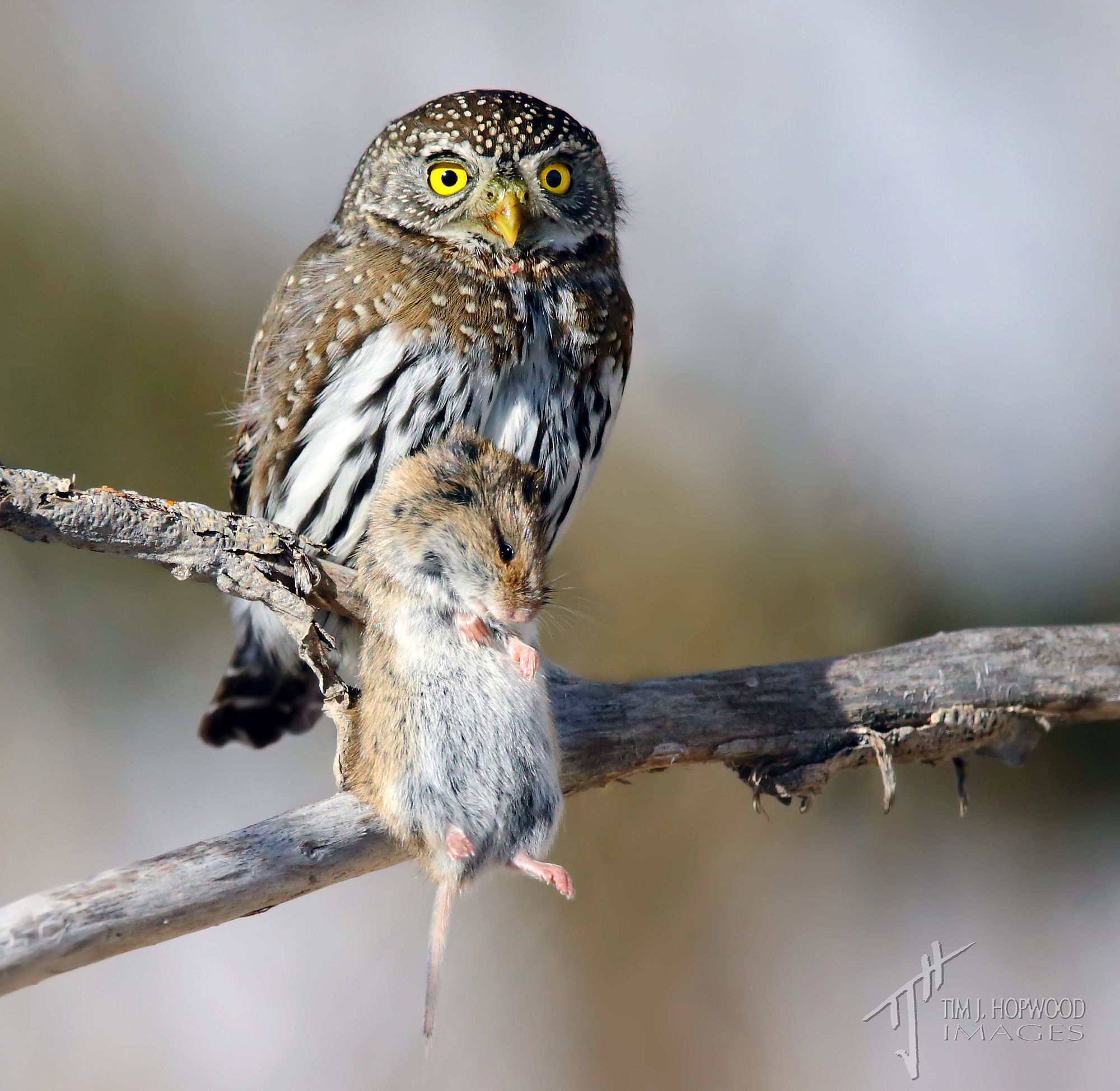
The forest hums with a quiet, ancient rhythm—each rustle of leaves, each whisper of wind through the pines, a testament to an ecosystem finely tuned over millennia. Yet, hidden within this verdant symphony, a diminutive predator moves with the stealth of a shadow. The pygmy owl, no larger than a sparrow, is a paradox of fragility and ferocity, a feathered titan whose presence reshapes the very fabric of its woodland domain. These tiny raptors, with their piercing golden eyes and a call that pierces the dawn like a silver needle, are not mere spectators to the forest’s drama. They are its unseen architects, wielding an influence that cascades through the insect world with the precision of a master weaver.
The Silent Sentinels: How Pygmy Owls Patrol the Forest Canopy
Imagine, if you will, a world where the air itself is a living thing—where every molecule carries the scent of damp earth, pine resin, and the faint metallic tang of predation. This is the realm of the pygmy owl, a creature whose hunting grounds are not the open skies but the dense, whispering corridors of the forest canopy. Unlike their larger raptorial kin, who command the open skies with regal indifference, pygmy owls are artisans of concealment. Their mottled plumage, a masterclass in cryptic camouflage, blends seamlessly with the bark of ancient conifers, rendering them nearly invisible until the moment of ambush.
What makes their hunting so uniquely devastating to insect populations is not brute force but surgical precision. A pygmy owl does not chase its prey; it *waits*. Perched on a gnarled branch, it becomes a part of the tree itself, a silent sentinel watching for the telltale tremors of an unsuspecting beetle or the erratic flutter of a moth. When the moment arrives, it strikes with a speed that defies its size—talons outstretched like the fingers of a conductor leading an orchestra, its beak a dagger poised to silence the symphony of wings.
The Invisible Hand: Pygmy Owls and the Balance of Forest Life
In the grand tapestry of the forest, insects are both the threads and the fraying edges—some vital, others voracious, all interconnected. Pygmy owls, with their insatiable appetites, act as nature’s pruners, trimming the excesses of populations that might otherwise spiral into ecological chaos. Consider the spruce budworm, a caterpillar whose ravenous hunger can defoliate entire forests, leaving behind a skeletal landscape of dead trees. Left unchecked, these pests would transform thriving woodlands into graveyards of brittle branches. Yet, where pygmy owls thrive, budworm numbers remain in check, their populations held in a delicate, dynamic equilibrium.
But the owl’s influence extends beyond mere predation. Their presence alone alters the behavior of insects, forcing them into a state of perpetual vigilance. Moths, once carefree dancers in the moonlight, now flit erratically, their flight paths a zigzag of panic. Beetles, those armored wanderers of the forest floor, burrow deeper into the soil, their movements slowed by the specter of talons. This behavioral shift, though subtle, ripples through the ecosystem. Plants, no longer besieged by unchecked herbivory, can flourish. Birds that rely on the same insects for sustenance find their tables less crowded. The forest breathes easier.
The Nocturnal Hunters: Pygmy Owls and the Dusk-to-Dawn Predation Cycle
While the forest sleeps, the pygmy owl takes up its mantle of the night. Unlike diurnal raptors, who cede the stage to daylight, these owls are the true sovereigns of twilight. Their hunting begins at dusk, when the last embers of sunlight fade into the indigo embrace of evening. They are creatures of the *crepuscular hour*, those liminal moments when the world is neither fully day nor night—a time of magic and menace.
Their hunting strategy is a masterclass in efficiency. With a wingspan barely wider than a dinner plate, they navigate the labyrinthine underbrush with the grace of a dancer, their flight a series of silent, undulating glides. They do not screech like their larger kin; their calls are soft, almost conversational, a series of whistles and chirps that sound more like a forest spirit than a predator. Yet, make no mistake—this is a hunter who speaks in a language of death. Each note carries the promise of a meal, a siren song for the unwary.
By dawn, they retreat to their perches, their bellies full, their work done. But the forest does not forget. The insects they have culled are gone, their absence felt in the rustling leaves and the sudden abundance of new shoots. The cycle continues, a perpetual motion machine of predation and renewal.
The Unseen Architects: Pygmy Owls and Forest Regeneration
To understand the full impact of pygmy owls, one must look not just at what they eat, but at what they *allow* to grow. Forests are not static entities; they are living, breathing organisms that evolve, adapt, and regenerate. Pygmy owls, by keeping herbivorous insect populations in check, play a pivotal role in this process. Without their intervention, certain plant species would be devoured before they could reach maturity, altering the composition of the forest itself.
Take, for example, the understory plants that rely on a delicate balance of light and shade. When budworms and other pests run rampant, they strip the canopy bare, allowing sunlight to flood the forest floor. This sudden abundance of light can trigger a burst of growth in sun-loving species, but it also creates a harsh, competitive environment where only the hardiest plants survive. Pygmy owls, by preventing such outbreaks, ensure that the forest floor remains a mosaic of diversity—a place where ferns unfurl like green lace, where wildflowers bloom in riotous color, and where saplings push toward the sky with the tenacity of the underdog.
In this way, pygmy owls are not just predators; they are the unseen architects of forest resilience. They shape the landscape in ways that are subtle, profound, and often invisible to the casual observer. To walk through a forest where pygmy owls thrive is to walk through a place that is, quite literally, more alive.
The Fragile Titans: Conservation and the Future of Pygmy Owls
Yet, for all their prowess, pygmy owls are not invincible. Their very existence is a testament to the fragility of the ecosystems they inhabit. Climate change, habitat destruction, and the creeping specter of pesticide use threaten to unravel the delicate balance they maintain. A forest without pygmy owls is like a symphony without a conductor—a cacophony of competing voices, each straining to be heard, none in harmony.
Conservation efforts must recognize the pygmy owl not as a mere curiosity of nature, but as a keystone species, one whose presence or absence can determine the fate of entire forests. Protecting their habitats means protecting the intricate web of life that depends on them. It means preserving old-growth trees, those ancient sentinels that provide the perfect perches for ambush. It means ensuring that the forest remains a place of shadows and secrets, where the pygmy owl can continue its silent work.
The challenge, then, is not just to admire these tiny titans from afar, but to stand as their allies. To advocate for forests that are not just places of recreation, but living, breathing entities with their own rights and rhythms. The pygmy owl does not ask for much—just a world where it can hunt, where it can thrive, where the night remains its domain. The question is: will we give it that world?