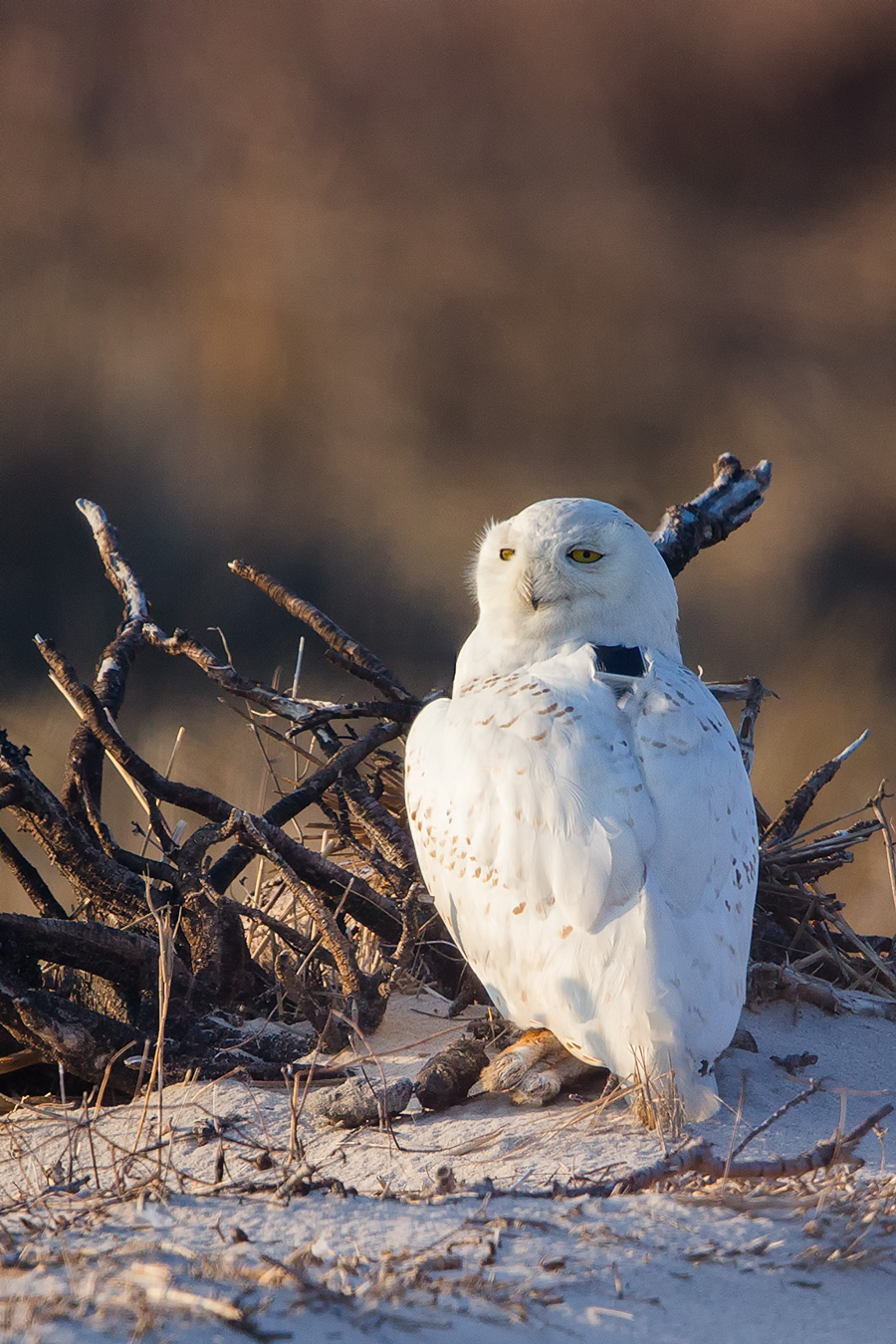
What if I told you that a bird with the majesty of a polar explorer could vanish into the winter skies without so much as a whisper? The snowy owl, that ghostly wanderer of the Arctic tundra, has long been a creature of mystery—until now. Thanks to the silent revolution of GPS tracking, we’re finally peeling back the layers of its enigmatic existence, one satellite ping at a time.
The Arctic Phantom: Why Snowy Owls Are Nature’s Ultimate Houdinis
Picture this: a bird clad in a cloak of snow, perched on a frozen expanse where the wind sculpts the land into an endless gallery of ice. The snowy owl isn’t just surviving in this harsh realm—it’s thriving, a master of camouflage and stealth. But here’s the kicker: these birds don’t just stay put. They’re nomads, traversing thousands of miles in search of prey, their movements dictated by the whims of lemming populations and the shifting seasons.
For centuries, their migrations were a riddle wrapped in a snowdrift. Did they follow the same paths year after year? Did they return to the same breeding grounds? Without a way to track them, we were left guessing. Enter the GPS tag—a tiny, featherweight marvel of technology that straps onto an owl’s back like a miniature backpack, recording every flap, every glide, every secretive journey across continents.
The Tech That Unlocked the Skies: How GPS Tags Work Their Magic
These aren’t your average GPS devices. Oh no. These are feathery spy gadgets, designed to be so lightweight they don’t so much as ruffle a wing. Solar-powered, they cling to the owl’s back like a second spine, harvesting energy from the sun while transmitting location data via satellite. Each ping is a breadcrumb, a digital trail leading us through the owl’s hidden life.
But here’s where it gets fascinating: the tags don’t just track location. They reveal altitude, speed, even the owl’s hunting patterns. We’ve learned that some snowy owls embark on epic transcontinental odysseys, while others are content to stay put, content in their frozen kingdoms. Some dive-bomb into snowdrifts to snatch unsuspecting prey, while others patrol the skies like feathered sentinels, their white plumage a stark contrast against the winter landscape.
The real magic? These tags allow us to witness the owl’s world in real time. No longer are we bound by the limitations of human observation. We’re eavesdropping on the whispers of the wind, the secrets of the snow.
The Great Migration Mystery: Where Do Snowy Owls Go When We’re Not Looking?
Every winter, snowy owls descend upon the northern United States and Canada in a phenomenon known as an “irruption.” But where do they come from? Where do they go when the snow melts? For decades, these questions lingered like a half-remembered dream. Then, GPS tags provided the answers—and they were far more dramatic than anyone imagined.
Some owls travel as far south as Texas and even Mexico, their journeys spanning thousands of miles. Others zigzag across the Arctic, their paths weaving through the vast, empty expanses of Canada and Greenland. One particularly adventurous owl, tagged in the Midwest, was found to have flown all the way to the Canadian Maritimes before turning back—an odyssey that would make even the most seasoned human traveler pause.
But the real revelation? Many of these owls aren’t just passing through. They’re establishing temporary territories, hunting grounds where they’ll spend weeks or even months before moving on. It’s a lifestyle that defies our traditional notions of migration. These aren’t birds following a rigid schedule. They’re opportunists, adapting on the fly, their movements a dance with the unpredictable rhythms of nature.
The Perils of the Wild: The Challenges of Tracking a Snowy Owl
Of course, attaching a GPS tag to a snowy owl isn’t as simple as slapping a sticker on its back. These birds are fierce, their talons capable of shredding flesh in an instant. Researchers must approach with caution, using specialized techniques to ensure the owl’s safety—and their own.
Then there’s the issue of battery life. While solar-powered tags are a game-changer, they’re not infallible. In the depths of winter, when daylight is scarce, the tags may struggle to recharge. And what happens if an owl sheds its tag mid-flight? Or if the tag malfunctions, leaving us with a digital breadcrumb trail that abruptly ends in the middle of the Arctic Ocean?
Worst of all, there’s the human factor. Not everyone welcomes these feathered wanderers. Farmers may see them as pests, shooting them on sight. Wind turbines pose another threat, their blades a silent death sentence for birds unlucky enough to fly too close. And then there’s climate change—a looming specter that’s already reshaping the Arctic, forcing owls to adapt to a world that’s rapidly changing beneath their talons.
The Future of Owl Tracking: What’s Next for These Feathered Pioneers?
The GPS revolution is only the beginning. Scientists are now experimenting with accelerometers—tiny devices that can detect an owl’s every movement, from the beat of its wings to the flick of its tail. Imagine knowing not just where an owl goes, but how it hunts, how it interacts with other birds, even how it reacts to the presence of humans.
There’s also the tantalizing possibility of real-time tracking. Instead of waiting for data to trickle in via satellite, what if we could watch an owl’s journey unfold live, on a screen? It’s a future where the line between observer and observed blurs, where we’re no longer just spectators but participants in the owl’s world.
But perhaps the most exciting prospect is the potential to inspire conservation. By understanding the snowy owl’s movements, we can identify critical habitats, protect migration corridors, and ensure these magnificent birds continue to grace our skies for generations to come. It’s a reminder that even in an age of technology, the wild still holds secrets worth uncovering—and that the greatest adventures are the ones we share with the creatures that call this planet home.