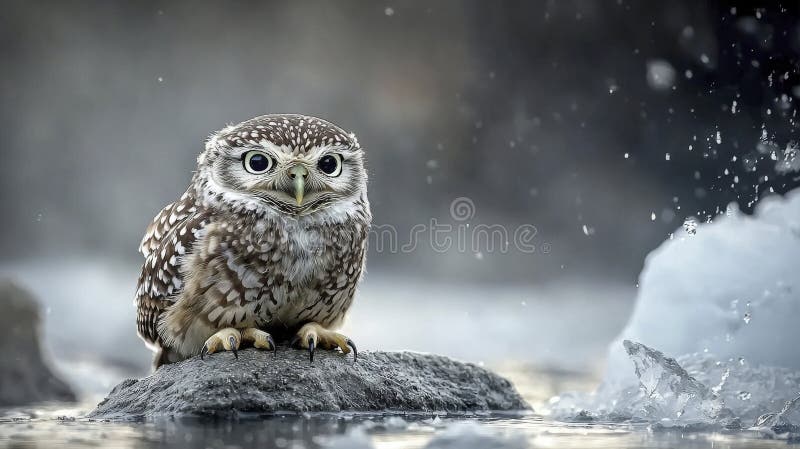
In the vast, unyielding expanse of the Arctic, a silent sentinel of the night, the Arctic owl, navigates a landscape perpetually at the mercy of shifting climates. As the frozen tundra increasingly succumbs to warming temperatures and erratic weather patterns, a profound story unfolds—one of resilience, vulnerability, and urgent call for protection. This narrative challenges us to rethink not only the fate of a singular species but the intricate web of life that hinges upon the fragile Arctic equilibrium. The plight of the Arctic owl, emblematic of this pristine wilderness, promises to reshape our understanding of ecological interconnectedness and compels a vigilant reevaluation of conservation in an era of accelerating change.
The Arctic Owl: Icon of a Changing Wilderness
The Arctic owl, often cloaked in ghostly white plumage, stands as both a symbol and a barometer of the Arctic ecosystem’s health. Adapted impeccably to an environment of relentless cold and scarcity, this raptorial marvel thrives amidst permafrost and polar nights. Its life cycle, hunting strategies, and reproductive rhythms are inextricably linked to the cyclical dance of Arctic seasons. Yet, these rhythms are becoming discordant. As ice retreats and snowpacks diminish, the delicate balance that sustains the owl’s prey and its own survival is profoundly disrupted. Their presence in these northern reaches is more than a curiosity; it is a narrative thread unraveling the complex tapestry of climatic transformation.
Climate Change: A Harbinger of Uncertainty
The relentless advance of climate change in the Arctic is not mere environmental flux—it is a seismic upheaval. Average temperatures in this region rise at more than twice the global rate, triggering cascading consequences. Melting glaciers threaten not only coastlines but the very habitat that Arctic owls rely on for nesting and hunting. Thawing permafrost reshapes terrain, altering prey availability and accessibility, while unpredictable weather patterns disrupt breeding and migration cycles. These factors collectively intensify survival challenges, forcing owls to adapt under immense pressure or face population declines. This is not a gradual nudge; it is a wrenching transformation that demands urgent attention from conservationists and policymakers alike.
Ecological Ramifications Beyond the Owl
Focusing solely on the Arctic owl risks overlooking a broader ecological symphony under siege. The owl is a top-tier predator, instrumental in maintaining balance by controlling populations of rodents and small mammals. Its decline echoes across trophic levels, potentially triggering overpopulation of certain species which could, in turn, devastate vegetation and soil stability. Additionally, owls serve as indicators—living compasses that signal shifts in biochemical cycles and habitat integrity. When their numbers falter, it forewarns deeper systemic disturbances that may ripple across the Arctic environment and even global climatic patterns, revealing the profound interconnectedness of ecosystems.
Conservation Challenges in a Remote Frontier
Protecting the Arctic owl is no simple feat; it is complicated by the Arctic’s remoteness, extreme conditions, and limited baseline data. Researchers grapple with logistical impediments—biting cold, vast distances, and short field seasons hinder comprehensive monitoring. Furthermore, the rapid pace of environmental change outstrips traditional conservation timelines and strategies, calling for innovative approaches. Community engagement, particularly with Indigenous peoples whose traditional knowledge spans generations, is vital. Their insights into wildlife behavior, seasonal changes, and ecological cues can complement scientific data, fostering nuanced, culturally respectful conservation frameworks that are adaptive and effective.
Innovative Strategies and the Path Forward
The complexity of protecting Arctic owls amidst climate chaos demands a multifaceted arsenal of strategies. Satellite tracking technology, for example, offers unprecedented glimpses into migratory routes and habitat usage, informing targeted protection zones. Habitat restoration initiatives, even in such a forbidding environment, are being explored to sustain critical breeding and hunting grounds. Policy-wise, advocacy for stronger emissions reductions and Arctic-specific protective legislation is gaining momentum. Cross-disciplinary collaborations between ecologists, climatologists, and local communities spark hope for solutions that balance ecological integrity with sustainability. These efforts underscore a paradigm shift—from reactive to proactive conservation, where anticipation and adaptability govern stewardship.
The Ethical Imperative and Global Resonance
The struggle to safeguard the Arctic owl transcends biology; it confronts us with an ethical imperative. This species, so finely attuned to the Arctic’s rhythm, is becoming a casualty of human-induced change. Protecting it demands more than policies and science—it calls for a transformation in collective consciousness and values. A recognition that the Arctic, though remote, is integral to global climate stability and cultural heritage. Our responses must reflect humility and respect for nature’s complexity, fostering stewardship that honors not just the survival of owls but the sanctity of entire ecosystems. In doing so, the Arctic owl becomes a poignant emblem of humanity’s responsibility in an interdependent world.
Conclusion: A Call to Witness and Act
The Arctic owl’s story is a prism through which the urgency of climate change is refracted—revealing stark vulnerabilities alongside resilient hope. Its silent flight over melting ice and thawing tundra is both a narrative of loss and a summons to action. By embracing innovative conservation, deepening scientific understanding, and honoring indigenous wisdom, we can forge pathways that allow these majestic creatures to navigate a transformed Arctic. Ultimately, the future of the Arctic owl challenges us to broaden our perspective—not only to witness its plight but to embrace a collective responsibility that safeguards the delicate balance of one of Earth’s most enigmatic frontiers.