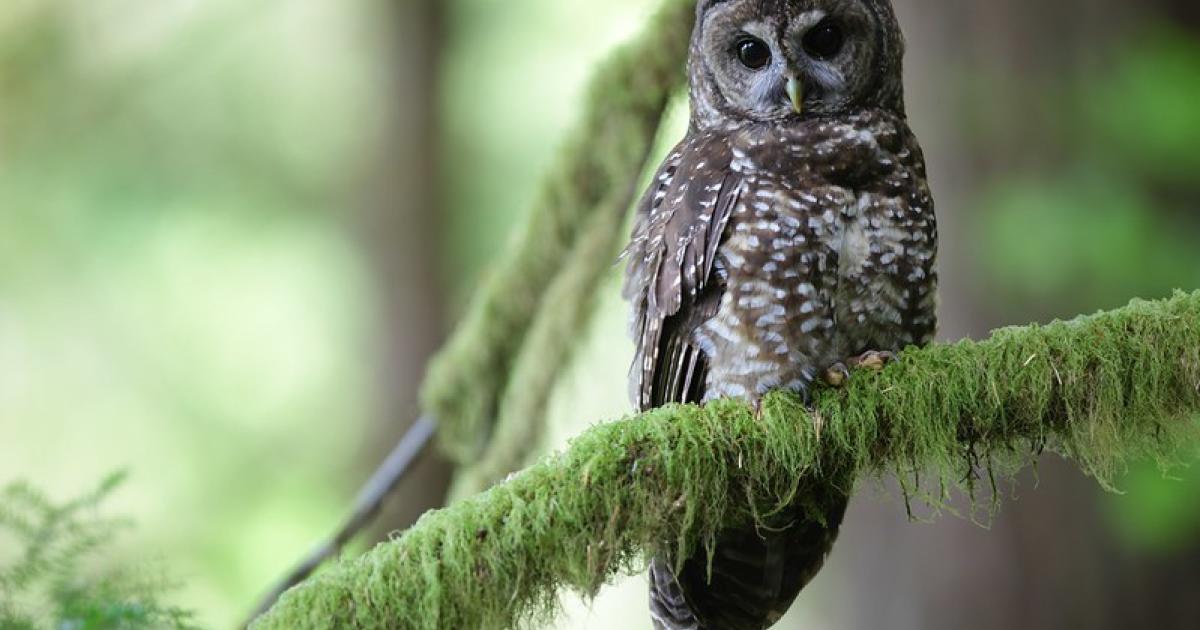
The verdant expanse of the Pacific Northwest is renowned not only for its towering evergreens and mist-shrouded landscapes but also for harboring some of North America’s most enigmatic avian species. Among these, the spotted owl stands as a symbol of old-growth forest ecosystems, embodying both ecological complexity and the tragic narratives of species under siege. Yet, in recent decades, an unrelenting force of displacement has permeated these ancient woodlands: the barred owl. This invasive cousin, with its aggressive expansion and adaptive prowess, is reshaping the delicate balance, forcing the iconic spotted owl into a perilous decline. Delving into this unfolding saga reveals a tale of interspecies rivalry, habitat encroachment, and the desperate human endeavors striving to conserve a fragile legacy.
Ecological Profiles: Contrasting Lives of Barred and Spotted Owls
The story begins by understanding the unique ecological niches occupied by these two owls. The spotted owl, Strix occidentalis, is a specialist, reliant on expansive tracts of mature and old-growth forests. Its preference for dense canopies and secluded nesting sites defines its habitat choices, making it vulnerable to fragmentation and logging. In stark contrast, the barred owl, Strix varia, is an ecological generalist. Native to eastern and central North America, barred owls have exhibited remarkable plasticity, thriving in diverse forest types, including younger woodlands and mixed habitats. Their adaptability grants them a competitive advantage, enabling them to colonize new areas rapidly.
These differing strategies are pivotal. Whereas the spotted owl’s survival hinges on the preservation of pristine, undisturbed forests, barred owls wield opportunism as their ace. Their broader dietary preferences encompass a wider range of prey, including small mammals, birds, and amphibians, whereas spotted owls lean heavily on certain rodent populations. This functional overlap intensifies competition, setting the stage for conflict in shared environments.
Mechanisms of Displacement: Behavioral and Biological Interactions
The encroachment of barred owls into the Pacific Northwest has unfolded not merely through passive cohabitation but through assertive displacement. Barred owls outcompete spotted owls through direct aggression, territorial dominance, and superior adaptability. Observations reveal barred owls frequently intruding into spotted owl territories, aggressively defending nesting sites and food resources.
Furthermore, barred owls are known for their prolific breeding, with many pairs establishing multiple clutches within a breeding season under favorable conditions. This reproductive vigor compounds their population growth, facilitating a demographic surge that exerts tremendous pressure on spotted owl numbers. The interspecies territorial disputes culminate in spotted owls being forced out of their preferred habitats, relegated to suboptimal environments where survival prospects dwindle.
Habitat Overlap and Fragmentation: The Amplifying Catalyst
While inherent biological advantages explain much of the displacement phenomenon, anthropogenic factors exacerbate the challenge. Logging practices and land development along the Pacific Northwest have fragmented centuries-old forests, shrinking the contiguous habitats essential for spotted owls. This habitat fragmentation inadvertently creates ecological vacuums that barred owls exploit.
Fragmented landscapes often favor barred owls, which flourish in edge habitats and disturbed areas, further tipping the balance. As spotted owls retreat into increasingly isolated patches of suitable habitat, their genetic diversity suffers, weakening population resilience. This dynamic underscores the symbiotic relationship between habitat integrity and species survival, where human actions reverberate through natural hierarchies.
Conservation Interventions: Removal and Management of Barred Owls
Recognizing the existential threat posed by barred owls, conservationists have undertaken controversial yet pivotal management interventions. One such approach involves the selective removal of barred owls from critical spotted owl habitats. This practice—though contentious—has shown promising results in slowing the decline of spotted owl populations. Scientific studies document increased sightings and reproductive success of spotted owls in areas where barred owl numbers have been reduced.
These removals are executed with utmost precision, emphasizing ethical considerations and ecological impact assessments. Furthermore, conservation strategies extend beyond mere removal. Habitat restoration efforts aim to rehabilitate old-growth forest corridors, enhancing habitat connectivity and quality. Deploying remote sensing technologies and acoustic monitoring also aids in tracking population dynamics, enabling adaptive management practices tailored to shifting landscape conditions.
Future Outlook: Balancing Coexistence and Biodiversity Preservation
The narrative of barred and spotted owls is far from concluding. As climate change alters forest phenology and prey availability, new variables weave into an already complex tapestry. The potential for hybridization, though currently rare, poses a genetic conundrum that could blur species boundaries in unforeseen ways.
Forward-looking conservation approaches embrace a holistic vision, balancing immediate protective actions with long-term ecosystem resilience. This includes fostering community engagement, bolstering policy frameworks to curb habitat degradation, and promoting interdisciplinary research to unravel the nuanced interactions between these owls and their environments. Ultimately, the fate of the spotted owl is intertwined with our collective commitment to safeguarding biodiversity in an era marked by rapid environmental transformation.
Educational and Engagement Opportunities: Raising Awareness Through Diverse Content
For readers and advocates alike, understanding the plight of the spotted owl involves engaging with varied content forms. In-depth documentaries capture the haunting calls and majestic flights of both owl species, immersing viewers in their nocturnal worlds. Interactive maps charting population fluctuations and habitat changes bring spatial dimensions to life.
Scientific articles and detailed reports offer rigorous data analysis, while personal narratives from biologists and conservationists reveal the emotional gravitas behind fieldwork challenges. Infographics distill complex ecological relationships into comprehensible visuals, facilitating broader public comprehension. These multifaceted content types collectively empower audiences to appreciate the nuances and urgency of the situation, inspiring stewardship and informed advocacy.
In the end, the tale of barred and spotted owls transcends mere ecological rivalry; it embodies the larger discourse on coexistence, adaptation, and the human role in planetary stewardship. Immersing oneself in this story invites reflection on the delicate threads that sustain life and the responsibility borne to preserve them.