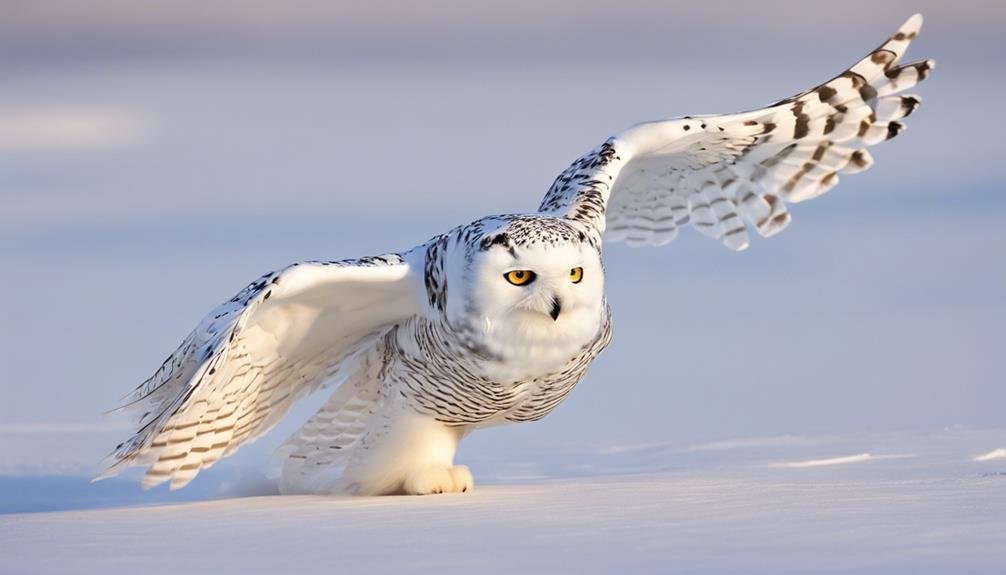
The Arctic, a realm of stark beauty and fragile balance, is home to one of nature’s most enigmatic predators: the snowy owl. With its piercing golden eyes and snowy plumage, this bird of prey has long captivated the imagination of scientists and dreamers alike. Yet, beneath its majestic exterior lies a story of survival—one that is increasingly threatened by the relentless march of climate change and human encroachment. Enter the unsung heroes of Arctic conservation: non-governmental organizations (NGOs). These tireless advocates are not merely preserving habitats; they are rewriting the narrative of coexistence between humanity and the wild. Their work is a testament to the power of collective action, where every policy shift and every protected acre is a step toward a future where snowy owls soar unshackled by the specter of extinction.
The Arctic’s Fragile Ecosystem: A Stage for Survival
The Arctic is not a monolith of ice and snow but a dynamic tapestry of interconnected ecosystems, where the fate of one species reverberates through the entire food web. Snowy owls, apex predators in this frozen wilderness, rely on a delicate balance of lemmings, voles, and other small mammals. Yet, as the Arctic warms at an alarming rate—four times faster than the global average—their world is unraveling. Thawing permafrost disrupts nesting grounds, while shifting prey populations force owls into unfamiliar territories, often closer to human settlements where they face new threats. Conservation NGOs recognize that protecting snowy owls means safeguarding the entire Arctic mosaic, from the tundra’s mossy carpets to the icy fjords teeming with life. Their interventions are not just about saving a species; they are about preserving an entire way of life that has thrived for millennia.
NGOs as Catalysts of Change: From Advocacy to Action
The role of Arctic conservation NGOs extends far beyond the confines of traditional wildlife protection. These organizations are the architects of systemic change, wielding influence in boardrooms, legislative chambers, and remote field stations alike. Through meticulous research, they uncover the hidden threats facing snowy owls—be it industrial pollution seeping into their prey or the silent creep of invasive species altering their habitats. Armed with data, they lobby for policies that curb carbon emissions, designate critical habitats as protected zones, and enforce stricter regulations on Arctic shipping lanes that disrupt owl migrations. But their work is not confined to policy. Many NGOs operate on the ground, deploying satellite tracking devices to monitor owl movements, rehabilitating injured birds, and engaging Indigenous communities in co-management initiatives. Their efforts are a symphony of science, diplomacy, and grassroots activism, each note resonating with the urgency of the moment.
The Power of Community: Indigenous Knowledge Meets Modern Conservation
In the Arctic, the line between conservation and culture is often blurred. Indigenous communities, who have coexisted with snowy owls for generations, possess an intimate understanding of the land and its rhythms. Conservation NGOs have increasingly turned to these stewards of the North, forging partnerships that blend traditional ecological knowledge with cutting-edge science. Together, they map critical habitats, document owl behaviors, and develop sustainable land-use plans that honor both wildlife and Indigenous rights. These collaborations are not merely transactional; they are transformative, challenging the colonial legacy of conservation that often sidelined local voices. By centering Indigenous perspectives, NGOs are not only strengthening conservation efforts but also fostering a model of environmental stewardship that is rooted in respect and reciprocity.
Climate Change: The Invisible Enemy and the Fight for the Future
No discussion of Arctic conservation would be complete without confronting the elephant in the room: climate change. For snowy owls, the warming Arctic is a double-edged sword. On one hand, milder winters can lead to booms in lemming populations, providing temporary respite. On the other, the loss of sea ice and the thawing of permafrost erode the very foundations of their existence. Conservation NGOs are on the frontlines of this battle, advocating for global climate accords, funding renewable energy projects in Arctic communities, and developing adaptive management strategies for species like the snowy owl. Their work is a race against time, where every degree of warming spared is a victory for the Arctic’s frozen sentinels. Yet, their efforts also underscore a harsh truth: without systemic change, even the most dedicated conservationists may find themselves fighting a losing battle.
Education and Awareness: Shifting the Narrative One Story at a Time
Conservation is as much about hearts as it is about habitats. NGOs understand that to protect snowy owls, they must first ignite a sense of wonder and responsibility in the public. Through immersive documentaries, interactive exhibits, and grassroots campaigns, they bring the Arctic’s plight to living rooms and classrooms around the world. They tell the story of the snowy owl not as a distant curiosity but as a vital thread in the web of life, a creature whose survival is intertwined with our own. By fostering a global community of Arctic advocates, these organizations are building a movement that transcends borders, uniting people in a shared commitment to the planet’s most vulnerable ecosystems.
The Road Ahead: Challenges and Hope in Equal Measure
The path to securing a future for snowy owls is fraught with obstacles. Political inertia, corporate interests, and the sheer scale of environmental degradation demand relentless perseverance. Yet, within these challenges lies an opportunity—a chance to reimagine humanity’s relationship with the natural world. Conservation NGOs are at the vanguard of this transformation, proving that even in the face of overwhelming odds, collective action can yield tangible results. Their work is a reminder that the Arctic is not a resource to be exploited but a heritage to be cherished. And as the snowy owl continues to navigate the shifting landscapes of the North, its survival may well hinge on the choices we make today—choices that will echo through the ice and snow for generations to come.