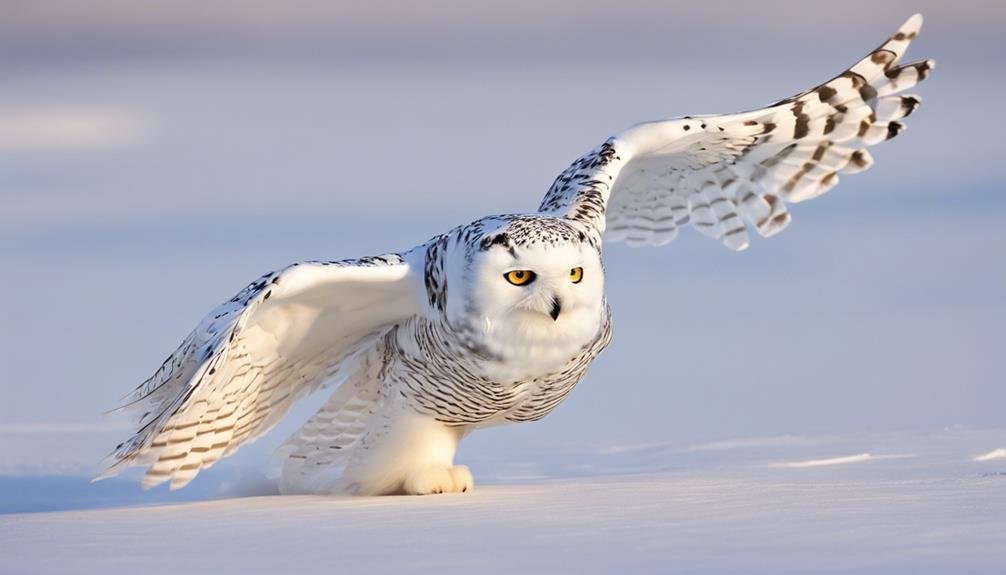
The Arctic is a realm of stark contrasts—a frozen expanse where the sun either blazes or vanishes for months, where life clings to the edge of survival with tenacious grace. Here, the snowy owl, a ghostly sentinel of the tundra, shares the sky with a kaleidoscope of migratory birds, each vying for the same fragile sustenance. As the Arctic warms, this delicate balance frays, unraveling into a fierce competition for food that tests the very resilience of its inhabitants. The story of snowy owls and migratory birds is not merely one of survival—it is a testament to the raw, unyielding spirit of life in the face of adversity, a dance of predator and prey where every meal is a hard-won victory.
The Arctic’s Shifting Canvas: A Stage for Survival
The Arctic is a land of extremes, where the rhythm of life is dictated by the mercurial moods of the climate. For centuries, the snowy owl has ruled these frozen plains, its piercing yellow eyes scanning the horizon for lemmings—their primary prey. But as temperatures rise, the tundra’s once-reliable bounty dwindles, forcing both owls and migratory birds into a relentless scramble for sustenance. The Arctic is no longer a static battleground; it is a canvas in flux, its hues of white and gray bleeding into the warmer tones of a changing world.
Migratory birds, drawn by the promise of endless summer daylight, arrive in droves, their arrival timed to the brief explosion of life on the tundra. Yet, this synchrony is now disrupted. The early thaw tricks plants into blooming prematurely, only for frost to return and wither them. Insects, once plentiful, retreat into the soil or perish. The lemmings, the linchpin of the Arctic food web, become scarce. The snowy owl, once a stoic monarch, must now adapt or perish. The stage is set for a drama where every actor is both hunter and hunted, where the rules of engagement are rewritten with each passing season.
The Snowy Owl: A Phantom of the Frozen Wastes
Few creatures embody the Arctic’s mystique as the snowy owl does. Cloaked in feathers as white as the winter’s first snowfall, it moves with eerie silence, a phantom gliding over the tundra. Unlike other owls, it is diurnal, its golden gaze piercing the endless daylight of the Arctic summer. But this regal hunter is not invincible. As the lemming populations crash, the owl’s once-reliable hunting grounds become barren. Starvation looms, and the owls, forced to diversify their diet, turn to migratory birds—robins, sandpipers, even other owls.
This shift is not without consequence. Migratory birds, though smaller, are swift and agile, their flocks a whirlwind of feathers and fury. The owl’s traditional dominance is challenged, its hunting grounds contested. Yet, the owl’s resilience is undeniable. It learns to ambush from hidden perches, to exploit the chaos of migration when exhausted birds falter. The Arctic’s most iconic predator is now a scavenger, a thief in the night, its survival a testament to the adaptability of life in the face of annihilation.
The Migratory Birds: A Kaleidoscope of Desperation
For migratory birds, the Arctic is both a sanctuary and a gauntlet. Each spring, they embark on epic journeys—some flying thousands of miles—only to arrive at a land that may no longer sustain them. The sandpiper, with its delicate legs, probes the thawing earth for insects that may no longer exist. The redpoll, a tiny ball of feathers, flits between shrubs in search of seeds that have yet to ripen. The Arctic tern, a globe-trotter of the skies, dives for fish in waters that are increasingly ice-free, their prey scattered and elusive.
The competition is fierce. Birds that once coexisted now find themselves in direct conflict. The snowy owl, once a distant specter, is now a looming threat. Mothers with chicks to feed must weigh the risks of foraging in open terrain against the ever-present danger of talons. Some species, like the Lapland longspur, have adapted by nesting in denser vegetation, trading safety for scarcity. Others, like the snow bunting, have altered their migration routes, seeking out new territories where food is more abundant. The Arctic’s migratory birds are not just survivors—they are pioneers, navigating a world that is no longer familiar.
The Unseen Battles: Competition Beneath the Surface
The struggle for food in the Arctic is not always a dramatic clash of predator and prey. Often, it is a silent war waged in the underbrush, in the frozen cracks of the earth, in the fleeting moments between dawn and dusk. Lemmings, though scarce, are still hunted by owls, but they are also preyed upon by foxes, weasels, and even larger birds. The migratory birds, in turn, compete with one another for the few remaining insects, seeds, and berries. The tundra, once a land of abundance, is now a patchwork of scarcity.
This competition extends beyond the visible. The Arctic’s soil, rich with nutrients from centuries of decaying plant matter, is now thawing at unprecedented rates. Microbes awaken, breaking down organic matter at a frenzied pace, depleting the soil of nitrogen before plants can absorb it. The result? A landscape where even the hardiest of plants struggle to grow. The migratory birds that rely on these plants for food find themselves in a double bind—starving on a land that no longer offers sustenance. The snowy owl, too, feels the ripple effects, as the entire food web unravels beneath its talons.
The Human Shadow: A Looming Threat
Beneath the ecological drama unfolding in the Arctic lies another, more insidious competition—one between nature and humanity. As the ice melts, new shipping routes open, and industrial interests descend upon the tundra. Oil drilling, mining, and shipping lanes carve through the fragile landscape, disrupting habitats and poisoning the land. The migratory birds, already struggling to find food, now face the added threat of habitat destruction. The snowy owl, though more adaptable, finds its hunting grounds fragmented, its solitude shattered by the roar of machinery.
This human encroachment is not just a physical barrier—it is a psychological one. The Arctic, once a realm untouched by human hands, is now a battleground for resources. The competition for food in the natural world is mirrored in the greed of industries that see the Arctic as little more than a treasure trove to exploit. The snowy owl and migratory birds are not just fighting for survival; they are fighting against an enemy that does not understand the language of the wild.
The Resilience of Life: A Beacon in the Dark
Yet, for all the challenges they face, the snowy owl and migratory birds endure. Their struggle is a reminder that life, in all its forms, is tenacious. The owl, with its keen eyes and adaptable nature, finds new hunting grounds. The migratory birds, with their relentless journeys, discover unexpected oases in the tundra. Even the lemmings, though diminished, persist in the cracks of the earth, their populations fluctuating with the seasons.
This resilience is not just a biological marvel—it is a call to action. The Arctic’s changing climate is a warning, a sign of the fragility of our planet. The competition for food among its inhabitants is a mirror held up to humanity, reflecting the consequences of our actions. If we do not act, the Arctic’s silent battles will become a chorus of extinction. But if we listen, if we learn, we may yet find a way to restore balance—to ensure that the snowy owl’s golden gaze continues to pierce the Arctic’s endless daylight, and that the migratory birds’ songs still echo across the tundra.