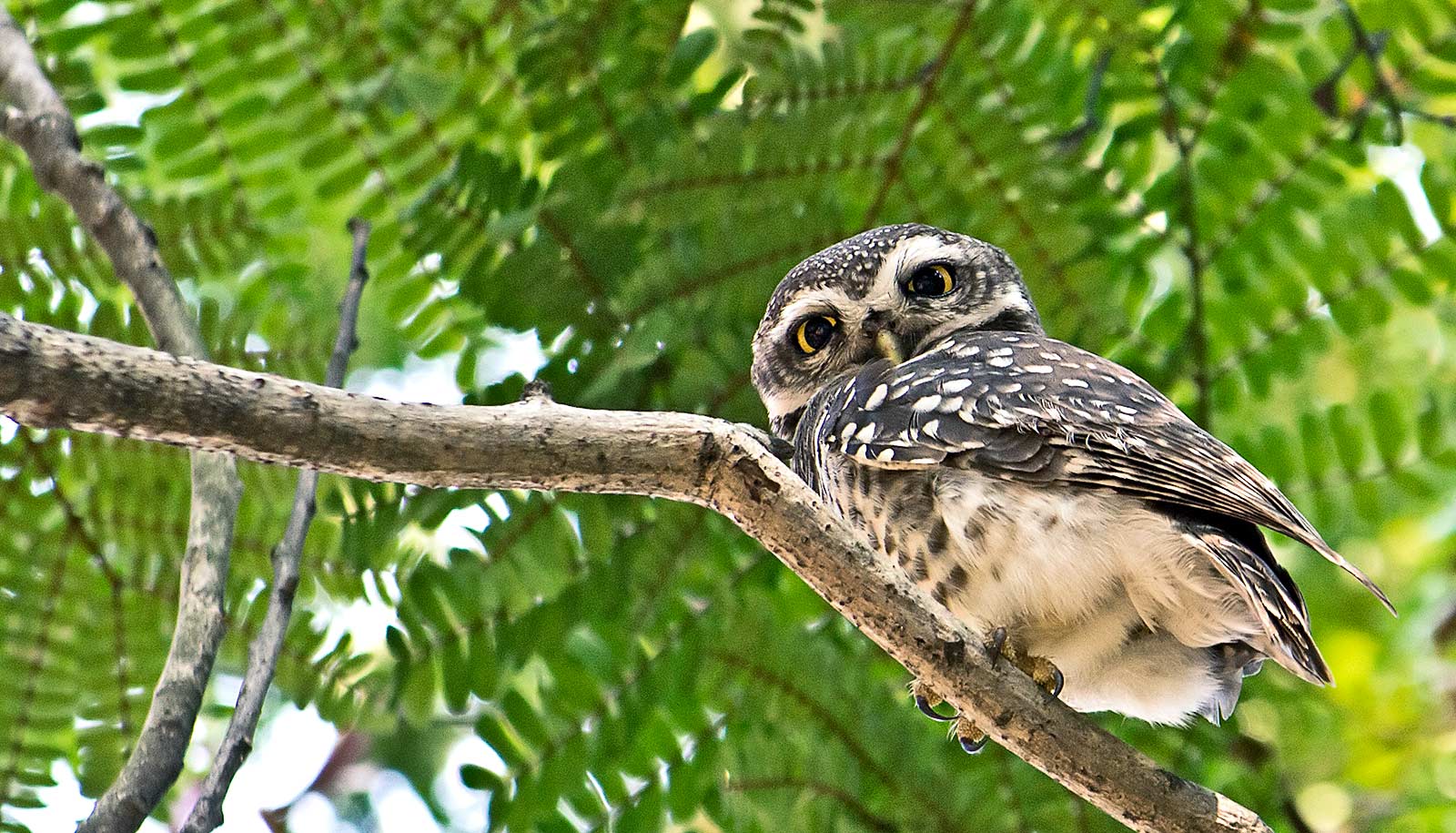
There is something undeniably captivating about the elusive presence of the spotted owl, a creature whose stoic gaze and ghostly flight have long stirred human fascination. Observers frequently note the quiet elegance with which these owls navigate forest realms that are in flux—thickets of pine and fir bowing to shifting climates, growing wildfires, and human encroachments. Yet, beyond the surface lies a story not just of survival but of unexpected adaptability. How have these creatures, symbols of old-growth forest vitality, begun to rewrite their own existence in the face of relentless environmental change? Their evolving behaviors and habitat choices invite us into a nuanced tableau of resilience, one that reshapes our understanding of nature’s capacity for endurance.
Shifting Habitat Utilization in Fragmented Forests
One of the most salient observations concerning spotted owls today is their altered patterns of habitat use. Traditional wisdom posited that these birds were near-exclusively tied to dense, old-growth forests, their existence woven tightly into the towering canopies and multilayered vegetation that characterize such ecosystems. However, as logging, wildfire, and climate-induced forest degradation have fragmented these landscapes, spotted owls have exhibited remarkable plasticity.
Rather than resigning to vanishing sanctuaries, many individuals are increasingly detected within mixed-age stands and younger forest patches, areas previously thought unsuitable. This shift suggests a calculated response to environmental pressures—a strategic expansion of their ecological niche. By utilizing a more heterogeneous mosaic of habitat types, spotted owls enhance their foraging opportunities and nesting prospects. Such adaptability hints at a flexible cognitive map of the forest, one informed by the nuanced demands of survival rather than rigid instinct alone.
Dietary Diversification as a Survival Mechanism
Coupled with habitat shifts is the spotted owl’s adaptive diet. Historically, their menu favored flying squirrels and woodrats—prey species abundant in mature forests. But as their fabled domains shrink and prey availability fluctuates, spotted owls have displayed an impressive dietary plasticity.
Recent studies chronicle an expanded palate encompassing smaller birds, amphibians, and even insects in times of scarcity. This diversification is far from a mere fallback; it appears to be an active foraging adaptation, a means of maintaining caloric intake and reproductive viability amid changing prey communities. Such opportunism not only challenges prior conceptions of the species as dietary specialists but underscores a profound behavioral elasticity that fuels their persistence.
Behavioral Adaptations: A Dance with Predation and Competition
The changing forest canvas also redraws the competitive and predatory dynamic that spotted owls must navigate. Notably, the encroachment of barred owls—larger, more aggressive relatives—into traditional spotted owl territories has introduced a novel interspecific rivalry. Observers have noted subtle yet significant behavioral shifts as spotted owls adjust their daily rhythms and territorial behaviors to avoid confrontations.
Some individuals shift to more nocturnal activity patterns, taking care to minimize overlap with the omnipresent barred owls. Others modify their vocalizations, employing quieter or altered calls to communicate without attracting unwanted attention. These behaviors are complex adaptations born from an evolutionary arms race, where survival necessitates both stealth and flexibility. The subtlety of such adjustments draws us deeper into the intricate ballet of coexistence in a forest under siege.
Reproductive Strategies in a Volatile Environment
The uncertainty of forest conditions also impinges on the reproductive biology of the spotted owl, compelling changes in nesting behavior and timing. Traditionally, nests were secured in large, old-growth trees high above the forest floor, offering safety and stable microclimates. But as these sanctuaries dwindle, some owls have taken to alternative nesting sites, including smaller trees or even artificial platforms introduced by conservation efforts.
Furthermore, breeding timing appears increasingly responsive to environmental cues such as temperature fluctuations and prey availability. This phenological adjustment ensures that fledglings hatch in synchrony with optimal resource abundance, a critical determinant of survival. Such temporal fine-tuning showcases the owl’s capacity for ecological attunement, where reproductive success hinges on an intimate dialogue with the shifting rhythms of the forest.
Role of Conservation and Human Intervention
Human agency paradoxically both threatens and bolsters the spotted owl’s adaptability. While habitat fragmentation and climate change jeopardize their existence, targeted conservation efforts provide critical lifelines. Habitat restoration initiatives that promote mixed-age forest mosaics, as well as the installation of nesting platforms, exemplify proactive strategies that recognize and support the owl’s evolving ecological needs.
Moreover, research programs employing radio telemetry and bioacoustic monitoring offer unprecedented insights into their behavioral ecology, enabling adaptive management that respects the owl’s newfound flexibility. Through these collaborative efforts, we witness a hopeful synergy—where the owl’s natural resilience is echoed and amplified by thoughtful stewardship, fostering an environment where adaptation may flourish rather than falter.
Reflections on the Fascination: Beyond Survival
The spotted owl’s journey is more than an ecological anecdote; it is a living narrative of transformation amidst adversity. The widespread observation of their seeming tenacity captivates not just because of survival itself but owing to the layered complexity of their responses. Each behavioral shift, dietary expansion, and reproductive tweak embodies a story of connection—between predator and prey, past and present habitats, and ultimately, nature and humanity.
Within the spotted owl’s adaptive strategies lies an invitation for us to reconsider how resilience manifests in the natural world. It challenges the notion of static species, unchanging in their ways, and instead reveals creatures who are active participants in shaping their destinies. This deeper reason for fascination is a potent reminder: adaptation is an ongoing, dynamic process, full of subtlety and spirit, echoing the profound interdependencies that bind life within the forest’s ever-changing tapestry.