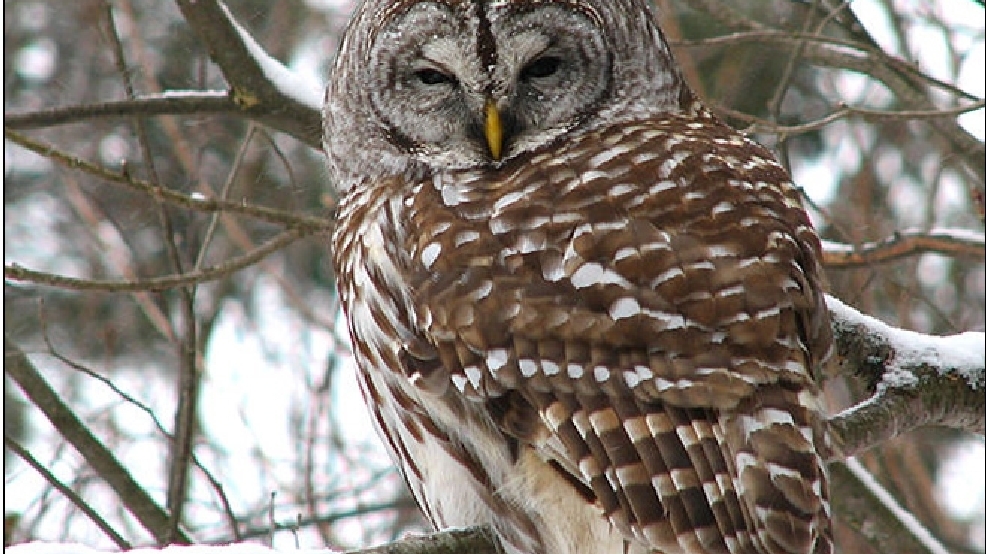
Deep within the lush canopies and mist-laden valleys of the Pacific Northwest, a subtle yet profound transformation is quietly unfolding. The barred owl, with its unmistakable hoot and mottled plumage, has become an enigmatic force reshaping the intricate web of life in these ancient forests. Far from merely being a charming avian presence, this species heralds a complex ecological upheaval that challenges long-held perceptions about coexistence, biodiversity, and the stewardship of wilderness. As their influence stretches across the region’s temperate rainforests, barred owls silently alter the environmental narrative, inviting us to reconsider the very balance of these majestic ecosystems.
The Arrival and Expansion of Barred Owls in the Pacific Northwest
Originally native to the eastern United States, barred owls (Strix varia) have gradually expanded their range westward over the past century, driven by environmental changes and a remarkable adaptability. Their migration into the Pacific Northwest was, at first, a subtle colonization—barely noticed against the backdrop of vast old-growth forests. But it was no accidental wandering. The barred owl’s ability to thrive in a variety of habitats, coupled with its opportunistic hunting strategies, allowed it to carve out a niche alongside native species.
This expansion has not occurred in isolation. The owls’ arrival triggers a cascade of ecological consequences that ripple through the forest community, influencing predator-prey dynamics and altering the distribution of other avian species. Their burgeoning population challenges our assumptions about invasive species and natural range shifts, calling to question what it truly means to ‘belong’ in a given landscape.
Ecological Interference: Competition with the Northern Spotted Owl
Perhaps the most contentious ecological impact of barred owls is their rivalry with the iconic northern spotted owl—a species long considered a symbol of Pacific Northwest conservation efforts. The barred owl’s encroachment introduces a formidable competitor into the northern spotted owl’s domain. More aggressive and more versatile, barred owls outcompete their spottier cousins for prime hunting territories and nesting sites.
Unlike the northern spotted owl, which predominantly hunts small mammals and inhabits specialized niches, barred owls possess a broader diet and greater adaptability. This allows them to exploit a wider range of prey and thrive in habitats altered by logging and forest management. Consequently, barred owls often displace northern spotted owls, contributing to the latter’s dwindling numbers.
This predator-supremacy dynamic is not merely a local skirmish but a dramatic struggle that jeopardizes biodiversity and challenges wildlife management paradigms. It forces a reevaluation of the strategies employed to protect endangered species and maintain ecosystem equilibrium.
Transforming Predation Patterns and Their Cascading Effects
Barred owls are formidable nocturnal predators. Their presence shifts the predation landscape in subtle yet significant ways. By preying on a diverse assembly of small mammals, birds, and amphibians, barred owls affect population dynamics throughout various trophic levels. This ripple effect can reshape the abundance and behavior of prey species, which in turn influences vegetation patterns and forest regeneration.
For instance, increased predation on certain rodents may alleviate pressure on tree seedlings, altering forest composition over time. Yet, by suppressing specific bird populations, barred owls may inadvertently reduce seed dispersal and pollination, potentially hindering ecological renewal. These nuanced interactions illustrate the profound, often unpredictable, consequences of a single species’ range expansion on forest ecology.
Barred Owls as Agents of Ecosystem Change: A Paradigm Shift
The presence of barred owls prompts a profound reassessment of our relationship with nature. Their expansion tests the boundaries of native versus invasive, illustrating that species are dynamic components of ecosystems, shaped by and shaping their environments in constant flux. Barred owls embody the unpredictability inherent in natural systems—a reminder that ecological processes are rarely linear or straightforward.
Rather than labeling barred owls as villains or victims, their role should be seen as a catalyst for ecosystem transformation. This perspective invites curiosity about the broader implications of species redistribution worldwide, especially in the context of climate change and habitat fragmentation. Understanding these owls’ ecological functions and interactions unlocks new avenues for research and management, fostering adaptive conservation strategies that embrace complexity and uncertainty.
The Conservation and Management Conundrum
Balancing the protection of the northern spotted owl with the burgeoning barred owl population presents an ethically and scientifically fraught dilemma. Wildlife managers grapple with decisions that pit one species’ survival against another’s. Methods such as selective removal of barred owls have been proposed or implemented, stirring controversy about human intervention in natural processes.
Such interventions raise deeper questions about the limits of conservation ethics and the intrinsic value of all species. Should barred owls be controlled because they threaten another species? Or does their presence signify a natural evolution of ecological communities in response to environmental change? These questions underscore the ambiguities faced by those charged with stewarding the Pacific Northwest’s forests, where every action harbors unintended consequences.
Looking Forward: Embracing Complexity in Forest Ecosystems
The saga of barred owls in the Pacific Northwest is a living testament to the mutable nature of wilderness. It challenges static notions of ecosystems as balanced or pristine, instead portraying them as ever-shifting mosaics influenced by myriad internal and external forces. This evolving story beckons scientists, policymakers, and the public alike to embrace a more nuanced understanding of ecological resilience and adaptation.
In embracing this complexity, there lies hope—for more sophisticated management approaches that integrate ecological, ethical, and social dimensions; for a rekindled sense of wonder about the interconnectedness of species; and for a renewed commitment to preserving the delicate beauty and biological richness of the region. The barred owl is not merely a forest dweller; it is an ecological harbinger, reshaping the Pacific Northwest’s narrative and reminding us of the perpetual dynamism at the heart of nature.