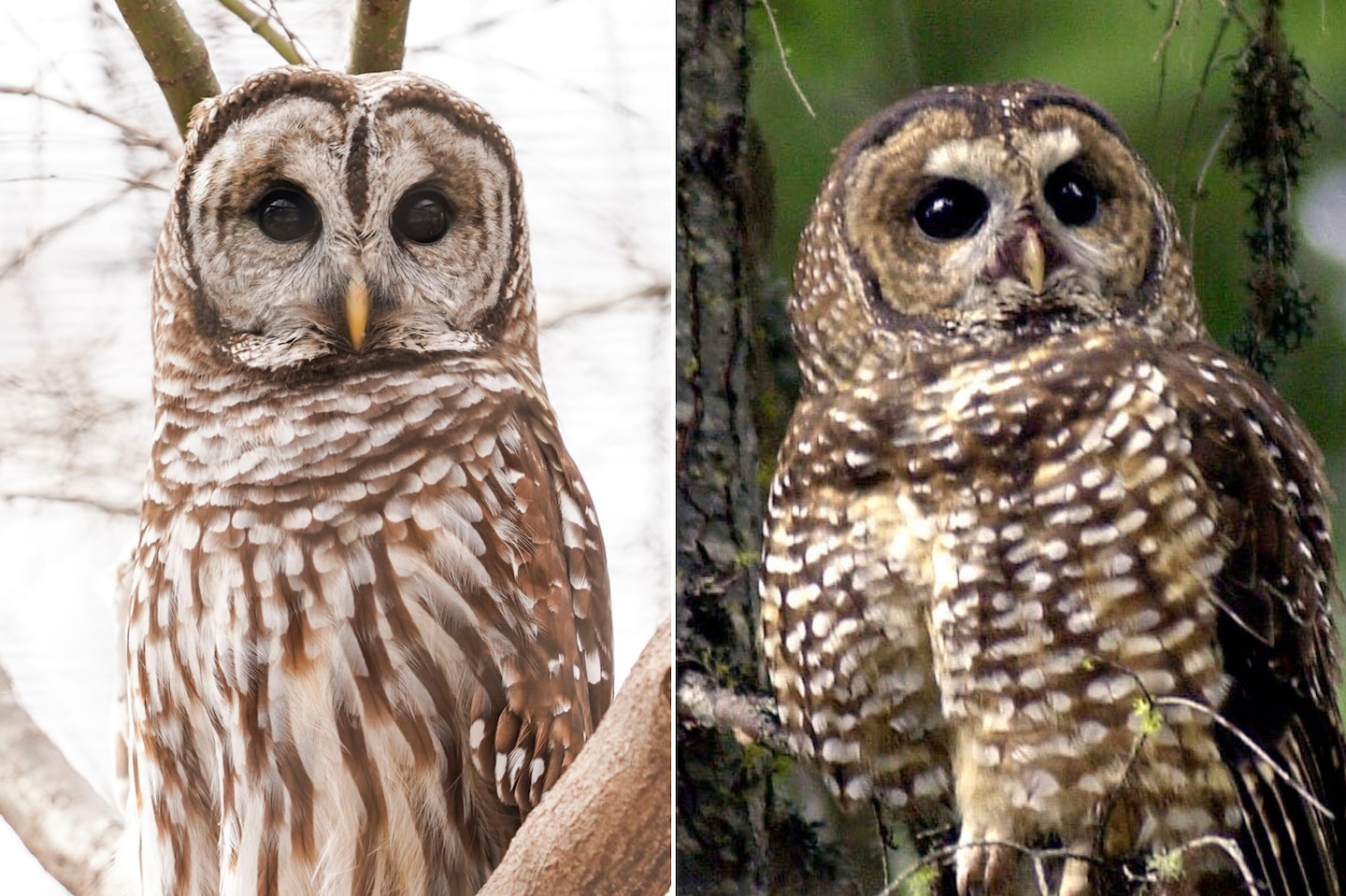
In the twilight world of mythology, owls have always held a place of enigmatic significance. They are creatures of the night, guardians of the unseen, and symbols layered with rich, contrasting meanings. Among these nocturnal birds, the barred owl and the spotted owl stand out not merely as distinct species but as potent symbols whose stories weave through diverse cultures and ancient lore. Through their symbolic contrast, these owls invite a profound reconsideration of how darkness, wisdom, and transformation are perceived across mythological narratives. This exploration promises to shift the conventional perspective on these creatures, sparking curiosity about the ways nature’s subtle nuances echo through human belief systems.
The Barred Owl: A Symbol of Vigilance and the Unknown
The barred owl, with its striking horizontal stripes across its chest and haunting, melodic hoots, has long been emblematic of watchfulness and mysterious knowledge. In many North American indigenous traditions, this owl’s presence signals deep insight and an alertness beyond human comprehension. It is often considered a sentinel of the night, a guardian that watches over the boundary between the known world and the hidden recesses of mystery.
Unlike some owls associated solely with wisdom, the barred owl’s symbolism frequently intertwines with the unknown and even portentous omens. It embodies a duality—representing both protection and an eerie forewarning. This paradox invites a layered interpretation: the barred owl is not simply a sage figure but also an emissary of the liminal, stirring unease while urging vigilance.
Its hooting calls are emblematic of communication from the shadowed realms, acting as a bridge between the conscious and subconscious worlds. To hear the barred owl’s call at dusk or dawn is often perceived as a summons to pay attention to hidden truths or upcoming change. This makes the barred owl a compelling figure in mythology, where it frequently appears as a harbinger, a creature whose presence challenges humanity to confront what lies beyond safety and certainty.
The Spotted Owl: Emblem of Delicacy, Balance, and Spiritual Guardianship
In stark contrast, the spotted owl’s symbolism often revolves around vulnerability and environmental harmony. Known for its speckled plumage and preference for ancient old-growth forests, the spotted owl is frequently revered as a guardian of the natural world’s fragile balance. In mythological contexts, it is a gentle yet potent emblem of protection, embodying the sacredness of place and the intricate interdependence of life forms.
The spotted owl’s rarity and specific habitat requirements inject its mythic image with themes of conservation and renewal. It symbolizes not just the physical wilderness but the spiritual wilderness—a pristine, untouched realm where purity and mystery coexist. Often, this owl appears in stories as a protector spirit, encouraging respect for the environment and emphasizing the consequences of human hubris.
Its symbolism extends to notions of patience and quiet strength. The spotted owl teaches that true power often lies beneath the surface, manifesting not in loud declarations but in subtle endurance and resilience. Through these interpretations, the spotted owl transforms from a mere creature of the woods into a mythological beacon urging stewardship and reverence for the sacred natural order.
Contrasting Mythological Narratives: Shadows and Light, Warning and Protection
When viewed side by side, the mythologies surrounding barred and spotted owls reveal a fascinating dialectic—one that elucidates varied human responses to the unknown and the natural world. The barred owl, associated with vigilance and ominous signals, represents a shadowy, cautionary force. The spotted owl, conversely, embodies a nurturing, protective presence devoted to safeguarding the delicate balance of existence.
This dichotomy mirrors broader human tensions: the struggle between fear and hope, between domination and harmony, and between acknowledgment of inevitable darkness and the aspiration towards preservation. In many stories, the barred owl’s role is to disrupt complacency, challenging characters to confront harsh realities and awakening latent fears. Meanwhile, the spotted owl offers a counterbalance, a promise of gentle guardianship and the possibility of coexistence.
Such contrasting symbolism invites reflection on humanity’s intricate relationship with nature. It underscores how different cultures interpret the same natural elements through varied lenses, each emphasizing distinct spiritual lessons. The barred and spotted owls, therefore, function not only as mythic icons but as mirrors reflecting the complex dualities of human existence.
Owls in Universal Mythological Contexts: Beyond Species, Beyond Borders
Beyond the nuanced interplay between barred and spotted owls, owls as a broader category occupy a unique niche in global mythology. From the Greek goddess Athena’s emblematic owl symbolizing wisdom and strategic warfare to the Aztec associations of owls with death and the afterlife, these creatures often bridge worlds—between life and death, ignorance and clarity, the mundane and the divine.
The barred and spotted owls contribute to these universal themes by offering more refined archetypes within the owl symbolism continuum. The barred owl’s often ominous role aligns with the archetype of the night’s whisperer, the bearer of difficult truths. The spotted owl, meanwhile, may be seen as a subtle embodiment of life’s protective spirits, spiritual caretakers embedded deep within ecosystems both physical and metaphysical.
In embracing these distinct narratives, mythology enhances its capacity to speak across cultural frontiers, demonstrating how nature’s own diversity enriches human storytelling. Such multiplicity in meaning provokes curiosity, encouraging a deeper engagement with the natural world as an ongoing source of metaphor and revelation.
Shifting Perspectives: The Owl as a Symbol of Complexity and Connection
Ultimately, exploring the barred and spotted owls in mythological terms challenges simplified perceptions of these creatures. They are not merely harbingers of wisdom or omens of death—they are vibrant symbols embodying complex interrelations between humanity, nature, and the intangible forces shaping life.
Recognizing the barred owl’s chilling vigilance alongside the spotted owl’s fragile protection allows a richer understanding of how myth encodes ecological and spiritual knowledge. It provokes a reconsideration of fear and reverence, signaling that darkness and light often coexist within the same symbol. This duality invites a more nuanced engagement with the environment and with the symbolic world around us.
In the quiet flight of the barred owl and the shadowed glimmer of the spotted owl, there lies an invitation: to listen attentively, to see beyond immediate appearances, and to embrace the contradictions inherent in the natural and symbolic realms. This promises not only a shift in perspective but also a rekindling of curiosity—an urge to delve deeper into the mythical fabric that defines human understanding of the enigmatic world we inhabit.