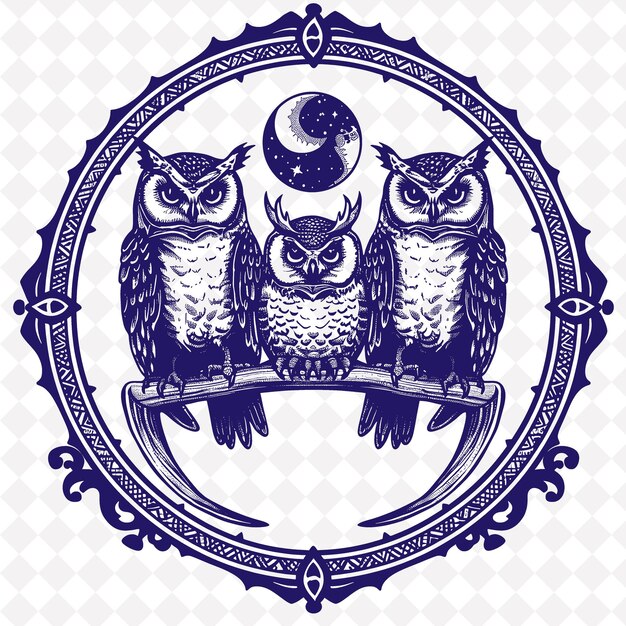
In the shadowed alcoves of human imagination, the owl emerges not merely as a creature of the night but as a potent symbol crawling with layers of meaning. Across centuries and cultures, owls have silently perched within the tapestry of literature, embodying mysteries that captivate, provoke, and inspire. Their emblematic presence transcends simple storytelling, weaving a rich narrative web that dances between wisdom and enigma. Exploring the role of owls in literature is akin to unraveling a labyrinth where metaphors flutter in twilight—ever elusive and endlessly intriguing.
The Owl as an Emblem of Wisdom and Knowledge
It is perhaps the most ubiquitous association—owls as paragons of wisdom. This metaphor, deeply entrenched in Western literary tradition, has its roots in antiquity where the owl was consecrated to Athena, the goddess of wisdom. In literature, the owl frequently emerges as a venerated sage, a guardian of secret knowledge whose silent vigilance watches over the unfolding of truth. Whether in ancient myths or modern novels, this archetype conveys not just intelligence but the kind of sagacity that pierces through deceit and ignorance.
Yet, this wisdom is never straightforward. The owl’s ability to see in darkness becomes a metaphor for insight beyond the visible, suggesting knowledge that resonates with intuition, the subconscious, and the hidden layers of reality. Literature often casts the owl as a quiet counselor or a cryptic herald, inviting the reader to peer deeper beneath surface appearances. This metaphor appeals uniquely because it invokes the haunting beauty of clarity amidst obscurity, a quality both noble and ineffable.
Symbols of Mystery and the Supernatural
Beyond wisdom, owls embody an aura of the mystical, straddling the borderlands of the natural and supernatural. In darker literary realms, they often symbolize omens, death, or the unseen forces at work in the universe. Their nocturnal existence, ghostlike flight, and haunting calls render them perfect totems of the unknown. Writers have long exploited this eerie appeal, allowing owls to function as spectral witnesses to events that ripple beyond the mortal plane.
In gothic and horror narratives, the owl’s cry can suggest an impending doom or a spiritual unrest, creating an atmosphere thick with suspense and foreboding. Intriguingly, this dual identity—wise yet ominous—adds to the metaphorical complexity of the owl. It embodies the paradox of knowledge that is both illuminating and unsettling, tethering the reader’s aesthetic appreciation with a primordial fear of the hidden. Literature exploits this tension to evoke deep emotional resonance and enrich storytelling.
Owls in Folklore and Cultural Storytelling Traditions
The owl’s symbolic resonance is not monolithic but variegated across cultures. Indigenous and folk narratives often attribute to owls qualities that range from protective spirits to harbingers of misfortune. This diverse palette of meanings infuses literary portrayals with cultural depth, allowing the owl to function as a versatile metaphor that can signal caution, reverence, or transformation.
For instance, in Native American lore, owls sometimes represent guardianship and prophecy, while in other traditions they are linked to witchcraft or death. These multifaceted characterizations enrich literary works by drawing on a mosaic of cultural symbolisms, expanding the owl’s narrative utility. Writers harness these archetypes to explore themes of identity, mortality, and the tension between known and unknown worlds, imbuing their stories with a potent intertextual vibrancy.
The Owl as a Narrative Catalyst in Modern Literature
In contemporary storytelling, owls have transcended their allegorical roots to become dynamic agents within the plot. Far from passive symbols, they are often imbued with character-like qualities, acting as messengers, guides, or even companions. This narrative evolution reflects a modern fascination with nature as a participant in human experience rather than a mere backdrop.
Consider how literary owls can function as thresholds between mundane reality and the magical, inviting protagonists—and readers alike—on journeys of discovery and transformation. Their silent flight and unobtrusive presence highlight themes of observation, stealth, and revelation. The owl becomes an enigma within the story’s fabric, an emblem of the unknown that refuses easy deciphering, compelling characters to confront mysteries both external and internal.
The Unique Appeal of Owls in Metaphorical Storytelling
The distinctive allure of the owl as a literary symbol is its inherent dualism—a creature simultaneously approachable and impenetrable. This duality sparks an imaginative tension that writers exploit to craft rich metaphors capable of conveying complexity with elegance. The owl’s embodiment of light and darkness, knowledge and secrecy, life and death renders it an endlessly supple figure in storytelling.
This unique appeal lies in its capacity to stir our fascination with the liminal spaces—those thresholds where understanding teeters on the brink of oblivion. The owl’s nocturnal vigilance and uncanny presence whisper of hidden truths and the eternal human quest to unveil them. In literature, this positions the owl not just as a symbol, but as a metaphorical compass guiding us through the labyrinth of the human condition.
Such metaphors emerge in myriad forms—from subtle prose nuances to vivid narrative imagery—each invoking the owl’s mystique to enrich theme and mood. The metaphorical potency of the owl invites readers to partake in a layered dialogue, one that transcends the literal and touches the sublime. This renders the owl an irreplaceable figure within the realm of literary symbolism, eternally perched at the intersection of light and shadow.