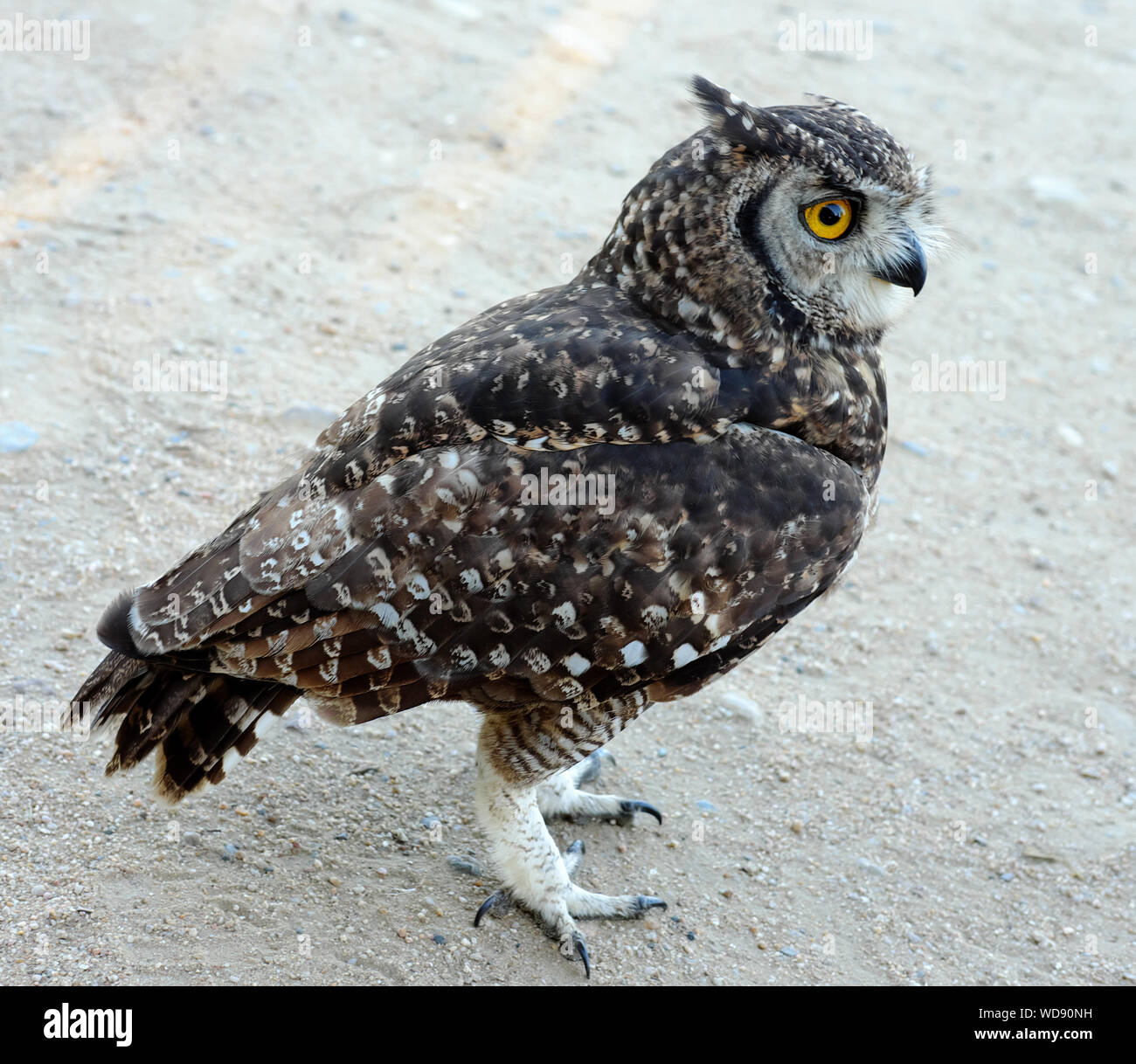
Imagine if a tiny resin model could become the catalyst for wildlife survival — could 3D printing be the alchemist’s tool turning technology into hope? In the intricate journey of rehabilitating the elusive Spotted Eagle Owl, innovative methods are constantly sought to overcome the formidable challenges these creatures face. As majestic birds of the night, their plight in injury recovery calls for delicate attention and cutting-edge ingenuity. But what if the future of their rehabilitation hinges not just on skilled caretakers, but also on sleek, custom-made 3D printed solutions designed to restore, support, and rejuvenate?
The Challenges of Spotted Eagle Owl Rehabilitation
The Spotted Eagle Owl is no ordinary raptor. Its nocturnal habits, silent flight, and keen senses place it at the crossroads of survival and vulnerability. Injuries caused by collisions, poaching, habitat destruction, and encounters with man-made structures pose grave threats—complications that demand multifaceted care. Traditional rehabilitation techniques often fall short due to the owl’s intricate anatomy and unique behavioral patterns. Splints and supports that work for other birds might not accommodate the Spotted Eagle Owl’s delicate bone structure or feather dynamics, making the process painstaking and protracted.
Moreover, owls are incredibly sensitive to stress and human handling, which can exacerbate recovery timelines or lead to permanent behavioral changes. This necessitates not only precise medical intervention but also minimal physical intrusion. How can rehabilitation specialists provide tailored solutions that are both effective and minimally invasive? Enter 3D printing—a technology that promises to revolutionize wildlife care, one layer at a time.
Customization and Precision: Tailoring Treatments Through 3D Printing
One of 3D printing’s superpowers lies in its unparalleled ability to fabricate custom designs with micrometer precision. For injured Spotted Eagle Owls, this means splints, prosthetics, and supportive devices can be designed specifically to the exact dimensions of the affected limb or wing. Advanced scanning methods capture the owl’s anatomy in digital detail, producing models that allow for personalized intervention with astonishing accuracy.
This customization transcends mere comfort. It mitigates the risk of infection and tissue damage often associated with ill-fitting supports, accelerates bone healing by maintaining perfect alignment, and respects the owls’ natural range of movement. This degree of specificity is a quantum leap away from one-size-fits-all solutions. The seamless integration of bespoke 3D printed components reduces recovery discomfort and enhances the overall success rate of rehabilitation efforts.
Lightweight Materials: Reducing Burden During Recovery
Traditional medical aids can be cumbersome. For an owl delicately balanced between flight readiness and injury, extra weight spells disaster. 3D printing utilizes ultra-lightweight yet durable materials, such as specialized polymers and composite resins, which are key in designing rehabilitative devices that impose minimal additional stress.
The resulting prosthetics or splints are not only feather-light but designed with aerodynamics and ergonomics in mind. This ensures that the rehabilitated owls can begin to engage in natural behaviors—perching, preening, and even tentative flights—without hindrance. The symbiosis of strength and lightness built into these 3D printed components is integral to restoring the owl’s independence physically and psychologically.
Rapid Prototyping: Accelerating the Path to Healing
Time is often of the essence in wildlife rehabilitation. In the critical hours and days following injury, the ability to rapidly anticipate and supply the right devices can dramatically alter outcomes. 3D printing excels in rapid prototyping, compressing weeks or months of traditional manufacturing into mere hours or days. This agility allows caregivers to iterate numerous designs—testing and refining until the optimal fit and function are achieved.
Imagine a rehabilitation center where an injured Spotted Eagle Owl arrives in the morning, and by nightfall, a perfectly tailored wing support is ready to be fitted. This nimbleness not only speeds recovery but also reduces downtime in clinical settings, maximizes resource efficiency, and ultimately increases the number of owls that can be treated effectively.
Educational and Training Applications: Building Expertise Through Visualization
3D printing’s contribution extends beyond direct treatment. The ability to produce accurate physical models of Spotted Eagle Owl anatomy empowers veterinarians, rehabilitators, and students to engage in tactile learning and simulation. These models provide an intimate understanding of the owl’s skeletal and muscular structure, facilitating more precise diagnoses and innovative therapeutic approaches.
By handling these models, professionals can rehearse surgical procedures or design custom rehabilitation protocols without risking harm to live animals. This educational dimension represents an investment in knowledge and skill, fundamentally elevating the standard of wildlife care for these enigmatic birds.
Ethical and Environmental Benefits: Aligning Technology with Conservation
In a world increasingly conscious of environmental footprints, 3D printing supports ethical conservation efforts by minimizing waste and reducing the need for mass-produced medical devices that may not suit wildlife’s diverse needs. Materials used can be biodegradable or recyclable, and the on-demand nature sidesteps overproduction.
Additionally, by enabling more successful rehabilitations, 3D printing indirectly promotes the preservation of Spotted Eagle Owl populations, reducing dependence on wild captures or indiscriminate release of inadequately healed birds. This harmonizes technological advancement with ecological responsibility and stewardship.
Future Horizons: Integrating Bioengineering and Smart Technologies
Looking forward, the integration of smart materials and bioengineering with 3D printing heralds an exciting frontier. Responsive prosthetics that adapt to changing physiological conditions or imbued with sensors to monitor healing progress in real time could soon be within reach. Such innovations would provide caregivers with unprecedented insight and control, transforming rehabilitation into an interactive, data-driven process.
Could the next generation of 3D printed devices for Spotted Eagle Owls be living, self-healing structures inspired by nature itself? The possibilities are tantalizing and expand the narrative of wildlife care from reactive treatment to proactive, dynamic healing.
In the delicate art of returning the Spotted Eagle Owl to the skies, 3D printing emerges not merely as a tool, but as an enabler—an alchemy of technology and compassion forging new pathways for survival. What seemed like science fiction only a few years ago is now an integral part of a hopeful reality, where every printed layer is a step toward wings restored and wilderness reclaimed.