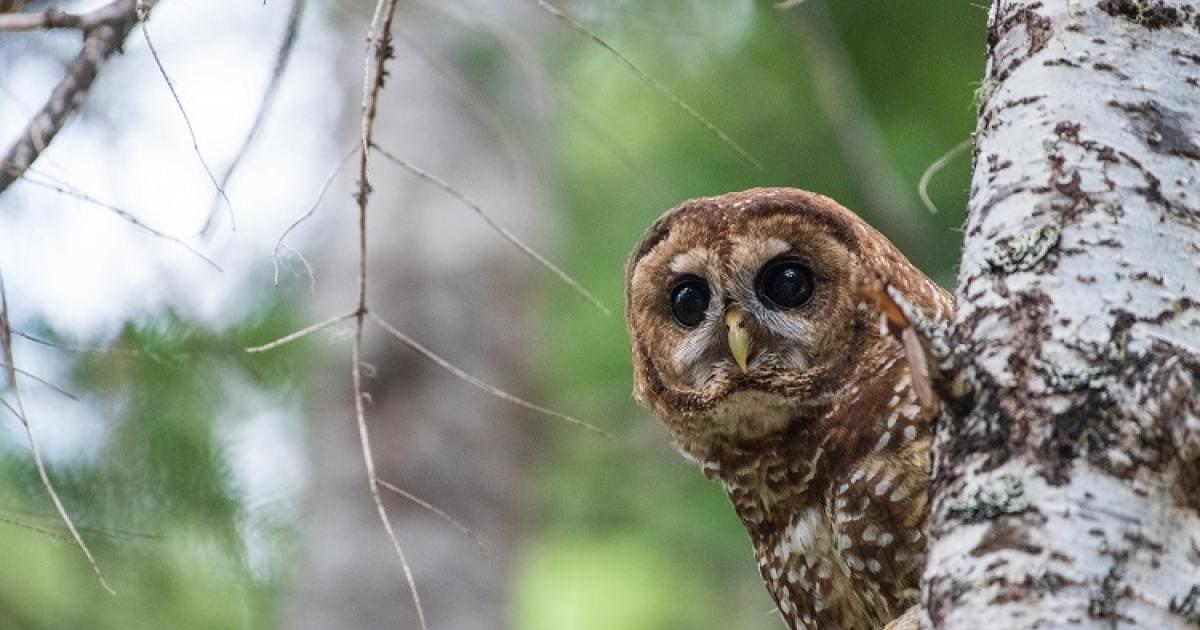
The barred owl, a creature of crepuscular whispers and piercing gaze, has become an unwelcome guest in the ancient forests of the Pacific Northwest. Once confined to the eastern woodlands, its relentless expansion westward has become a clarion call for conservationists, scientists, and policymakers alike. The Bureau of Land Management (BLM), tasked with stewarding these lands, has embarked on a bold and contentious journey to address this ecological upheaval. Their strategy is not merely a bureaucratic response—it is a delicate dance between preservation and intervention, a symphony of science and stewardship that seeks to restore balance to a landscape under siege.
The Barred Owl: A Relentless Invader in a Fragile Ecosystem
The barred owl (*Strix varia*), with its haunting hoots that echo through the mist-laden canyons, is a master of adaptation. Its expansion into the western United States is not a mere migration—it is an invasion, a silent takeover of territories that once belonged exclusively to the northern spotted owl (*Strix occidentalis caurina*). The latter, a relic of ancient forests, is now a species on the brink, its survival threatened by competition, habitat loss, and the unchecked proliferation of its eastern cousin.
Consider the irony: the barred owl, a bird of resilience and adaptability, has thrived in landscapes altered by human activity. Deforestation, urban sprawl, and climate change have fragmented its original habitat, pushing it ever westward. Yet, in its newfound domain, it has become an agent of displacement, outcompeting the spotted owl for food, nesting sites, and territory. The BLM’s challenge is not just to manage one species but to untangle the complex web of ecological relationships that bind them together.
The BLM’s Strategy: A Delicate Balancing Act
The Bureau of Land Management’s approach to barred owl management is a tapestry woven from threads of science, ethics, and pragmatism. At its core lies a recognition that inaction is not an option—yet intervention must be measured, precise, and rooted in evidence. The strategy is multifaceted: monitoring populations, conducting controlled removals, and restoring habitats to favor the spotted owl’s survival.
Controlled removals, though controversial, are a necessary evil in this ecological chess game. The BLM’s plan involves selectively culling barred owl populations in critical spotted owl habitats, a process that demands meticulous planning to avoid unintended consequences. Critics argue that such measures are akin to playing God with nature, but the alternative—watching the spotted owl fade into extinction—is a fate too grim to contemplate.
Restoration efforts, too, play a pivotal role. By revitalizing old-growth forests and ensuring sustainable forestry practices, the BLM aims to create refuges where the spotted owl can reclaim its rightful place. These efforts are not just about trees and terrain; they are about restoring the very rhythm of the forest, the ancient cadence of life that has sustained these species for millennia.
The Ethical Quandary: Conservation or Culling?
The BLM’s strategy forces us to confront a haunting question: Is it ethical to cull one species to save another? The barred owl, after all, is not inherently malicious—it is simply following the dictates of survival. Yet, in the grand theater of nature, survival often comes at a cost, and the cost here is the potential extinction of a native species.
This dilemma is not unique to the barred owl. It is a microcosm of the broader challenges facing conservationists worldwide, where the line between intervention and interference blurs with every decision. The BLM’s approach seeks to strike a balance, acknowledging that nature is not a static tableau but a dynamic, ever-shifting ecosystem. The goal is not to eradicate the barred owl but to manage its presence in a way that allows the spotted owl to coexist—or at least survive.
Ethics aside, the practical realities of this endeavor are staggering. The barred owl’s adaptability means it is not easily deterred. Its ability to thrive in fragmented landscapes and its resilience to human presence make it a formidable opponent. The BLM’s task is akin to trying to dam a river with one’s hands—it requires constant vigilance, adaptability, and a willingness to accept that some battles may never be fully won.
The Role of Science: Data as the Compass
At the heart of the BLM’s strategy lies a commitment to science—a commitment that transforms speculation into action and hunches into policy. Researchers have deployed an arsenal of tools to understand the barred owl’s behavior, its impact on the ecosystem, and the most effective ways to mitigate its expansion. From GPS tracking to acoustic monitoring, these efforts paint a vivid picture of a species in motion, its movements dictated by food availability, territorial disputes, and environmental pressures.
Yet, science is not a monolith. It is a living, breathing entity, constantly evolving as new data emerges. The BLM’s approach is iterative, adapting to new findings and refining its strategies in real time. This dynamic process is a testament to the complexity of ecological management, where every variable—from climate patterns to prey populations—can shift the balance of power.
The use of controlled removals, for instance, is not a haphazard decision but a data-driven one. Scientists analyze population densities, habitat use, and the barred owl’s reproductive success to determine where and when interventions are most necessary. It is a process that demands patience, precision, and an unwavering commitment to the long-term health of the ecosystem.
The Human Element: Communities in the Crossfire
Behind the scientific data and policy decisions lie the communities that call these forests home. For indigenous peoples, these lands are not just ecosystems but sacred spaces, repositories of cultural heritage and spiritual significance. For loggers, ranchers, and rural residents, the forests are a source of livelihood, a way of life that has sustained generations.
The BLM’s strategy must navigate this delicate human landscape, balancing the needs of conservation with the realities of those who depend on the land. Public engagement is not an afterthought—it is a cornerstone of the approach. Workshops, consultations, and educational initiatives aim to foster understanding, to bridge the gap between science and society, and to ensure that the voices of those most affected by these decisions are heard.
Yet, even with the best intentions, conflicts arise. Some view the BLM’s actions as an overreach, an infringement on their rights and traditions. Others see it as a necessary step to preserve the land for future generations. The challenge is to find common ground, to craft policies that are not just scientifically sound but also socially just.
The Future: A Forest in Flux
The story of the barred owl’s expansion is far from over. It is a narrative that will unfold over decades, its chapters written by the hands of scientists, policymakers, and the natural world itself. The BLM’s strategy is not a silver bullet but a step in the right direction—a recognition that nature is not a static entity but a living, breathing system that demands our attention, our respect, and, when necessary, our intervention.
As we stand at the precipice of this ecological crossroads, we are reminded that conservation is not a sprint but a marathon. It requires endurance, adaptability, and a willingness to confront uncomfortable truths. The barred owl, with its piercing gaze and relentless spirit, is a symbol of the challenges we face—a reminder that nature is not a museum to be preserved but a garden to be tended, with care, with wisdom, and with an unyielding commitment to the future.