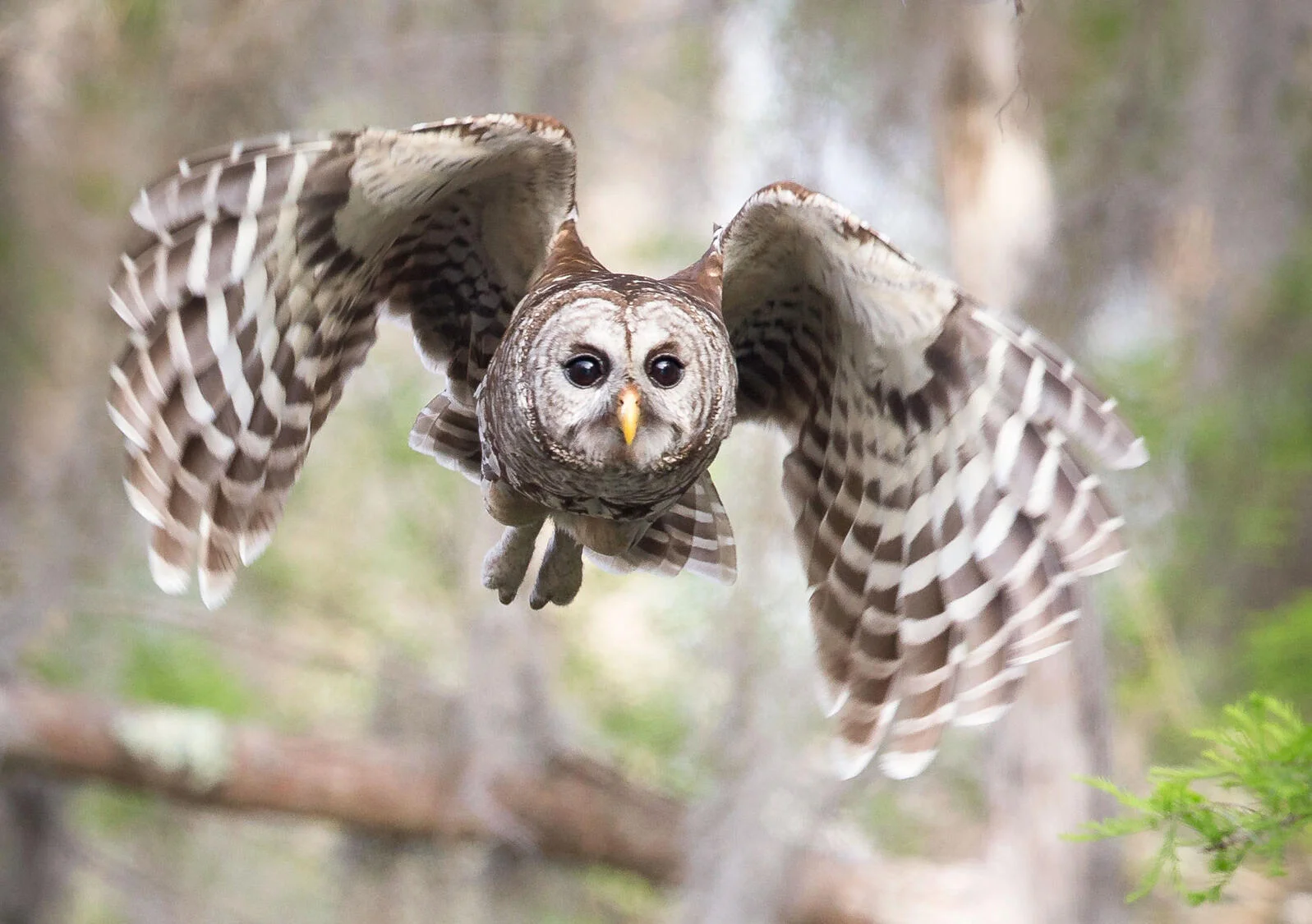
The barred owl, with its haunting call echoing through dense forests, is more than just a mysterious emblem of the night; it represents a complex force within the avian communities it inhabits. Traditionally celebrated for its enigmatic presence, this raptor has quietly reshaped the very dynamics of bird populations across its range. But what if the barred owl’s dominance carries consequences far beyond what the casual observer realizes? What if, hidden beneath the shadowy wingspan of this majestic bird, subtle and profound disruptions are unfolding — rippling through ecosystems and affecting other bird species in ways we are only beginning to comprehend?
The Barred Owl’s Expanding Dominion
The barred owl’s range has dramatically expanded over the past century, infiltrating territories once predominated by other owls, notably the northern spotted owl. This expansion is not merely a shift in geographical borders but a reconfiguration of avian hierarchies. Adaptable to various habitats, including mixed forests and suburban edges, barred owls possess an eclectic palate and versatile hunting techniques. Such ecological plasticity grants them an upper hand in interspecies competition. As their numbers swell, barred owls impose a formidable presence on native bird populations, challenging the balance that has been maintained for millennia.
Competitive Supremacy and Territorial Disputes
Barred owls assert an aggressive territorial behavior that significantly impinges on sympatric bird species. Their vocal duets and persistent presence often overshadow the calls of smaller owls and other cavity nesters. Unlike many birds whose territories ebb and flow seasonally, barred owls maintain consistent residency, aggressively defending nesting sites and hunting grounds. This zeal depletes available resources, forcing other birds into marginal habitats where survival and reproduction are precarious. The competitive exclusion principle unfolds before us, with barred owls monopolizing prime territories and compelling others into ecological corners.
Predation Patterns and Cascading Effects
Barred owls are opportunistic predators with a remarkable breadth of prey species: small mammals, amphibians, reptiles, and notably, other birds. Their predation on avian nestlings and fledglings is a critical and often overlooked factor in the decline of certain vulnerable bird populations. This predatory pressure does not occur in isolation; it initiates a cascade of ecological effects. For instance, the reduction in certain songbird numbers may alter insect populations, impacting plant pollination and seed dispersal. The barred owl, therefore, acts as an agent of trophic upheaval, subtly rewriting food webs with every hunting excursion.
Displacement of Native Owls: A Case Study
Perhaps the most emblematic example of barred owls affecting other bird species is their interaction with the northern spotted owl. This native raptor, already imperiled by habitat loss, finds itself beleaguered by the barred owl’s encroachment. The latter’s aggressive dominance not only results in direct competition but also hybridization risks. These interactions exacerbate the precariousness of northern spotted owl populations, triggering conservation dilemmas and raising fundamental questions about human stewardship and intervention. It is a poignant tale of survival and adaptation, where the barred owl’s success paradoxically challenges the resilience of native species.
Navigating the Anthropogenic Landscape
Human-induced changes in landscapes have inadvertently favored barred owls, easing their dispersal and amplifying their influence. Fragmented forests and altered habitats create niches where their adaptability thrives, often at the expense of more specialized species. The intersection of urban expansion, deforestation, and climate shifts crafts an environment where the barred owl’s generalist traits propel it forward, while others falter. This anthropogenic backdrop shapes the ongoing narrative of avian community rearrangement, prompting reconsideration of conservation priorities and ecosystem management.
Implications for Biodiversity and Conservation
The barred owl’s impact on other bird species ignites an intricate web of ecological and ethical considerations. Its rise exemplifies how species interactions can shift dramatically, influenced by environmental change and human activity. Protecting biodiversity compels us to grasp these dynamics fully — to discern when intervention is warranted and when the ecosystem is merely in flux. Restoration efforts, from habitat preservation to controlled management of barred owl populations, reflect an emerging paradigm that recognizes the delicate interplay between coexistence and competition.
Enigmatic Future of Avian Communities
The story of the barred owl is still unfolding; its influence is a living testament to nature’s volatility and resilience. This enigmatic predator does not merely exist within its range — it sculpts it. As we observe their continuing expansion and the resultant effects on other avifauna, a fascinating complexity emerges. Nature’s balance is neither static nor predictable. It is a dance of power, adaptation, and survival, where every note counts, and every player shapes the symphony. The barred owl’s tale invites us to look beyond appearances, to challenge assumptions, and to embrace the intricate interdependencies that define our natural world.