What if the Arctic’s most stoic sentinels—the snowy owls—were losing their rhythm to the drumbeat of a warming world? Their once-predictable breeding cycles, finely tuned to the pulse of winter’s icy embrace, now face a disconcerting disruption. As the planet’s thermostat climbs, these ethereal hunters of the tundra are caught in a paradox: their survival depends on the very cold that is vanishing before their eyes. The question isn’t just whether shorter winters are altering their breeding patterns—it’s how they’re adapting, or failing to, in a world that no longer obeys the old rules.
The Delicate Dance of Snowy Owl Reproduction
Snowy owls, those ghostly denizens of the Arctic, are creatures of habit in the most literal sense. Their breeding cycles are a masterclass in ecological choreography, synchronized with the ebb and flow of seasonal rhythms. For millennia, the arrival of winter’s deep freeze has signaled the onset of courtship, nesting, and the rearing of young. The females, clad in their pristine white plumage, seek out elevated perches—often the carcasses of lemmings or the hummocks of frozen earth—to lay their eggs in a clutch that can number up to a dozen. The timing is everything: too early, and the eggs risk freezing; too late, and the chicks may not survive the scant weeks of summer before the next freeze.
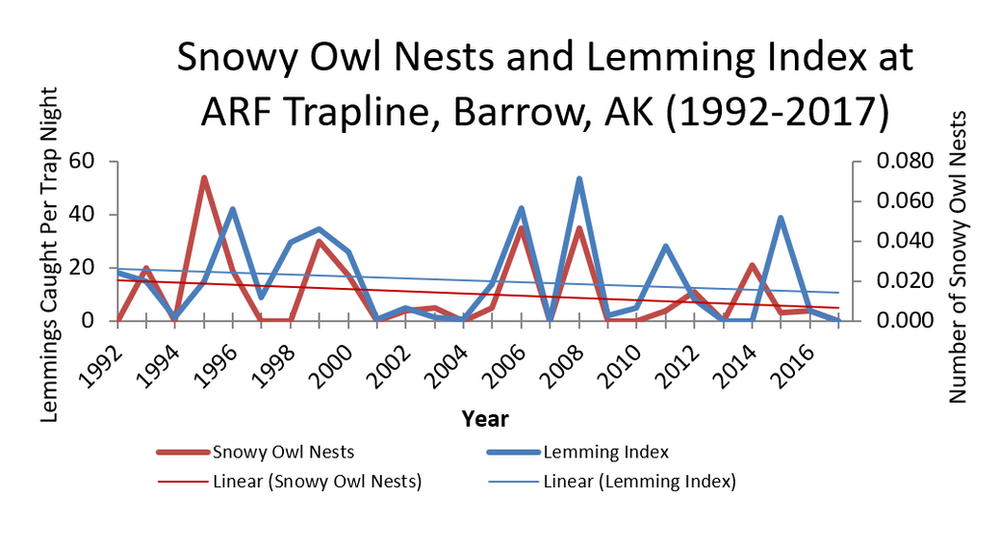
But what happens when winter’s grip loosens? The Arctic is warming at a rate nearly four times faster than the global average, and the consequences are rippling through the food web. Snowy owls rely on lemmings, those plump, unassuming rodents, as their primary prey. Lemmings, in turn, depend on the insulating blanket of snow to breed and thrive. When winters grow shorter and milder, the snowpack becomes thinner, patchier, and less persistent. The lemming populations, already prone to boom-and-bust cycles, now face a precarious existence. Fewer lemmings mean fewer meals for snowy owls, and fewer meals mean fewer owls breeding—and those that do may struggle to feed their young.
When the Snow Melts Too Soon: A Crisis of Timing
Imagine a world where the calendar no longer aligns with the seasons. For snowy owls, this isn’t a dystopian fantasy—it’s a creeping reality. The Arctic’s spring thaw is arriving earlier each year, pulling the rug out from under the owls’ carefully timed reproductive strategies. Snowy owls are among the few birds that breed during the Arctic winter, a counterintuitive adaptation that relies on the deep cold to preserve food and maintain the integrity of their nesting sites. But as temperatures rise, the snow melts prematurely, exposing the ground to the elements and leaving the owls vulnerable to predators and the elements.
Consider the plight of a female snowy owl in late February, her body primed for egg-laying. In the old days, the tundra would still be blanketed in snow, the lemmings burrowed safely beneath its surface. Today, she might find herself staring at a landscape of slush and bare earth, her instincts screaming that something is amiss. The mismatch between her biological clock and the environment’s new cadence is a form of ecological whiplash. Some owls may delay breeding, but this comes with its own risks: a later hatch means less time for the chicks to fledge before the next winter’s onset. Others may abandon nesting altogether, their reproductive instincts dulled by the uncertainty of their surroundings.
The Lemming Paradox: A Domino Effect of Scarcity
To understand the snowy owl’s plight, we must first peer into the humble burrows of the lemming. These small, unassuming rodents are the linchpins of the Arctic food web, and their fate is inextricably tied to the snow. In a typical winter, a thick layer of snow insulates the ground, creating a subnivean world where lemmings can tunnel, feed, and breed without fear of predators or freezing temperatures. But as winters shorten, this protective cocoon thins. The lemmings’ breeding season shrinks, their populations dwindle, and the owls—already facing a dwindling prey base—are left with a cruel calculus: breed fewer chicks or risk starvation.
This isn’t just a numbers game; it’s a crisis of survival. Snowy owls are opportunistic hunters, but they are not generalists. They evolved to exploit the boom-and-bust cycles of lemming populations, synchronizing their own reproductive peaks with the rodents’ abundance. When lemmings are scarce, the owls may turn to alternative prey—ptarmigans, hares, or even other birds—but these options are less reliable and often harder to catch. The result? Lower fledging success, weaker chicks, and a population that is slowly unraveling at the seams.
Migration and Mismatch: The Owls’ Gambit
Not all snowy owls are bound to the Arctic. Some populations migrate southward during the winter, following the retreating edge of the snowline. But even these nomads are not immune to the disruptions of a warming world. As the Arctic’s winters grow shorter, the traditional migration routes may become obsolete. The owls that once relied on predictable snow cover to hunt may find themselves arriving at their southern haunts only to discover that the prey they depend on has already moved on—or vanished entirely.
This migratory mismatch is a silent crisis, unfolding in the wings of birds that have traversed these routes for generations. Some owls may adapt, shifting their wintering grounds or altering their hunting strategies. Others may perish, their bodies found in unfamiliar landscapes where the food they need no longer exists. The Arctic is a place of extremes, and the snowy owl is a creature of those extremes. When the extremes blur, the owls are left adrift in a world that no longer makes sense.
Can the Snowy Owl Adapt—or Are We Witnessing an Extinction in Slow Motion?
The question lingers like a specter over the tundra: Can snowy owls adapt to a world where winter is no longer winter? The answer is as complex as the Arctic itself. Some individuals may possess the genetic or behavioral flexibility to adjust, but adaptation is a slow process—one that may not keep pace with the rapid changes unfolding around them. The owls that survive may do so by becoming more generalist in their diets, by nesting in new habitats, or by altering the timing of their breeding. But these adaptations come with trade-offs, and the long-term viability of such strategies remains uncertain.
For now, the snowy owl’s future hangs in the balance, a delicate equilibrium threatened by forces beyond its control. The Arctic is not just a barometer of climate change—it is a canary in the coal mine, and the snowy owl is its most visible casualty. As the winters grow shorter and the snow retreats, we are left to wonder: Will these majestic hunters of the frozen north become relics of a bygone era, or will they find a way to rewrite the rules of survival in a warming world?