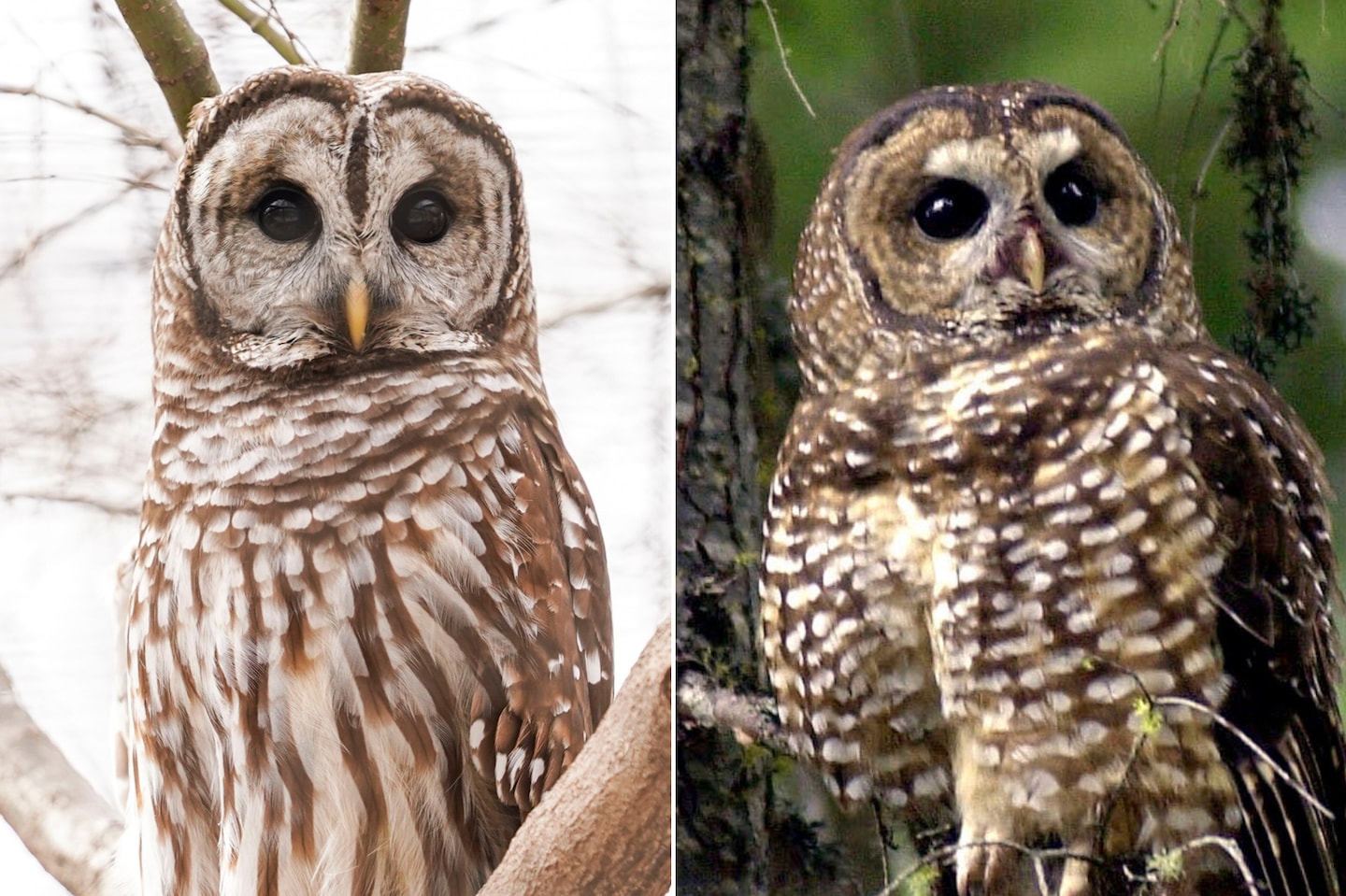
The symphony of the forest is not merely a backdrop to the wild—it is a living archive of biodiversity, a whispered dialogue between species that has unfolded for millennia. Among the most enigmatic voices in this chorus are those of the barred owl and the spotted owl, two nocturnal sentinels whose calls echo through the ancient woodlands of North America. Yet, as human encroachment reshapes their habitats, these owls face an uncertain future. Enter bioacoustics, a cutting-edge discipline that transforms sound into data, offering a non-invasive lens into the lives of these elusive birds. By tuning into their vocalizations, scientists are not only deciphering the intricacies of owl communication but also crafting strategies to safeguard their dwindling populations. This is not just about monitoring—it is about listening to the pulse of the wild and acting before the silence grows too loud.
The Language of the Night: Decoding Owl Vocalizations
To the untrained ear, the hoots and trills of owls may sound like a random cacophony, but each note is a carefully composed message. Barred owls, with their distinctive “Who cooks for you? Who cooks for you-all?” refrain, and spotted owls, whose calls are softer and more melodic, communicate in a complex lexicon of sounds. Bioacoustics leverages high-fidelity recording devices and machine learning algorithms to parse these vocalizations, distinguishing between territorial calls, mating duets, and alarm signals. The barred owl’s vocal range, for instance, spans from deep, resonant hoots to eerie, cat-like screams, while the spotted owl’s repertoire includes a haunting, four-note whistle that carries through dense forests. By analyzing these acoustic signatures, researchers can infer population densities, breeding success, and even individual health—all without disturbing the birds. This method transcends traditional field surveys, which are often labor-intensive and invasive, offering a quieter, more ethical approach to wildlife monitoring.
From Sound Waves to Conservation Strategies: The Role of Acoustic Monitoring
The transition from raw audio data to actionable conservation policy is where bioacoustics truly shines. Automated recording units, strategically placed in owl habitats, capture thousands of hours of audio. These recordings are then processed using artificial intelligence to identify species-specific calls, filter out background noise, and even estimate the number of individuals present. For barred owls, whose populations have surged in recent decades—partly due to climate change and habitat expansion—this data is critical. Their aggressive expansion into spotted owl territories has intensified competition for resources, pushing the latter toward endangerment. By mapping the spatial and temporal patterns of barred owl vocalizations, conservationists can pinpoint hotspots of conflict and design targeted interventions, such as habitat restoration or controlled removals, to restore balance. Meanwhile, the spotted owl’s declining vocal activity serves as an early warning system, signaling habitat degradation before it becomes irreversible.
Technology Meets Ecology: The Tools Shaping Bioacoustic Research
The tools of bioacoustics are as diverse as the ecosystems they study. Directional microphones, capable of isolating sounds from over a kilometer away, allow researchers to eavesdrop on owl conversations without intruding. Meanwhile, autonomous recording devices equipped with solar panels and long-lasting batteries can operate in remote wilderness for months, collecting data in real time. Advances in machine learning have further revolutionized the field, with neural networks trained to recognize owl calls with near-human accuracy. Some systems even employ edge computing, processing audio on-site to reduce data storage demands and enable instant alerts when rare vocalizations are detected. These innovations are not just technological marvels—they are lifelines for species teetering on the edge of survival. In the dense canopies of the Pacific Northwest, where spotted owls once thrived, bioacoustic networks are now the first line of defense against extinction.
Ethics and Equity: The Human Dimensions of Bioacoustic Monitoring
While bioacoustics offers a powerful tool for conservation, its implementation raises ethical questions that demand careful consideration. Indigenous communities, for instance, have long held deep ecological knowledge of owl behaviors, passed down through generations. Excluding these voices from bioacoustic research risks erasing cultural wisdom in favor of data-driven solutions. Moreover, the deployment of recording devices in sacred or contested lands requires consent and collaboration with local stakeholders. There is also the question of bias in AI models—if training datasets are skewed toward certain regions or dialects, the results may not reflect the full diversity of owl populations. To ensure equity, bioacoustic projects must be co-designed with Indigenous groups, local ecologists, and community scientists, fostering a model of conservation that is both technologically advanced and culturally respectful. After all, the goal is not just to save a species, but to honor the intricate web of relationships that sustain it.
Beyond the Forest: Applications in Urban and Agricultural Landscapes
Bioacoustics is not confined to pristine wilderness; it is equally vital in fragmented landscapes where owls struggle to coexist with human development. In urban peripheries, barred owls have adapted to parks and golf courses, their calls now a fixture of the nighttime soundscape. Monitoring their presence in these areas can reveal how wildlife adapts to anthropogenic change, offering insights into resilience and vulnerability. Similarly, in agricultural regions where spotted owls once hunted, bioacoustic surveys can track their dwindling numbers and identify corridors for habitat reconnection. Even in areas where owls are functionally extinct, their vocalizations can be reintroduced through playback experiments to study behavioral responses, a technique known as “acoustic enrichment.” These applications underscore the versatility of bioacoustics, proving that even in the most altered environments, the language of the wild can still be heard—if we know how to listen.
The Future of Listening: Innovations on the Horizon
The next frontier of bioacoustics lies in integrating sound with other ecological data streams. Imagine a network of recording devices linked to satellite imagery and climate models, creating a dynamic portrait of owl habitats in real time. Drones equipped with directional microphones could survey vast areas, while citizen science platforms allow volunteers to contribute recordings from their backyards. Advances in bioacoustics may even enable the translation of owl calls into human-understandable narratives, bridging the gap between species and society. Yet, the most profound innovation may be a shift in perspective: recognizing that conservation is not just about saving a species, but about preserving the symphony of life itself. As technology evolves, so too must our commitment to ethical, inclusive, and adaptive conservation—one that listens as much as it acts.