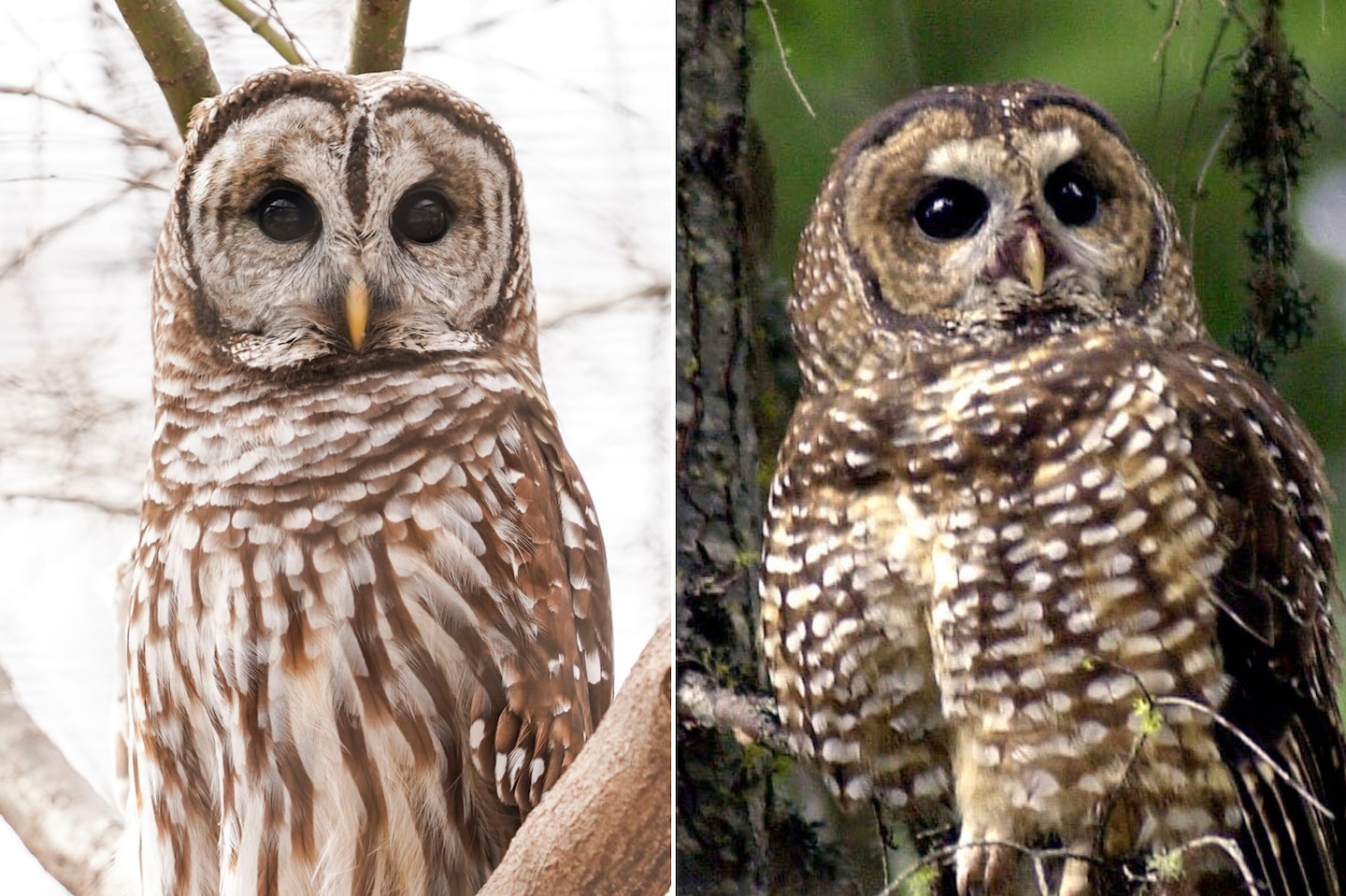
In the shadowy depths of North America’s old-growth forests, a quiet war has long been waged—a battle for survival not just between species, but between ethical imperatives and ecological necessity. At the heart of this struggle lies the contentious practice of culling barred owls to save the imperiled spotted owl. This dilemma presents a profound question: Is it justifiable to extinguish tens of thousands of one species in an effort to preserve another? Exploring this quandary reveals a complex tapestry of conservation ethics, ecological balance, and the unforeseen consequences of human intervention.
The Ecological Context: Interwoven Fates of Owl Species
Understanding the impetus behind barred owl culling requires immersion into the delicate ecology of these birds. The spotted owl, a creature emblematic of the Pacific Northwest’s ancient forests, has suffered precipitous population declines due to habitat destruction and competition. Enter the barred owl—a more adaptable and aggressive species whose range expanded westward, overlapping and often overwhelming the habitats traditionally held by spotted owls. This interspecific competition has exacerbated the spotted owl’s struggle, accelerating fears of its extinction.
Yet, it is not a simple story of predator and prey. The barred owl is a native species in its eastern range and a natural part of North America’s fauna. Its resurgence in the west is a natural range expansion, albeit possibly influenced by human-altered landscapes that favored its adaptability. Thus, the ecological tableau is not black and white but a complex interaction of species whose balance has been disrupted, raising the stakes in the debate around intervention.
The Moral Quagmire: Conservation versus Compassion
At the ethical core lies a bewildering paradox. To save one species—deemed more vulnerable and emblematic of ecological health—thousands of barred owls may be lethally removed. This strategy pits conservationist objectives against the intrinsic value of individual animal life. Can one justify the systematic killing of sentient beings for a collective ecological good? For many, this evokes visceral discomfort and moral dissonance.
The crux of the moral dilemma hinges on anthropocentric stewardship versus biocentric compassion. Conservation often mandates difficult choices, but the notion of selecting which lives matter introduces a disquieting hierarchy. Is it ethical to play executioner for ecological balance? There’s also a broader meditation on the role of humans as arbiters of nature, wielding power to intervene decisively in complex ecosystems, sometimes with unforeseen repercussions.
Effectiveness of Culling: Science, Uncertainties, and Consequences
Proponents argue that controlled removal of barred owls is a scientifically sound strategy to arrest spotted owl decline. Studies suggest that when barred owls are culled in specific areas, spotted owl populations exhibit signs of recovery, enhanced breeding success, and improved survival. The logic is straightforward, predicated on reducing competition for limited resources and restoring natural balance.
However, science is riddled with uncertainties. Ecosystems are dynamic, and the long-term ecological consequences of culling remain partially speculative. Could barred owls rebound with greater vigor? Will the territories vacated by barred owls be reoccupied by other competitors? Furthermore, culling does not address broader systemic issues such as ongoing habitat loss and climate change, which continue to imperil the spotted owl’s survival. These cascading uncertainties call into question whether culling is a panacea or a stopgap measure within a larger conservation strategy.
Alternatives to Culling: Innovation and Ethical Conservation
Is culling the only viable path? Not necessarily. Conservationists and scientists are exploring alternative strategies aiming to mitigate conflict without lethal outcomes. Habitat restoration, for instance, seeks to enhance and expand spotted owl nesting grounds, thereby reducing competitive pressure. Similarly, translocation efforts have been trialed—relocating barred owls to areas where their presence is less detrimental.
Emerging technologies offer promising but nascent solutions. Non-lethal deterrents, such as acoustic displacement and habitat modification, might influence barred owl behavior without harm. Genetic and reproductive interventions, though ethically complex, have also been proposed. These alternatives demand greater investment and patience, underscoring a preference for coexistence over culling.
Philosophical Reflections: Redefining ‘Natural’ in an Anthropocene Era
Embedded within this debate is a deeper philosophical interrogation of what constitutes the ‘natural’ order. In an era defined by human-induced environmental change, the concept of untouched wilderness is increasingly elusive. Should conservation efforts aim to restore historical ecological baselines or embrace evolving ecosystems shaped by anthropogenic influence? The barred-spotted owl conflict exemplifies this tension—one species expanding its range in a landscape forever altered by human activity challenges the binaries of native versus invasive, natural versus unnatural.
This perspective invites a paradigm shift—not merely to preserve a species but to reconceptualize the goals of conservation. It challenges us to balance reverence for ecological heritage with pragmatic stewardship that acknowledges ongoing change, resilience, and adaptability.
Cultural and Emotional Dimensions of Wildlife Management
The narrative of owl conservation is not only a scientific and ethical issue but also a profoundly emotional and cultural one. The spotted owl has come to symbolize the struggle for endangered species protection and the fight against habitat destruction. It evokes passionate support not just for ecological reasons but as a cultural icon of wilderness preservation.
Conversely, the barred owl’s role as ‘villain’ in this story stokes unease and empathy on behalf of an animal targeted by human hands. This duality highlights how human values and emotions permeate wildlife management decisions. Ultimately, these feelings shape public opinion, funding decisions, and policy directions, making the conservation battle as much a contest of hearts and minds as of ecological data.
The Way Forward: Synthesizing Ethics, Ecology, and Empathy
The question of barred owl culling is not one with facile answers. It demands a synthesis of empirical evidence, ethical reflection, and an empathetic understanding of wildlife and ecosystems. While culling may offer expedient relief for the spotted owl, it is a strategy fraught with moral complexity and ecological uncertainty. The path forward likely requires a multifaceted approach—integrating habitat conservation, innovative non-lethal methods, and ongoing dialogue among stakeholders.
Ultimately, confronting this dilemma compels us to question the broader implications of how humans interact with nature. It beckons a more nuanced stewardship—one that respects the intrinsic value of all species, recognizes the irrevocable impact of human activity, and seeks harmonious coexistence rather than dominion. In navigating this labyrinth, perhaps the greatest promise lies in evolving our perspective on conservation itself.