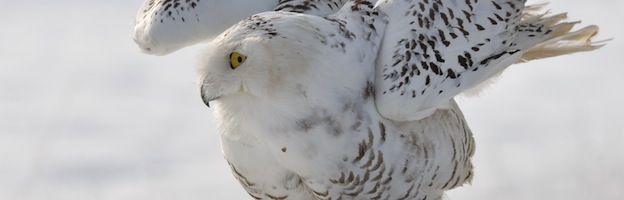
What if the key to unlocking the secrets of owl populations lay hidden not in the quiet rustle of forest undergrowth, but in the vast, humming corridors of digital data? In an era where every hoot, flutter, and nocturnal hunt can be captured, analyzed, and interpreted, big data is emerging as the unsung hero of owl conservation. These enigmatic birds, with their silent wings and piercing gaze, have long fascinated scientists and poets alike—but today, they are also becoming subjects of a technological revolution. From tracking migration patterns to predicting habitat loss, big data is reshaping how we understand and protect these feathered enigmas. Yet, as we dive into this data-driven odyssey, we must ask: can we truly decode the mysteries of owl populations without losing sight of the wild, untamed essence that makes them so captivating?
The Silent Symphony: How Big Data Captures Owl Behavior
Imagine standing in a dense forest at dusk, straining to hear the faintest rustle of wings. Now, picture doing the same thing—except your ears are replaced by algorithms, your eyes by satellite imagery, and your notebook by petabytes of data. Big data doesn’t just observe owl behavior; it reconstructs it in intricate detail. Motion-activated cameras, acoustic sensors, and GPS trackers feed into vast datasets, painting a portrait of owl life that was once impossible to capture. These nocturnal hunters, often elusive and cryptic, leave behind digital footprints that reveal their hunting grounds, territorial disputes, and even their mating rituals. But here’s the twist: while data can tell us where an owl flies, it can’t always explain why. The challenge lies in bridging the gap between raw numbers and the nuanced, often whimsical behaviors that define owl existence.
From Pixels to Populations: Mapping Owl Habitats with Precision
Satellite imagery and LiDAR technology are transforming the way scientists map owl habitats. Gone are the days of laborious field surveys; today, we can scan entire landscapes in a fraction of the time, identifying prime nesting sites and critical foraging areas with astonishing accuracy. Big data allows us to overlay environmental variables—such as tree density, prey availability, and climate patterns—onto these maps, creating a multi-dimensional puzzle of owl ecology. Yet, this precision comes with a caveat: the risk of overfitting. Just as a painter might focus too closely on a single brushstroke and miss the bigger picture, we must be wary of getting lost in the granularity of data. The true art lies in knowing when to zoom out and see the forest for the trees—or, in this case, the owl for the forest.
The Data Deluge: Challenges of Managing and Interpreting Vast Datasets
With great data comes great responsibility—and great complexity. The sheer volume of information generated by owl-tracking technologies can be overwhelming. Researchers must sift through terabytes of audio recordings, millions of GPS coordinates, and countless camera trap images, all while ensuring the data is clean, consistent, and meaningful. The challenge isn’t just technical; it’s philosophical. How do we extract signal from noise when the signal itself is a whisper in the dark? Machine learning models, though powerful, are only as good as the data they’re fed. A mislabeled audio clip or a misplaced GPS tag could send an entire analysis spiraling into error. The real test of big data’s utility isn’t in its collection, but in its curation—and that’s where the human touch remains irreplaceable.
Predicting the Unpredictable: Big Data and the Future of Owl Conservation
What if we could predict an owl population’s decline before it happens? Big data is making this a reality. By analyzing trends in habitat loss, climate change, and prey availability, conservationists can model future scenarios and intervene before it’s too late. Predictive analytics are already being used to identify at-risk species and prioritize conservation efforts. Yet, prediction is not prophecy. The natural world is a chaotic symphony, and even the most sophisticated models can’t account for every variable. A sudden disease outbreak, an unexpected shift in prey behavior, or a human-induced disaster could upend the best-laid plans. The challenge here is balancing data-driven foresight with the humility to accept that nature will always keep some secrets.
The Human Factor: Ethical Considerations in Owl Data Collection
As we harness the power of big data to understand owl populations, we must also confront the ethical implications of our methods. Are we intruding too deeply into the lives of these wild creatures? Does the constant monitoring of their behavior disrupt their natural rhythms? The line between observation and interference is thin, and crossing it could have unintended consequences. Additionally, the data we collect often belongs to the public domain, raising questions about ownership and access. Who gets to decide how this information is used? Conservationists, governments, or corporations? The challenge isn’t just technical; it’s moral. We must ensure that our pursuit of knowledge doesn’t come at the cost of the very creatures we seek to protect.
Beyond the Numbers: The Soul of Owl Conservation
Big data may illuminate the patterns of owl life, but it can’t capture the soul of these creatures. There’s a magic in watching an owl take flight, a poetry in its silent hunt, that no dataset can replicate. Conservation isn’t just about preserving numbers; it’s about safeguarding the wild, untamed spirit of the natural world. As we rely more on data, we must remember to look up from our screens and marvel at the owls themselves. The challenge, then, is to use big data as a tool—not a replacement—for our connection to the wild. After all, the most profound insights often come not from algorithms, but from the quiet moments spent in the presence of these magnificent birds.