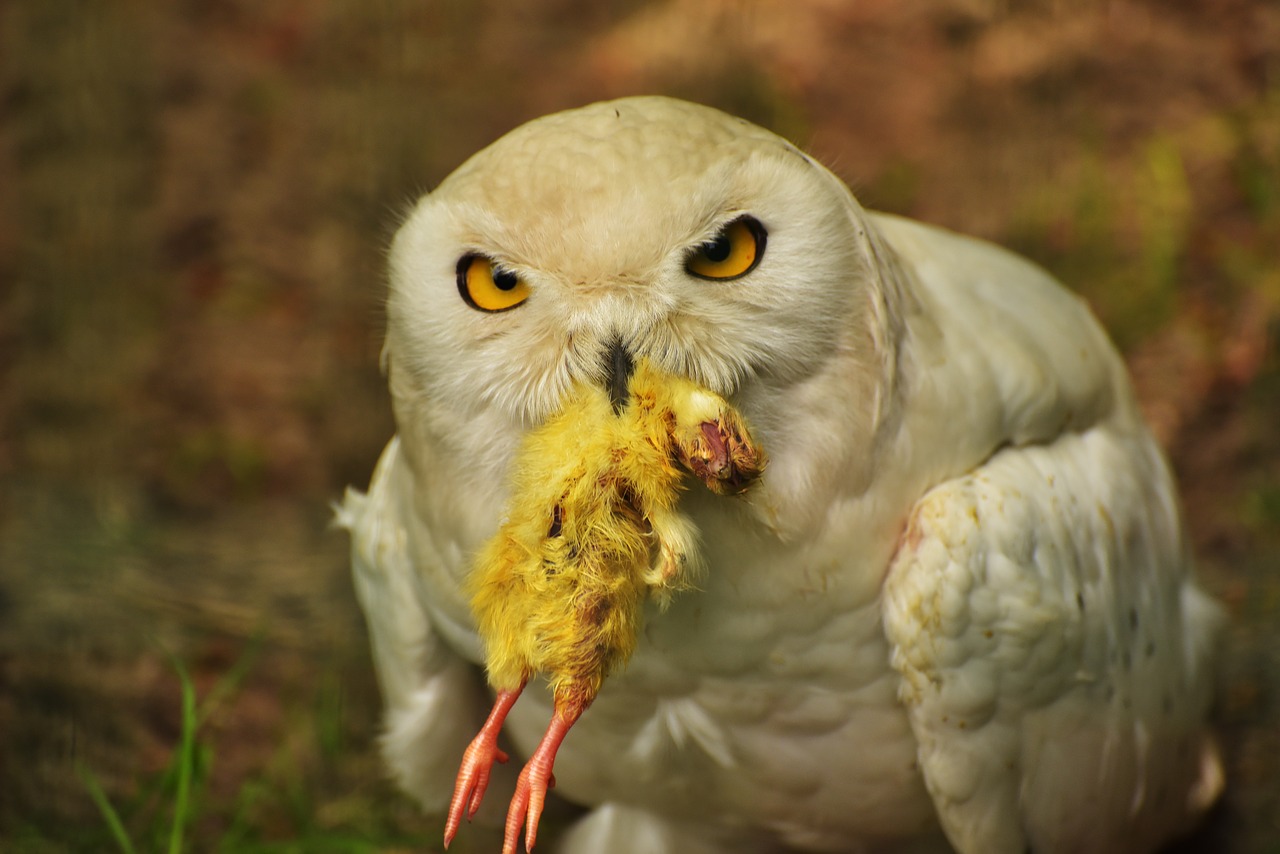
The Arctic is a realm of stark beauty and brutal efficiency, where life thrives in a delicate balance dictated by the merciless cycle of seasons. At the heart of this frozen expanse, the snowy owl stands as a silent sentinel, a ghostly specter gliding over the tundra. But beneath its majestic plumage lies a role far more vital than mere predator—it is a linchpin in the Arctic’s food web, a keystone species whose decline could unravel an entire ecosystem. What happens when the snowy owl falters? The answer is not just a loss of feathers and talons, but a cascade of consequences rippling through the Arctic’s frozen veins.
The Arctic’s Icy Stage: Where Every Creature Plays a Part
The Arctic is not a barren wasteland of ice and snow, but a dynamic theater where life persists through ingenuity and adaptation. Here, the food web is a fragile tapestry woven from threads of predator and prey, each species a vital knot holding the structure together. At the base of this web lie the primary producers—lichens, mosses, and hardy shrubs—sustained by the brief Arctic summer’s fleeting sunlight. These, in turn, feed herbivores like lemmings and Arctic hares, which become the sustenance for predators such as foxes, weasels, and, of course, the snowy owl.
The snowy owl, *Bubo scandiacus*, is not merely a hunter; it is an architect of balance. Its presence regulates the populations of its prey, preventing overgrazing of the tundra’s sparse vegetation. Without this apex predator, the lemming populations could explode, leading to overconsumption of the very plants that sustain the entire ecosystem. The owl’s role is not just about predation—it is about stewardship, a silent guardian ensuring that no single species dominates the landscape.
The Lemming Paradox: A Delicate Dance of Life and Death
At the heart of the snowy owl’s ecological significance lies the lemming—a small, unassuming rodent that is, paradoxically, both the owl’s primary prey and the ecosystem’s most disruptive force. Lemmings are the pulse of the Arctic, their populations fluctuating in dramatic cycles that span three to five years. When lemmings are abundant, snowy owls thrive, breeding prolifically and raising large broods. But when lemmings crash, so too does the owl’s reproductive success, leaving the tundra eerily silent.
This boom-and-bust cycle is not a sign of failure but of resilience. The snowy owl’s ability to adapt to these fluctuations is a testament to its evolutionary prowess. Yet, this adaptability is now being tested as never before. Climate change is disrupting the lemming’s habitat, melting the permafrost that shelters their burrows and altering the timing of snowmelt, which in turn affects their breeding cycles. As lemmings struggle, so too does the snowy owl, and the Arctic’s food web begins to fray at the edges.
The Domino Effect: When One Species Falls, Others Follow
The decline of the snowy owl is not an isolated tragedy—it is the first domino in a chain reaction that could reshape the Arctic. Without the owl’s predation, lemming populations could surge unchecked, leading to overgrazing of the tundra’s vegetation. This, in turn, would reduce the habitat quality for other herbivores, such as Arctic hares and geese, which rely on the same plants for sustenance. The ripple effects would extend to predators like Arctic foxes and ermines, which would face food shortages and potential population declines.
But the consequences don’t stop there. The Arctic’s food web is interconnected in ways that are often invisible to the untrained eye. For example, the snowy owl’s decline could indirectly affect bird species that nest on the ground, such as Lapland longspurs and snow buntings. These birds rely on the owl’s presence to deter predators like foxes and gulls. Without the owl’s watchful gaze, their nests could be raided more frequently, leading to reduced reproductive success and further destabilizing the ecosystem.
The Climate Crisis: A Silent Saboteur of the Arctic’s Balance
Climate change is the invisible hand reshaping the Arctic, and the snowy owl is one of its most vulnerable victims. Rising temperatures are altering the timing of snowmelt, which disrupts the lemming’s breeding cycles and reduces their survival rates. Additionally, the loss of sea ice—a critical hunting ground for snowy owls—is forcing these birds to adapt to new, often less productive, habitats. The Arctic is warming at a rate twice as fast as the global average, and the snowy owl is paying the price.
Yet, the owl’s decline is not just a symptom of climate change—it is also a harbinger of its consequences. As the Arctic’s food web unravels, the entire ecosystem becomes more vulnerable to further disruptions. The loss of the snowy owl could accelerate the decline of other species, creating a feedback loop of environmental degradation. This is not just an ecological crisis; it is a warning of the broader impacts of climate change on global biodiversity.
Human Footprints in the Snow: How Our Actions Shape the Arctic’s Future
The fate of the snowy owl is not solely in the hands of nature—it is also intertwined with human actions. Industrial activities, such as oil drilling and mining, are fragmenting the Arctic’s habitats, leaving the snowy owl with fewer places to hunt and nest. Pollution, from plastic waste to chemical runoff, is poisoning the tundra’s delicate balance, affecting everything from the lemmings to the owls themselves. Even the seemingly innocuous act of tourism can disrupt the Arctic’s fragile ecosystems, as increased human presence disturbs nesting sites and alters animal behavior.
But there is hope. Conservation efforts, from protected areas to community-led initiatives, are working to mitigate the damage. Indigenous communities, with their deep understanding of the Arctic’s rhythms, are leading the charge in sustainable land management. By supporting these efforts, we can help ensure that the snowy owl—and the entire Arctic food web—remains intact for generations to come.
The Owl’s Legacy: A Call to Reimagine Our Relationship with the Arctic
The snowy owl is more than a predator; it is a symbol of the Arctic’s resilience and fragility. Its decline is a stark reminder of the interconnectedness of life on Earth, where every species, no matter how small or seemingly insignificant, plays a role in the grand tapestry of existence. The loss of the snowy owl would not just be a tragedy for the Arctic—it would be a loss for all of us, a reminder of the delicate balance that sustains life on this planet.
As we stand at the precipice of an uncertain future, the snowy owl’s plight challenges us to rethink our relationship with the natural world. It asks us to consider not just what we take from the Earth, but what we give back. The Arctic is not a distant, frozen wasteland—it is a living, breathing ecosystem, and its fate is intertwined with our own. The question is not whether we can afford to protect it, but whether we can afford not to.