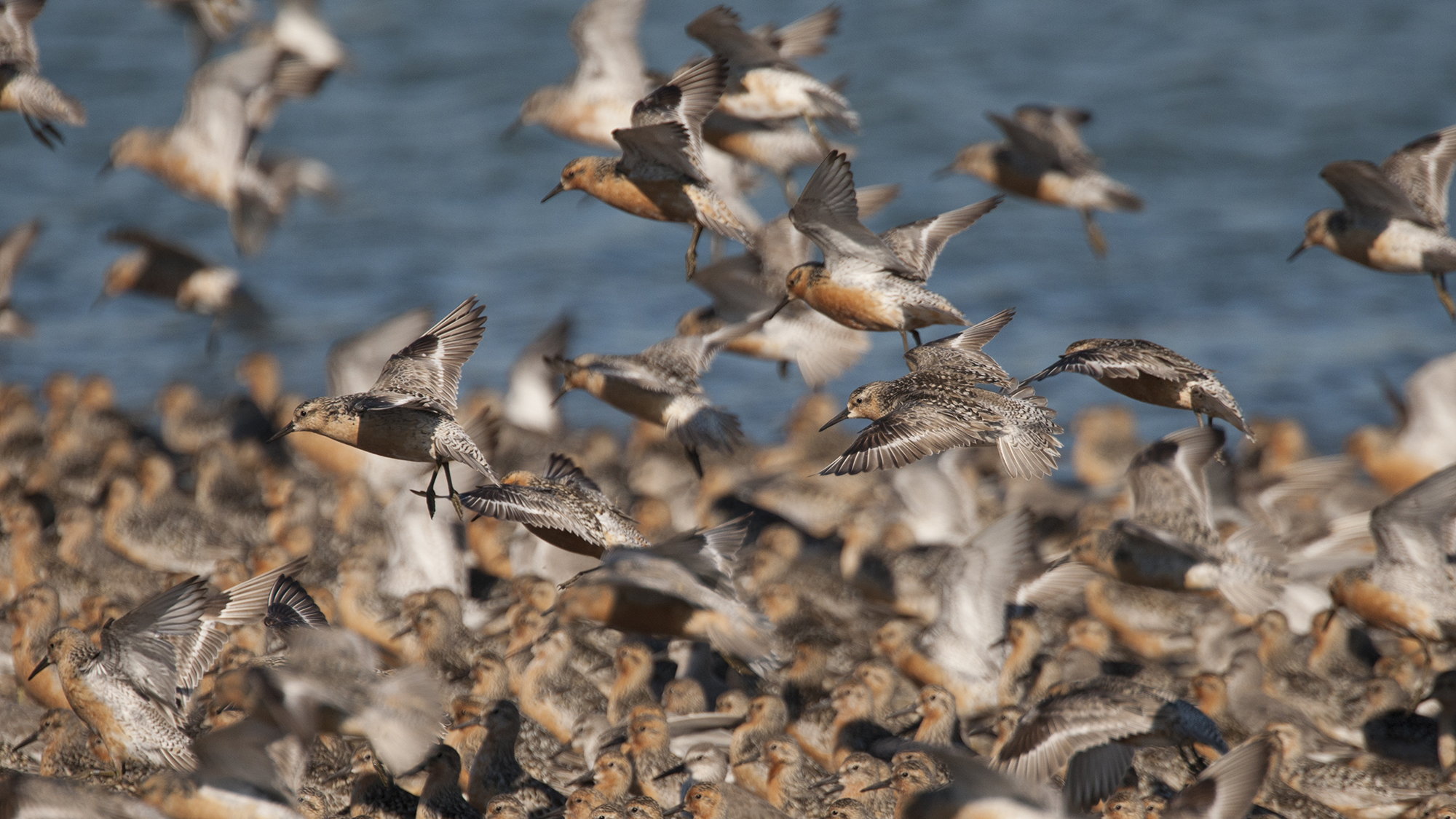
In the hushed realms where twilight bleeds into the indigo of dusk, a silent exodus unfolds. Owls, those spectral sentinels of the night, are taking to the skies in a journey as ancient as the moon itself. For centuries, their migrations have been shrouded in mystery, whispered about in the rustle of feathers against the wind, glimpsed only in fleeting silhouettes against the moon’s glow. But no longer. A revolution is stirring in the shadows—one that promises to peel back the veils of secrecy surrounding these enigmatic wanderers. Welcome to the dawn of a new era in owl migration tracking, where cutting-edge technology meets the age-old dance of predator and prey.
The Silent Exodus: Why Owls Migrate and What We’ve Missed
Owls are not the nomads of the bird world. Unlike their diurnal counterparts, most owl species are year-round residents, bound to territories by the unyielding demands of their hunting grounds. Yet, for a select few—those dwelling in the boreal forests of the north or the high-altitude plateaus of the Andes—the urge to migrate is as irresistible as the tides. These journeys, often spanning thousands of miles, are not mere whims of nature but desperate adaptations to the cruel calculus of survival. Food scarcity, the encroachment of winter’s icy grip, or the need to escape the relentless pressure of competition drive them southward, where the earth still teems with life.
For too long, we’ve known these migrations only in fragments. A snowy owl spotted in a Kansas cornfield. A short-eared owl gliding over the marshes of Louisiana. These sightings, though thrilling, are mere breadcrumbs in a vast, uncharted trail. Without a way to track their movements in real time, we’ve been left to wonder: Where do they go? How do they navigate the endless night? And most tantalizingly, what secrets do their journeys hold about the health of our planet?
The Technological Leap: From Bands to Biologgers
The first attempts to unravel owl migration were crude, almost quaint by today’s standards. In the early 20th century, ornithologists affixed numbered metal bands to the legs of birds, hoping for a distant recapture that might reveal a fragment of their travels. The method was flawed—recovery rates were dismally low, and the data gleaned was sparse, like trying to read a novel through a keyhole. But necessity, as ever, is the mother of invention.
Enter the age of biologging. Today’s tracking devices are marvels of miniaturization and ingenuity, small enough to perch on an owl’s back without impeding its flight yet powerful enough to beam back a deluge of data. Solar-powered GPS tags, accelerometers that chart every wingbeat, and barometric sensors that map altitude changes in real time have transformed our understanding of owl migration from guesswork to granular precision. Some devices even incorporate tiny cameras, offering us a glimpse into the owl’s world—its hunting grounds, its rest stops, its battles with rival predators.
But the true game-changer lies in the realm of satellite telemetry. Unlike traditional GPS, which requires recapturing the bird to retrieve data, satellite tags transmit information in real time, painting a living, breathing portrait of an owl’s journey. We can now watch as a great gray owl from Canada’s taiga forests weaves its way through the American Midwest, or track the marathon flight of a boreal owl as it crosses the Bering Strait into the Russian wilderness. These are not just dots on a map; they are stories of endurance, resilience, and the unbreakable will to survive.
The Night’s Compass: How Owls Navigate the Unknown
To migrate, an owl must possess a compass more reliable than any human invention. Theories abound: perhaps they navigate by the Earth’s magnetic field, their brains attuned to the subtle shifts in polarity like a sailor reading the stars. Maybe they follow the scent trails of prey, or listen for the telltale whispers of the wind as it dances over mountain ridges. Some researchers even speculate that owls, with their extraordinary low-light vision, can read the polarized patterns of moonlight reflected off water or ice, using them as celestial signposts.
What we do know is that their navigation is a symphony of senses, each playing its part in perfect harmony. Recent studies using biologging data have revealed that owls don’t follow straight paths but instead meander, as if testing the air for cues only they can sense. Their routes are not rigid; they adapt, improvise, and sometimes even double back, as if correcting for an unseen error in their calculations. It’s a reminder that migration is not just a physical journey but a cognitive one—a dance between instinct and intelligence.
And then there’s the matter of the unknown. Some owls, particularly young ones on their first migration, seem to wander aimlessly, as if guided by nothing more than chance. Are they lost? Or are they, in their own way, exploring, learning the lay of the land for future journeys? The data is still too sparse to say, but one thing is clear: the more we learn, the more we realize how little we truly understand.
The Data Deluge: What We’re Learning—and What It Means
The flood of data pouring in from these tracking devices is rewriting the textbooks on owl migration. We’ve discovered that some species, like the snowy owl, are not the nomads we once thought but instead follow cyclical patterns tied to lemming populations in the Arctic. Others, like the burrowing owl, exhibit a nomadic lifestyle, their movements dictated by the availability of prey and suitable nesting sites. The great gray owl, once believed to be a rare wanderer, is now revealed to be a regular traveler, its migrations spanning entire continents.
But the implications go far beyond mere curiosity. These migrations are barometers of ecological health. When an owl’s journey is cut short, when its route is altered by deforestation or climate change, we are witnessing the ripple effects of human activity on the natural world. Tracking these movements isn’t just about satisfying our curiosity—it’s about safeguarding the delicate balance of ecosystems that sustain us all.
Consider the case of the spotted owl in the Pacific Northwest. Once a symbol of the fight to save old-growth forests, its migration patterns are now being mapped in unprecedented detail. Researchers have found that these owls, unlike their more adaptable cousins, are reluctant to cross open landscapes, their survival tied to the continuity of dense, undisturbed forests. The data is a clarion call, urging us to rethink our land-use policies and protect the corridors that these birds—and countless other species—depend on.
The Future of Owl Tracking: Where Do We Go From Here?
The next frontier in owl migration tracking lies in the integration of artificial intelligence and machine learning. Imagine a world where algorithms predict migration routes before the owls even take flight, where conservationists can preemptively protect critical habitats. Already, researchers are using AI to sift through vast datasets, identifying patterns in owl behavior that would take humans lifetimes to uncover. The potential is staggering—a future where we don’t just observe migration but actively shape it, ensuring that these silent travelers continue to grace our skies for generations to come.
But technology alone won’t save the owls. It will take a shift in perspective, a recognition that these birds are not just subjects of study but vital threads in the tapestry of life. Citizen science initiatives, where birdwatchers contribute their sightings to global databases, are already bridging the gap between researchers and the public. Meanwhile, conservationists are working to create “owl highways”—protected corridors that allow these birds to move freely across landscapes fragmented by human development.
The journey of the owl is a story of endurance, adaptation, and mystery. With each new technological breakthrough, we peel back another layer of the unknown, inching closer to understanding the intricate web of life that connects us all. And as we stand on the cusp of this new era, one thing is certain: the owls are watching. Waiting. And their migrations are just beginning to reveal their secrets.