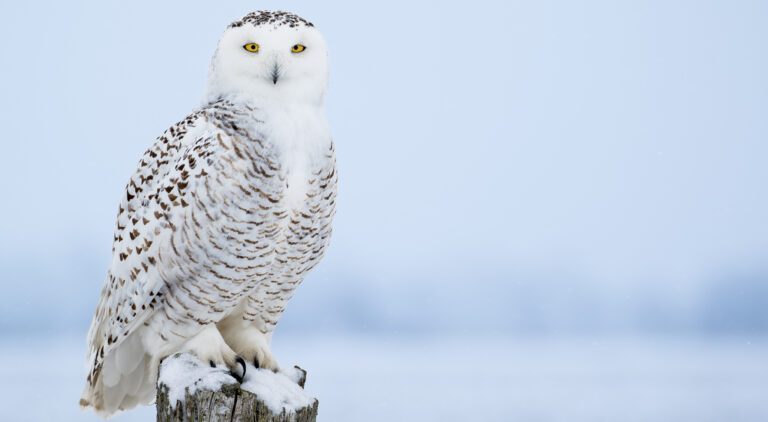
Have you ever wondered how the haunting calls of the elusive Snowy Owl traverse the frozen tundras, carrying stories of survival, territory, and courtship? What if we could intercept those calls with the precision of a seasoned detective, unveiling secrets that might otherwise remain shrouded in the silent Arctic nights? Tracking the ethereal vocalizations of these majestic birds poses a playful yet formidable challenge—one that bioacoustics has taken up with scientific fervor and technological ingenuity.
The Enigmatic Vocal Landscape of Snowy Owls
Snowy Owls, with their ghostly white feathers and piercing yellow eyes, are as iconic as the Arctic landscapes they inhabit. Yet, their vocalizations remain a cipher, rich with nuanced meanings but challenging to decipher. These birds communicate through a repertoire of calls, from deep hoots to sharp barks and guttural whistles—each sound carrying distinct behavioral significance. Mating rituals, territorial defense, and intraspecific communication all unfold through these vocal exchanges. However, the sporadic and often distant nature of their calls across vast snowy expanses complicates direct observation and recording by researchers.
Bioacoustics: The Sonic Lens into Hidden Behaviors
Enter bioacoustics—the interdisciplinary science that harnesses sound as a portal to understand animal behavior and ecology. By deploying sensitive recording equipment and sophisticated analytical software, scientists penetrate the Arctic’s acoustic veil to isolate and categorize Snowy Owl calls. This sonic exploration reveals temporal patterns and variations in call structures that might correlate with environmental cues or social dynamics. It is almost as if each recorded call is a vignette, a stanza in the epic poem of survival performed by these remarkable birds.
Technological Innovations Empowering Call Tracking
Tracking the calls of Snowy Owls is no trivial pursuit. The frozen tundra and expansive ranges these owls inhabit demand resilient and intelligent technologies. Autonomous recording units (ARUs) are strategically installed across breeding grounds and migratory paths. These devices vigilantly capture hours of soundscapes, waiting for the signature owl hoots to emerge from the background noise of wind, other wildlife, and environmental echoes.
Advanced signal processing algorithms then parse these soundfiles, identifying and classifying calls with remarkable accuracy. Machine learning models trained on validated datasets distinguish the subtle acoustic nuances between the owl’s three primary call types. This automated scrutiny significantly reduces human labor and increases detection rates, especially during nocturnal hours when visual monitoring is limited.
Challenges in Acoustic Monitoring of Snowy Owls
Yet, this venture is not without pitfalls. The very habitat that shelters Snowy Owls also conspires against acoustic clarity. Harsh weather conditions—blizzards, high winds, and ice accumulation—can distort sound waves or damage recording equipment. Moreover, the natural variability in vocalization intensity and frequency between individual owls introduces a layer of complexity. Adapting algorithms to handle these variations without false positives or missed detections demands rigorous calibration and continuous refinement.
Another intriguing challenge lies in distinguishing between calls used in different behavioral contexts. For example, mating calls have acoustic signatures distinct from alarm or territorial calls. The overlap in frequency ranges sometimes makes it difficult to parse these vocal signals precisely, calling for more sophisticated analytical techniques and long-term data collection to build comprehensive acoustic libraries.
Ecological Insights Gained Through Acoustic Tracking
Despite these hurdles, bioacoustic tracking has illuminated several ecological dimensions of Snowy Owls that traditional field methods struggled to reveal. For instance, researchers have mapped migration corridors by detecting call patterns far beyond the known breeding territories. This has shed light on the owls’ occasional irruptive movements—massive migrations linked to prey scarcity and environmental pressures.
Additionally, bioacoustic data has unveiled temporal shifts in vocal activity that correspond with breeding phases, feeding behaviors, and predator alerts. Understanding these patterns deepens ecological comprehension and supports conservation efforts aimed at mitigating human disturbances during critical periods.
Future Horizons: Integrating Bioacoustics with Other Technologies
The journey to track and interpret Snowy Owl calls is accelerating with the integration of bioacoustics alongside other cutting-edge tools. GPS telemetry paired with sound recordings offers a multimodal insight, correlating spatial movement with vocal communications in real time. Deploying drones equipped with directional microphones may soon enhance our capacity to capture high-fidelity calls from previously inaccessible locations.
Moreover, expanding collaborative networks of citizen scientists equipped with mobile recording devices enriches data pools, democratizing scientific discovery. These synergies promise a future where the snowy owls’ vocal narratives are collected on a continental scale, weaving a richer tapestry of knowledge and stewardship.
Conservation Implications Rooted in Acoustic Knowledge
Understanding the acoustic behavior of Snowy Owls is not a mere academic exercise—it holds profound conservation implications. The Arctic ecosystem, increasingly vulnerable to climate change and human disturbances, demands vigilant monitoring of keystone species like the Snowy Owl. Acoustic monitoring can function as an early warning system, detecting shifts in population densities or breeding success through changes in call frequencies and distribution.
This sonic surveillance aids policymakers and conservationists in making informed decisions—establishing protected areas, regulating human activity during sensitive periods, and gauging the impacts of environmental change. Thus, the soundscape of the Snowy Owl becomes a living barometer of Arctic ecosystem health.
The Poetic Challenge Continues
Tracking the snow-white specters of the Arctic through their elusive calls is a scientific odyssey woven with mystery, technology, and deep ecological empathy. While bioacoustics offers unprecedented access to this sonic world, the challenge remains—to continually refine our listening tools and interpretative frameworks so that every whisper of the Snowy Owl carries meaning beyond the frozen silence. What new stories lie hidden in their calls, waiting to be discovered? The quest to answer this question ensures that the interplay between sound and survival endures as an inspiring narrative of nature’s resilience and human curiosity.