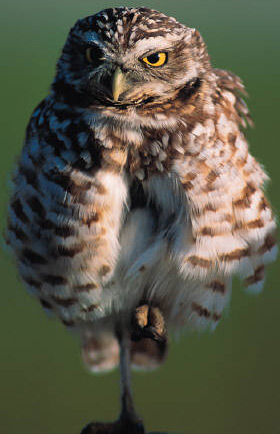
What if the key to saving the world’s most enigmatic birds lay not in solitary research labs or isolated field stations, but in the unspoken bonds between scientists scattered across continents? The Global Owl Conservation Network (GOCN) isn’t just another conservation initiative—it’s a living, breathing web of collaboration, where data flows like whispers through the night and shared insights become the wings that lift endangered species from the brink. In a world where biodiversity is hemorrhaging at an unprecedented rate, these researchers are rewriting the rules of conservation by turning competition into camaraderie. But as they stitch together a tapestry of knowledge, a playful yet pressing question lingers: Can a global network truly outpace the relentless march of habitat destruction?
The Dawn of a Unified Front: How the GOCN Took Flight
The Global Owl Conservation Network didn’t emerge from a single eureka moment but rather from the quiet frustration of researchers watching owl populations dwindle in silence. For decades, ornithologists worked in silos, their findings buried in obscure journals or lost in the labyrinth of academic databases. The GOCN changed that. Born from a cocktail of necessity and serendipity, it began as a digital agora where scientists could trade not just data, but stories—of failed nest boxes, of elusive species rediscovered in forgotten corners of the globe, of the haunting calls of owls echoing through vanishing forests. Today, it stands as a testament to what happens when curiosity transcends borders. Researchers in Patagonia share thermal imaging techniques with colleagues in Mongolia; European biologists exchange genetic samples with African conservationists. The network’s strength lies not in its size, but in its diversity—a mosaic of methodologies, cultures, and unwavering dedication.
The Art of Collaboration: Breaking Down Silos with Data and Determination
Collaboration, in the realm of owl conservation, is less about grand gestures and more about the meticulous art of listening. The GOCN’s platform isn’t just a repository of spreadsheets and satellite maps; it’s a dynamic ecosystem where researchers upload real-time nest observations, acoustic recordings of owl calls, and even citizen science contributions from backyard birdwatchers. But here’s the twist: the network’s true power lies in its ability to turn raw data into actionable intelligence. Take the case of the Spotted Owl in North America. By pooling genetic data from populations in California, Oregon, and British Columbia, researchers identified critical genetic bottlenecks that threatened the species’ long-term survival. Armed with this knowledge, conservationists could prioritize habitat corridors with surgical precision, ensuring that owls—those silent sentinels of the night—could move freely between territories. Yet, the challenge isn’t just collecting data; it’s ensuring that every piece of the puzzle finds its place. In a world drowning in information, the GOCN’s role as a curator of knowledge becomes nothing short of heroic.
From Pixels to Protection: The Role of Technology in the GOCN’s Arsenal
Imagine an owl, perched on a branch in the Amazon, its eyes reflecting the glow of a camera trap. Hundreds of miles away, a researcher in Berlin monitors the feed in real-time, cross-referencing the owl’s behavior with climate data to predict future habitat shifts. This isn’t science fiction; it’s the daily reality of the Global Owl Conservation Network. Technology has become the invisible thread weaving together the network’s efforts. Drones equipped with thermal cameras scout nesting sites in inaccessible terrain, while AI algorithms analyze years of acoustic data to detect subtle changes in owl populations. But technology is a double-edged sword. For every breakthrough, there’s a new hurdle: the cost of equipment, the steep learning curve for field researchers, and the ever-present risk of data overload. The GOCN’s challenge? To democratize these tools, ensuring that even the smallest conservation team in a developing nation can harness the same power as their well-funded counterparts. It’s a lofty goal, but one that could redefine the future of wildlife protection.
The Human Element: Why Stories Matter as Much as Science
Behind every dataset and every GPS coordinate lies a story—a tale of a researcher braving subzero temperatures to band an owl in the Arctic, or a local community in India rallying to protect a sacred grove where Barn Owls nest. The GOCN understands that conservation isn’t just about numbers; it’s about people. The network’s annual symposium isn’t a dry academic conference but a vibrant gathering where biologists, indigenous leaders, and even schoolchildren share their experiences. These stories do more than inspire; they humanize the data. When a Peruvian ornithologist describes how a single owl nest became a symbol of hope for a village facing deforestation, it transforms abstract statistics into a call to action. Yet, the challenge here is subtle: how do you balance the emotional weight of these narratives with the rigor of scientific inquiry? The GOCN’s answer? By letting the stories guide the science, not the other way around. After all, what good is a perfectly preserved dataset if it doesn’t move someone to pick up a shovel and plant a tree?
The Shadow of Extinction: Can the GOCN Outpace the Clock?
For all its triumphs, the Global Owl Conservation Network operates under a shadow—a shadow cast by the relentless pace of extinction. Every year, new threats emerge: climate change redraws the maps of owl habitats, invasive species outcompete native predators, and human encroachment gobbles up the last refuges of these nocturnal hunters. The GOCN’s response? Adaptation. Researchers are now deploying predictive modeling to anticipate habitat loss before it happens, while legal teams within the network lobby for stronger protections in critical regions. But adaptation requires resources, and resources are scarce. The playful question from the outset—can a global network truly outpace habitat destruction?—now feels less like a riddle and more like a race against time. The GOCN’s greatest challenge isn’t technological or logistical; it’s existential. In a world where every species is a thread in the web of life, the loss of an owl isn’t just a tragedy for owls. It’s a warning for us all.
The Ripple Effect: How the GOCN’s Model Could Save More Than Just Owls
The Global Owl Conservation Network’s success isn’t measured solely in the number of owls saved but in the blueprint it offers for saving the planet. The collaborative model it has perfected—where data, stories, and determination flow freely across borders—is a template for other conservation efforts. Imagine applying this approach to the plight of the vaquita, the world’s most endangered marine mammal, or the rapid decline of pollinators. The GOCN’s methods could be the catalyst for a new era of global conservation, one where isolation is replaced by interconnection and competition by cooperation. Yet, the ultimate test will be whether this model can scale beyond owls. Can it inspire a generation of researchers to see themselves not as lone wolves, but as part of a vast, interconnected pack? The answer may well determine the fate of countless species—and perhaps our own.