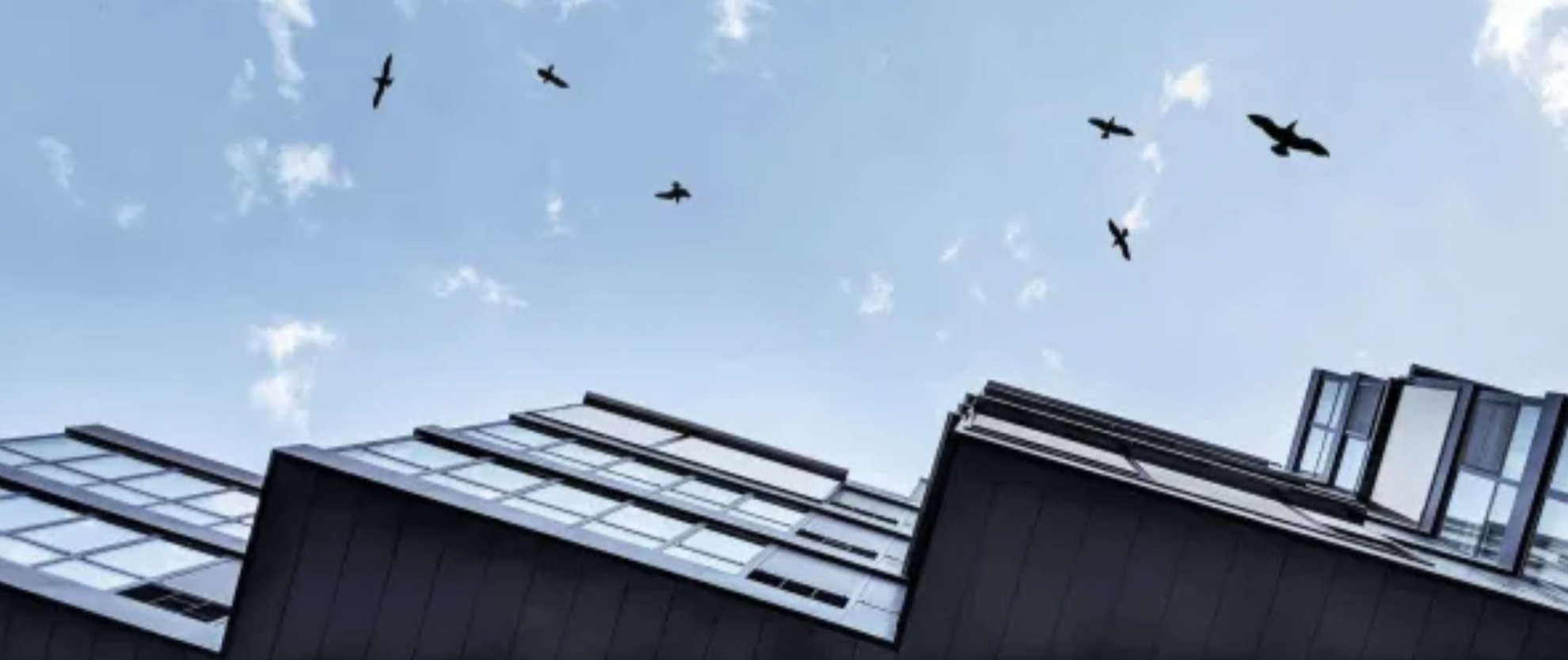
In the labyrinthine sprawl of urban landscapes, where glass and steel rise like monoliths, a silent tragedy unfolds each dawn. Urban owls, those enigmatic sentinels of the night, find themselves ensnared in an invisible web—glass windows, once mere reflections of the sky, now act as death traps. The phenomenon is as heartbreaking as it is preventable. Every year, millions of birds perish from collisions with windows, and among them, owls, with their silent flight and keen senses, are particularly vulnerable. This is not merely an ecological concern; it is a poignant reminder of how human progress often tramples the delicate threads of coexistence. Yet, within this crisis lies an opportunity—not just to save lives, but to reimagine our cities as havens for wildlife.
The Invisible Peril: Why Glass is a Death Trap for Urban Owls
Glass windows are the urban equivalent of a mirage. To an owl, the reflection of trees or open sky on a sunlit pane is indistinguishable from reality. Unlike their forest-dwelling counterparts, urban owls navigate a world of artificial canyons, where the boundaries between safety and peril are blurred by human ingenuity. The problem is exacerbated by the placement of windows—often at eye level for owls, who, unlike smaller birds, do not instinctively avoid large, flat surfaces. Their hunting instincts, honed over millennia, fail them in an environment where the prey they seek is not a mouse, but an illusion. The result is a silent, unseen toll: owls striking glass at high speeds, often fatally, their bodies left unnoticed until the next morning.
But the danger is not confined to daylight. At night, owls are drawn to the warm glow of interior lights, mistaking them for the moon or stars. The soft illumination of a living room window becomes a beacon, luring them into a deadly dance with the unseen barrier. This is not just a matter of physical harm; it is a disruption of their nocturnal rhythms, a collision not just of bodies, but of lifecycles. The urban owl, already a creature of paradox—wild yet adapted to human spaces—finds itself caught in a web of its own making.
Designing with Wings in Mind: Architectural Solutions for Safer Skies
If the problem is rooted in design, then the solution must be too. Architects and urban planners hold the power to transform glass-clad cities into sanctuaries for owls. One of the most effective strategies is the use of fritted glass—windows patterned with ceramic frit, a technique that breaks up reflections and reduces transparency. These patterns can mimic the dappled light of a forest canopy, creating a visual barrier that owls instinctively avoid. Alternatively, acid-etched or sandblasted glass scatters light, making windows appear opaque from a distance while still allowing natural light to flood interior spaces.
Another innovative approach is the integration of external shutters or screens. These not only provide shade and energy efficiency but also create a physical barrier that owls can detect. For existing structures, decorative decals—strategically placed in patterns that owls perceive as obstacles—can serve as a temporary fix. The key is to disrupt the illusion of open space without compromising the aesthetic or functionality of the building. In this way, human creativity can harmonize with the natural world, proving that sustainability and beauty are not mutually exclusive.
The Power of Light: Mitigating Nocturnal Lures
Owls are creatures of the night, and their survival depends on the subtle cues of moonlight and starlight. Artificial lighting, however, has rewritten the rules of their world. Streetlamps, neon signs, and the glow of office buildings create a false horizon, disorienting owls as they hunt or migrate. The solution lies in light pollution reduction. Motion-activated lighting, dimmers, and timers can minimize unnecessary illumination, while shielded fixtures direct light downward, preventing it from scattering into the sky. Even the color of light matters—owls are less sensitive to red or amber hues, which can be used in place of harsh white or blue lighting to reduce their attraction.
For buildings that must remain lit, window films with UV-blocking properties can deter owls by making glass less reflective. Alternatively, curtains or blinds drawn at dusk can create a visual barrier, breaking the illusion of an open sky. The goal is not to plunge cities into darkness, but to restore a semblance of the natural night, where owls can navigate by the stars rather than the glare of human excess.
Community Action: How Urban Dwellers Can Become Owl Allies
Saving urban owls is not the sole responsibility of architects or policymakers—it is a collective endeavor. Every resident, from the high-rise apartment dweller to the ground-floor shopkeeper, can play a role. Simple measures, like installing bird-safe decals or replacing reflective surfaces with frosted glass, can make a difference. For those with gardens or balconies, native plants can provide shelter and food, reducing the need for owls to venture into high-risk areas. Even something as small as turning off non-essential lights at night can save lives.
Education is another powerful tool. Community workshops can teach residents about the risks of window collisions and the importance of owl conservation. Schools can incorporate lessons on urban wildlife, fostering a generation that sees owls not as distant creatures, but as neighbors deserving of protection. Citizen science projects, such as tracking owl sightings or reporting collisions, can provide valuable data to researchers studying these resilient birds. In this way, cities become not just concrete jungles, but ecosystems where humans and wildlife thrive side by side.
Beyond Survival: Reimagining Cities as Havens for Wildlife
The plight of urban owls is a microcosm of a larger crisis—the erosion of biodiversity in the face of human expansion. Yet, it is also an invitation to rethink our relationship with the natural world. What if every glass tower reflected not just the sky, but the values of its inhabitants? What if every streetlamp cast a glow that guided owls home, rather than lured them to their doom? The solutions are within reach, but they require a shift in perspective. We must see owls not as fleeting visitors, but as integral parts of our urban ecosystems, deserving of the same care we give to our parks and gardens.
This is not just about saving owls—it is about reclaiming our cities as places of wonder, where the wild and the built coexist in harmony. It is about recognizing that our greatest innovations should not come at the expense of the natural world, but in partnership with it. The urban owl, with its piercing gaze and silent flight, is a reminder of what we stand to lose—and what we can still save. The choice is ours: to build walls that kill, or windows that welcome.