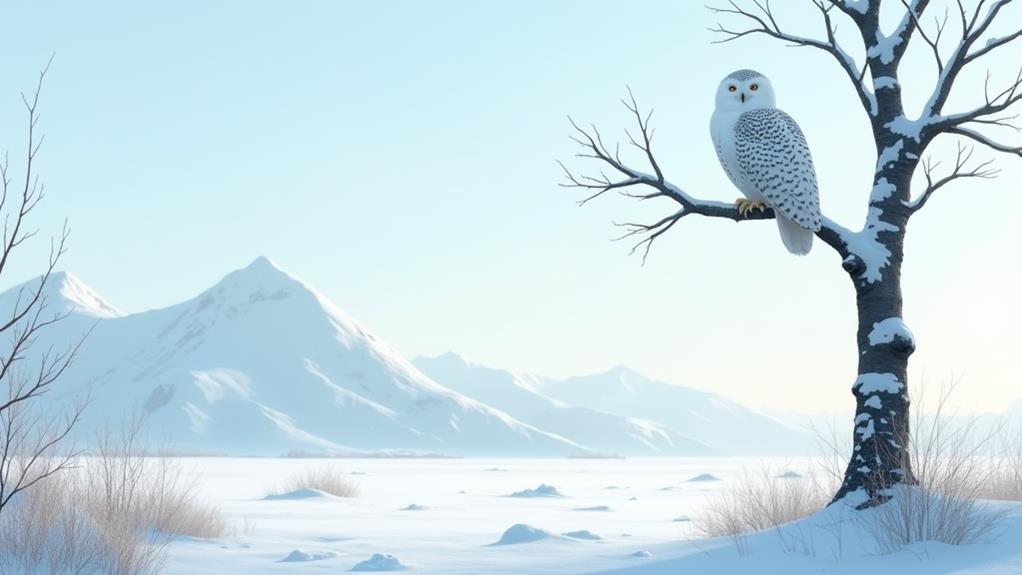
In the vast, stark tundras where icy winds carve the landscape, the snowy owl reigns as a majestic sentinel. Their ethereal white feathers blend seamlessly with the snow, evoking a sense of mystery and wild grace. It is a common observation to marvel at their striking presence against the barren backdrop. Yet, beneath this surface fascination lies a pressing concern: the intricate interplay between these magnificent birds and the encroaching sprawl of oil and gas development. This intersection raises profound questions about survival, resilience, and the cost of progress on one of the Arctic’s most enigmatic inhabitants.
The Snowy Owl’s Unique Ecological Niche
The snowy owl is not merely a captivating creature of frozen realms; it occupies a distinctive ecological niche that highlights its adaptability and specialized survival strategies. Native to the Arctic tundra, these raptors depend on vast expanses of undisturbed land to hunt lemmings, voles, and other small mammals — their primary prey. Their hunting success is a delicate balance dictated by terrain accessibility and prey availability, both of which are finely tuned to a pristine environment.
Snowy owls breed on the open tundra, creating nests directly on the ground, which underscores their reliance on an unfragmented, relatively undisturbed habitat. The absence of tall trees or dense vegetation makes them extraordinarily vulnerable to changes in landscape architecture. Their life cycle is intimately entwined with the rhythmic pulses of the Arctic ecosystem, where any disruption can ripple through their survival prospects.
Oil and Gas Development: Expanding Frontiers, Shrinking Habitats
The accelerating expansion of oil and gas operations across the Arctic has transformed once-pristine wildernesses into landscapes marked by machinery, infrastructure, and human activity. Roads, drilling rigs, seismic lines, and pipelines carve linear scars through the tundra, fragmenting habitats that snowy owls rely upon. This industrial footprint manually reshapes the environment at a scale and speed that outpaces natural recovery processes, posing existential threats to vulnerable species.
Fragmentation not only reduces contiguous nesting and hunting zones but also creates edge habitats that alter predation pressures and competition. No longer do snowy owls face a relatively simple set of ecological variables; they must navigate a labyrinth of human-induced changes that affect their entire life history. Moreover, noise pollution and artificial light disrupt nocturnal behaviors pivotal for hunting and mating. These disturbances erode the integrity of their critical habitat in subtle but profound ways.
Consequences for Hunting and Breeding Success
The spatial reorganization of the tundra due to hydrocarbon exploitation adversely impacts snowy owl hunting efficiency. Lemmings, the cornerstone of their diet, are sensitive to habitat alterations. The degradation of vegetative cover and soil compaction from vehicles and infrastructure diminishes lemming populations, reducing the prey base indispensable to snowy owl sustenance and chick rearing.
Furthermore, snowy owls’ ground nests become more susceptible to predation and trampling with increased human presence. Industrial activities often coincide with the critical breeding season, heightening the risk of nest abandonment or failure. Such disturbances may induce chronic stress, compromising reproductive output and juvenile survival. Each lost clutch represents a significant blow to regional population stability, where snowy owls already face numerous environmental constraints.
Pollution and Its Insidious Effects
Beyond physical habitat alteration, pollution stemming from oil and gas development poses insidious threats. Hydrocarbon spills, runoff, and airborne contaminants introduce toxic substances into the food web. Snowy owls, as apex predators, are vulnerable to bioaccumulation of heavy metals, polycyclic aromatic hydrocarbons, and other pollutants, which can impair immune function, disrupt endocrine systems, and reduce overall fitness.
Such chemical exposures shift the baseline of health and longevity, making snowy owls less resilient in the face of other environmental stresses. The snow-covered landscape that once seemed pristine harbors invisible perils that degrade the quality of life and exacerbate population declines over time.
Climate Change as an Amplifying Factor
Intricately linked with fossil fuel extraction is the accelerating pace of climate change, which transforms the Arctic in unprecedented ways. Warmer temperatures and altered precipitation patterns affect snow cover duration and the phenology of prey species, further complicating the snowy owl’s ecological calculus. Diminished snow cover undermines their camouflage, increasing predation risks and decreasing hunting success.
Moreover, climate-induced shifts in species distributions may introduce novel competitors and predators, compounding the pressures on snowy owls already stressed by habitat encroachment. The synergy between industrial development and climate change presents a labyrinthine challenge that threatens to unravel ancient ecological balances.
Conservation Efforts and Sustainable Development
Confronting the impact of oil and gas development on snowy owl habitats demands a holistic approach that marries conservation imperatives with responsible resource extraction. Protecting critical breeding and hunting grounds through strategic land-use planning helps maintain contiguous habitats resistant to fragmentation. Establishing buffer zones and temporal restrictions on industrial activities during sensitive biological periods can mitigate disturbances.
Technology also offers hope, with innovations aimed at reducing surface footprints, minimizing pollution, and employing quieter equipment. Collaboration between industry stakeholders, ecologists, and indigenous communities fosters indigenous knowledge integration and promotes stewardship aligned with long-term ecosystem health.
The future of snowy owls depends on such multifaceted strategies that honor their ecological significance while balancing humanity’s resource needs. Their survival story is not just a tale of bird and tundra; it is a potent symbol of our capacity for coexistence with nature.
Reflections on Our Fascination and Responsibility
Why does the snowy owl captivate us so? Its mesmerizing appearance, haunting calls, and resilient presence in one of Earth’s harshest environments evoke a deep sense of wonder. Yet, the intrigue extends beyond surface aesthetics—it stirs a palpable connection to wildness, to worlds untouched by human haste.
This fascination, however, carries an unspoken mandate: to understand the forces that threaten such creatures and to act with foresight and respect. The snowy owl’s fate entwines with broader ecological narratives about stewardship, exploitation, and the enduring costs of progress. As we peer into those icy eyes, we glimpse more than a bird; we see the reflection of a fragile balance, one we are duty-bound to preserve.