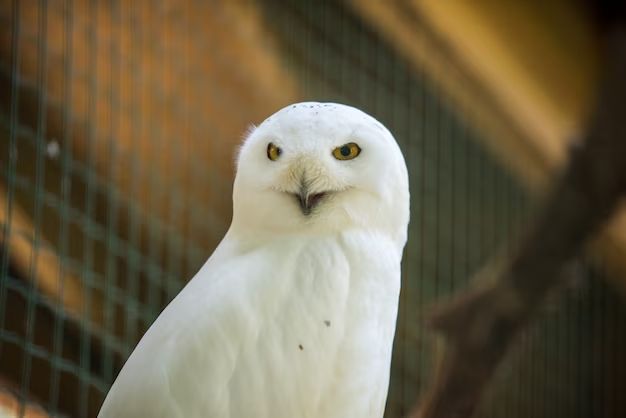
In the vast, whispering tundras where the Arctic winds carve their stories into the ice, the snowy owl glides like a spectral guardian—its feathers a blizzard given form, its gaze a piercing comet’s tail across the endless white. Yet, beyond the frozen horizons, a quieter drama unfolds. Zoos and wildlife sanctuaries, those modern-day arks of compassion, have become unexpected allies in the snowy owl’s survival tale. While the wild calls these birds home, captivity offers a sanctuary not just for individuals, but for the very future of the species. Here, in carefully crafted enclosures bathed in the glow of conservation science, snowy owls are more than exhibits—they are living ambassadors, educators, and silent warriors in the fight against extinction.
The Arctic Phantom Meets the Urban Ark: A Tale of Two Worlds
Picture the snowy owl in its natural domain: a vast, windswept expanse where the sun barely grazes the horizon in winter, and the summer sun never truly sets. This is the realm of *Nyctea scandiaca*—a name that whispers of Scandinavian nights and frozen skies. Yet, as climate change melts the permafrost and human encroachment shrinks its habitat, the owl’s domain fractures like thin ice underfoot. Enter the zoo: a controlled microcosm of the wild, where temperature, space, and even daylight can be artfully manipulated to mimic the owl’s ancestral rhythms.
In these urban arks, snowy owls are no longer wanderers of the wind. They become storytellers. Their presence in zoos transforms cold statistics into living, breathing narratives. A child gazes up at those golden eyes, and suddenly, the Arctic isn’t a distant postcard—it’s a place worth protecting. This is the magic of the captive environment: it turns conservation into empathy, and empathy into action.
From Rescue to Revival: The Sanctuary’s Silent Symphony
Not all snowy owls in captivity are there by choice. Some arrive as orphans, their parents lost to collisions with power lines or the relentless march of development. Others are injured, their wings broken by storms or human interference. Sanctuaries become their convalescent homes, where veterinarians and caretakers conduct a symphony of healing—each note a carefully measured dose of antibiotics, each restorative silence a period of enforced stillness as broken bones knit back together.
But healing is only the first movement. The second is rehabilitation. In spacious, open-air aviaries designed to simulate the owl’s natural hunting grounds, these birds relearn the art of flight, the precision of the stoop, the patience of the watcher. Some are deemed unreleasable—too habituated to humans, too compromised by injury. For these, captivity becomes a lifelong calling. They become educators, their presence in educational programs inspiring generations to care about the wild.
The Breeding Paradox: Love in the Time of Climate Crisis
One of the most profound roles of zoos is as breeding grounds—not just for survival, but for hope. Snowy owls, like all raptors, are notoriously difficult to breed in captivity. Their mating rituals are complex, their environmental triggers delicate. Yet, when success blooms, it is nothing short of alchemy. A pair of owls, carefully matched by geneticists and behavioral specialists, may produce a clutch of downy chicks that represent the future of the species.
These chicks are not just new life—they are insurance policies against extinction. In a world where the Arctic thaws earlier each year, where lemmings (the owl’s primary prey) vanish in unpredictable cycles, captive breeding offers a buffer. It’s a paradox: the very places that confine these birds also give them a chance to thrive beyond the wild’s unpredictable whims. Each chick hatched in a zoo is a defiant spark in the gathering dusk of climate change.
The Enclosure as Ecosystem: Crafting a Miniature Wilderness
To house a snowy owl is to become an architect of illusion. The enclosure must be vast enough to allow flight, yet secure enough to prevent escape. It must mimic the undulating terrain of the tundra—rolling hills of artificial snow, patches of hardy Arctic vegetation, and elevated perches that offer panoramic views. Some zoos go further, introducing live prey in controlled settings to stimulate natural hunting behaviors, or even using scent trails to recreate the thrill of the chase.
But the true art lies in the details. The temperature must fluctuate with the seasons. The lighting must shift to replicate the Arctic’s endless days and starless nights. Even the substrate—whether sand, gravel, or synthetic snow—must feel authentic beneath taloned feet. It’s a high-wire act of design, where every element must serve the owl’s physical and psychological well-being. Fail, and the bird may become listless, stressed, or worse—indifferent to its own survival.
Beyond the Bars: Education and the Ripple Effect of Awareness
The most powerful tool in a zoo’s arsenal is not its veterinary team or its breeding programs—it’s its visitors. A snowy owl in captivity is a living lesson. Its golden eyes, once a symbol of the untamed wild, now reflect the faces of curious children and awestruck adults. Each visit becomes a moment of connection, a spark that could ignite a lifelong passion for conservation.
Zoos leverage this connection through interpretive programs, where keepers share stories of individual owls—the one that overcame a broken wing, the one that teaches chicks to hunt, the one that seems to recognize its caretakers. These narratives humanize the species, stripping away the mystique of the “Arctic phantom” to reveal a creature of intelligence, resilience, and quiet dignity. The ripple effect is profound: a visitor who leaves with a newfound respect for snowy owls is more likely to support policies that protect their habitat, donate to conservation efforts, or even choose sustainable lifestyles.
The Ethical Tightrope: Conservation vs. Captivity
Yet, for all its benefits, captivity is not without controversy. Critics argue that no enclosure, no matter how well-designed, can replicate the freedom of the wild. They question whether breeding programs truly aid wild populations or merely create a dependent class of animals. The ethical tightrope is taut: on one side, the moral imperative to save a species; on the other, the risk of normalizing captivity as a solution to human-caused problems.
Zoos counter this by emphasizing their role as stewards, not captors. They argue that their primary mission is conservation, not entertainment—that every snowy owl in their care is part of a larger strategy to ensure the species’ survival. They point to successful reintroduction programs, where captive-bred owls have been released into the wild with tracking devices, their movements monitored to ensure they adapt and thrive. These are not just stories of survival—they are testaments to the power of human intervention when wielded with care and responsibility.
The Future: A World Where Zoos Are Obsolete?
Ideally, the day will come when snowy owls no longer need the shelter of zoos and sanctuaries. When the Arctic’s lemming populations stabilize, when climate change reverses its course, when human encroachment halts and reverses—then, perhaps, these birds will reclaim their frozen kingdoms without fear. Until then, zoos remain a necessary paradox: a blend of confinement and care, of loss and hope.
In the grand tapestry of conservation, snowy owls in captivity are threads of silver against a backdrop of gray. They remind us that even in a world that often prioritizes convenience over wilderness, there are still places where compassion dictates the rules. They teach us that survival is not just about strength, but about adaptability—and that sometimes, the most radical act of love is to hold on tight, even when the world outside is crumbling.