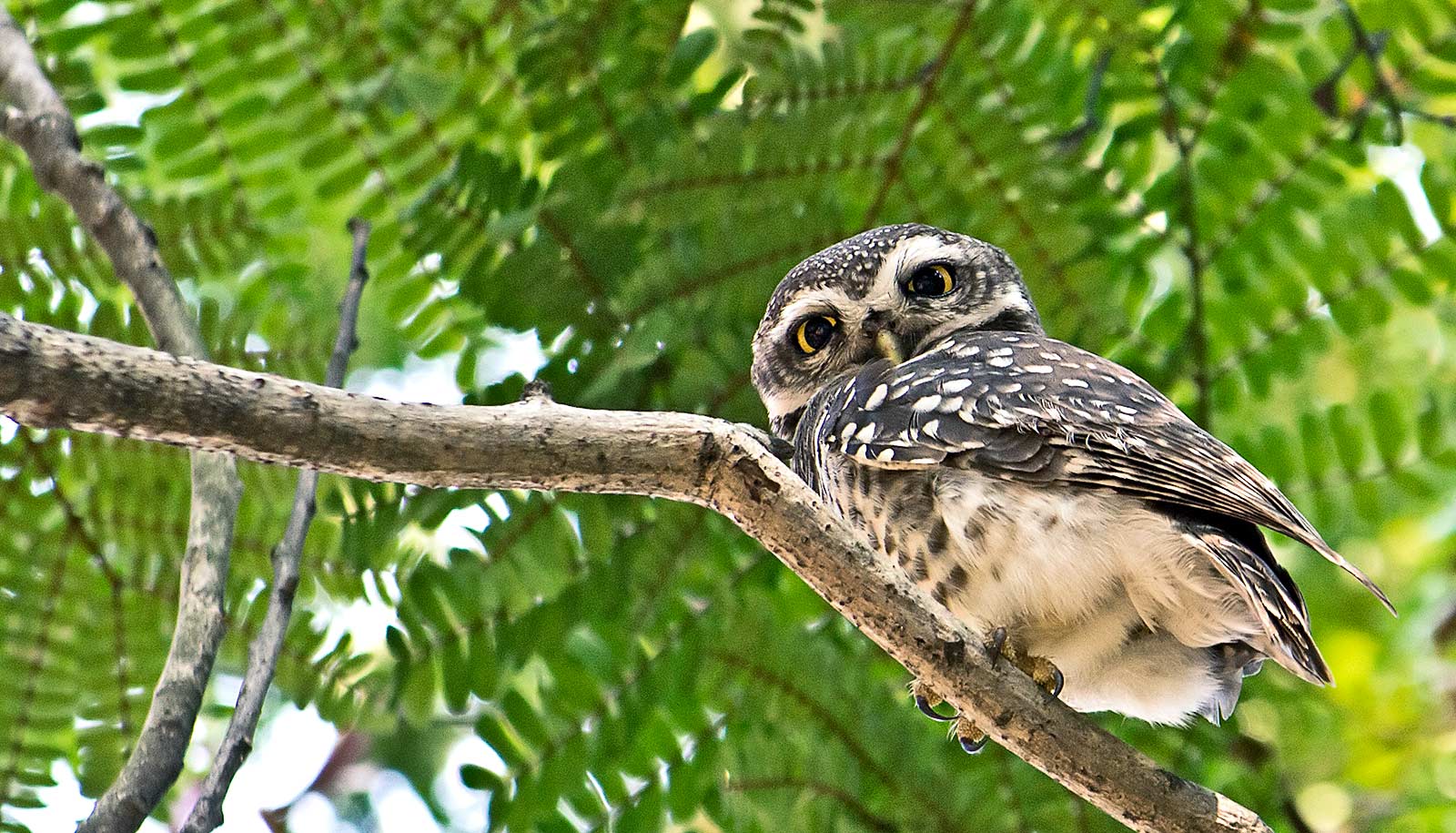
In the emerald shadows of ancient forests, where the air hums with the whispers of unseen creatures, a silent battle rages—not of swords or bullets, but of survival. The spotted owl, a bird of quiet dignity and haunting gaze, has become an unwitting symbol of a far greater struggle: the collision between conservation and private land ownership. For decades, this enigmatic creature has been at the center of environmental policy, its fate intertwined with the hands of those who own the land it calls home. But what if the key to its survival doesn’t lie solely in government mandates or sweeping regulations, but in the hands of the very people who walk those woods every day? The story of the spotted owl is not just about a bird—it’s about people, choices, and the fragile balance between humanity and the wild.
The Owl as a Mirror: Reflecting the Fractures in Conservation
Spotted owls are more than just feathered sentinels of the forest; they are living barometers of ecological health. Their presence—or absence—tells a story of habitat loss, climate change, and the relentless march of human development. Yet, their plight has also exposed deeper fractures in how we approach conservation. For years, the debate has been framed as a clash between environmentalists demanding protection and private landowners resisting what they see as overreach. But this binary is a dangerous oversimplification. It ignores the fact that private landowners are not monolithic villains or passive bystanders; they are stewards, entrepreneurs, and sometimes, reluctant participants in a system that often leaves them with little incentive to prioritize biodiversity.
The spotted owl’s decline is not merely a tale of deforestation. It is a narrative of fragmented landscapes, where even the most well-intentioned policies can fail if they do not account for the human dimension. Private landowners, whether they manage timberlands, ranches, or recreational properties, hold the power to either exacerbate or alleviate the owl’s struggles. The question is no longer whether they should participate in conservation, but how we can transform their role from adversaries to allies—without stripping them of their livelihoods or autonomy.
The Invisible Hand: How Market Forces Shape Conservation
Economics, that invisible hand guiding so many decisions, has long dictated the fate of the spotted owl’s habitat. Timber harvesting, real estate development, and agricultural expansion have carved up the owl’s domain, leaving it with fewer and fewer places to nest and hunt. But what if the market itself could be harnessed to protect rather than destroy? Conservation finance, a burgeoning field, offers a tantalizing possibility: rewarding landowners for preserving habitat rather than exploiting it.
Imagine a world where private landowners are not just passive recipients of regulations, but active participants in a system that values their role in sustaining biodiversity. Conservation easements, for instance, allow landowners to retain ownership while permanently protecting critical habitats. Tax incentives can make conservation financially viable, turning a liability into an asset. Even emerging concepts like “payments for ecosystem services” could compensate landowners for maintaining owl-friendly forests, creating a direct link between their stewardship and tangible rewards. The key lies in designing these mechanisms not as punitive measures, but as collaborative opportunities—where conservation and profit are not mutually exclusive, but mutually reinforcing.
The Human Element: Stories from the Ground
Behind every policy and every statistic are real people—landowners who have spent generations tending the land, whose families have relied on its resources, and whose identities are woven into the fabric of their property. For some, the spotted owl is seen as a threat, a symbol of government overreach that threatens their way of life. For others, it is a calling, a chance to leave a legacy that extends beyond their lifetime. These are not faceless opponents or unquestioning allies; they are individuals with fears, hopes, and a deep connection to the land.
Consider the rancher in Oregon who, after years of battling drought and rising costs, finds himself at odds with conservationists over a small patch of old-growth forest on his property. Or the timber family in Washington who, after generations of harvesting, now faces the prospect of their land being designated as critical habitat, limiting their ability to manage it sustainably. These stories are not outliers; they are the lived reality of conservation in the 21st century. Ignoring them—or worse, dismissing them as obstacles—only deepens the divide. True progress requires listening, understanding, and co-creating solutions that honor both the owl’s needs and the landowner’s rights.
Beyond the Binary: A New Covenant with the Land
The spotted owl’s survival hinges on our ability to transcend the tired narratives of conflict and embrace a new covenant with the land—one that recognizes the interconnectedness of all life, human and non-human alike. This means moving beyond the zero-sum game of “jobs vs. owls” and instead exploring innovative models where conservation and economic viability coexist. It means acknowledging that private landowners are not the enemy, but potential partners in a shared mission.
One such model is adaptive management, where conservation strategies are flexible, data-driven, and responsive to real-world conditions. Instead of rigid, one-size-fits-all regulations, adaptive management allows for experimentation and learning, giving landowners the autonomy to implement solutions that work for their unique landscapes. Another is community-based conservation, where local stakeholders—including landowners, Indigenous communities, and conservationists—collaborate to design and implement habitat protection strategies. These approaches recognize that the owl’s fate is not just an environmental issue, but a social and economic one as well.
The path forward is not without challenges. Trust must be rebuilt. Incentives must be aligned. And perhaps most importantly, we must confront the uncomfortable truth that conservation is not just about saving species—it’s about redefining our relationship with the land and with each other. The spotted owl, with its piercing eyes and silent flight, is not just a creature of the forest; it is a messenger, urging us to ask ourselves what kind of world we want to leave behind.
The Ripple Effect: How Saving the Owl Could Save Us All
The fate of the spotted owl is a microcosm of a much larger story—one about the health of our ecosystems, the resilience of our communities, and the future of our planet. If we can find a way to protect this bird without pitting people against each other, we may just uncover a blueprint for conservation that works not just for owls, but for all of us. The owl’s survival depends on it. And so, in a way, does ours.