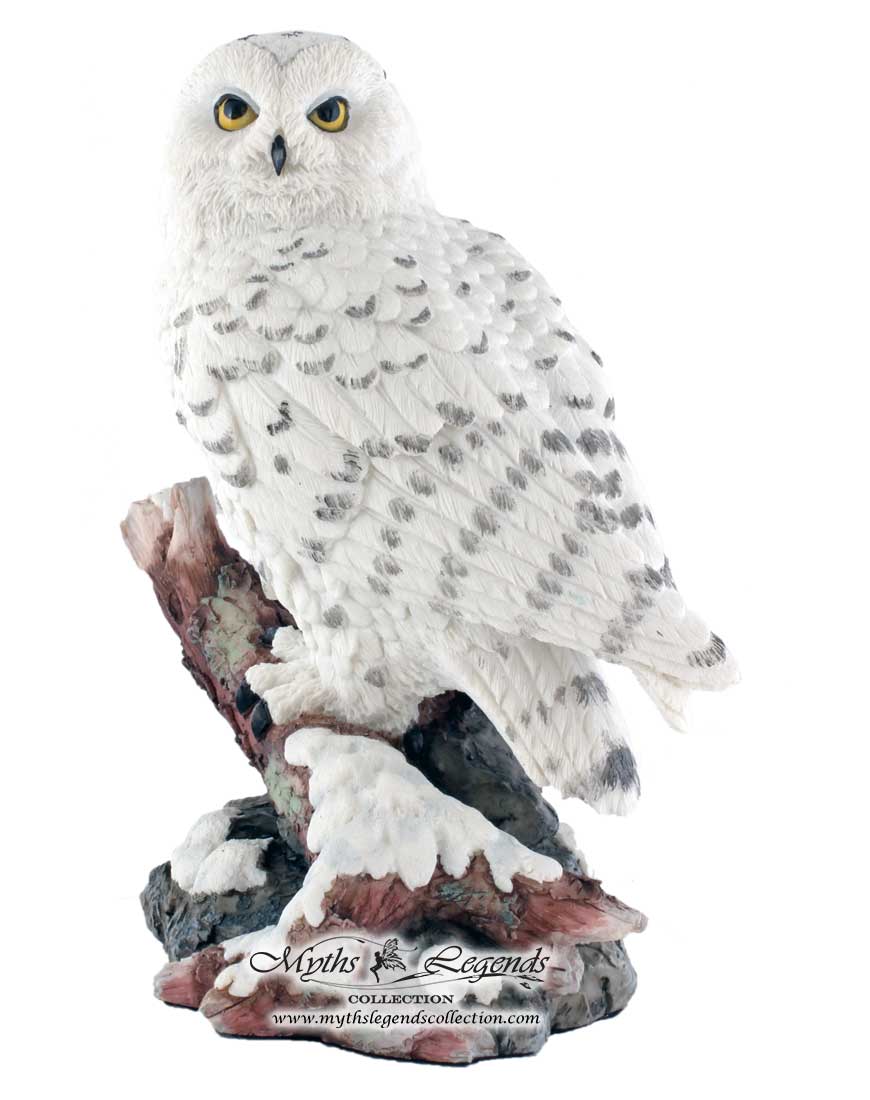
The snowy owl, with its ethereal white plumage and piercing golden eyes, is more than just a bird of the Arctic tundra—it is a living emblem of mystery, resilience, and ancient wisdom. For centuries, this majestic creature has captivated the human imagination, weaving its way through myths, legends, and modern folklore. Its presence in the cultural landscape is not merely a testament to nature’s beauty but a reflection of humanity’s enduring fascination with the unknown. From the icy expanses of the Far North to the pages of contemporary literature, the snowy owl has transcended its biological existence to become a symbol of transformation, intuition, and the untamed spirit of the wild. What is it about this bird that has made it a perennial muse for storytellers, artists, and dreamers alike? The answer lies in the interplay between its stark, otherworldly appearance and the rich tapestry of meanings humanity has draped over it.
The Arctic Phantom: Snowy Owls in Indigenous Lore and Cosmology
In the frozen heart of the Arctic, where the sun dips below the horizon for months on end, the snowy owl reigns as a celestial messenger. Indigenous peoples of the North, from the Inuit of Greenland to the Sámi of Scandinavia, have long revered this bird as a bridge between the earthly and the spiritual realms. To the Inuit, the snowy owl is *Tukturjuk*, a guardian of the hunt, its silent flight a reminder of the delicate balance between predator and prey. Legends speak of it as a guide for lost travelers, its hoots echoing through the blizzards like a beacon of hope. The Sámi, meanwhile, associate the owl with *Noaidi*, shamans who traverse the spirit world, their rituals often invoking the owl’s keen vision to pierce the veil of illusion. These stories are not mere fables; they are a testament to the owl’s role as a silent witness to the cycles of life and death in the harshest of environments. To dismiss these tales as mere superstition is to overlook the profound ecological and spiritual lessons they encode—lessons about adaptability, foresight, and the interconnectedness of all living things.
From Athena’s Companion to Harry Potter’s Familiar: The Owl in Western Mythology
The snowy owl’s cultural footprint extends far beyond the Arctic Circle, embedding itself in the mythologies of ancient Greece and the modern imagination alike. In Greek lore, the owl was sacred to Athena, goddess of wisdom, its unblinking gaze a symbol of knowledge and strategic prowess. Yet, the snowy owl’s alabaster feathers set it apart from its darker, more common relatives, lending it an air of otherworldly purity. Fast-forward to the 20th century, and the owl’s mystique is repurposed in J.K. Rowling’s *Harry Potter* series, where Hedwig, Harry’s snowy owl, becomes a symbol of loyalty and protection. This shift from divine emblem to magical companion reflects humanity’s evolving relationship with nature—once revered as a deity, now cherished as a friend. The snowy owl, in particular, embodies this duality: a creature of both ancient divinity and contemporary companionship, its white plumage a blank canvas onto which we project our hopes, fears, and dreams.
The Harbinger of Change: Snowy Owls in Folklore and Superstition
Across Europe and North America, the snowy owl has been cast in the role of an omen, its sudden appearances often interpreted as foretellers of significant events. In medieval Europe, the owl’s nocturnal habits and eerie calls made it a creature of ill repute, associated with witchcraft and misfortune. Yet, in other traditions, its arrival was seen as a blessing—a sign of impending prosperity or a bountiful harvest. Scandinavian folklore, for instance, tells of the *Jólnir*, a snowy owl that accompanies the winter solstice, its presence a reminder of the sun’s eventual return. Similarly, in North American Indigenous stories, the owl is sometimes depicted as a trickster, using its wit to outmaneuver stronger foes. These contradictory narratives reveal a deeper truth: the snowy owl, like all symbols, is a mirror. It reflects the fears and aspirations of the cultures that revere it, serving as a reminder that nature’s creatures are never just what they seem.
Ecological Marvels: The Snowy Owl’s Role in the Natural World
Beyond its mythological allure, the snowy owl is a marvel of evolutionary adaptation. Unlike its temperate counterparts, this Arctic dweller thrives in conditions that would cripple most other species. Its dense, insulating feathers allow it to withstand temperatures as low as -50°C, while its keen eyesight and silent flight make it an unparalleled hunter. Lemmings, its primary prey, form the backbone of its diet, and the owl’s population cycles often mirror the boom-and-bust dynamics of these small rodents. Yet, the snowy owl’s existence is not without peril. Climate change, habitat destruction, and human encroachment threaten its delicate balance with the environment. As the Arctic warms, the owl’s traditional hunting grounds shrink, forcing it to adapt or perish. This ecological precariousness adds a layer of urgency to its cultural significance—it is not just a symbol, but a living barometer of the planet’s health. To protect the snowy owl is to safeguard the Arctic’s soul, a place where myth and reality intertwine in the most visceral way.
The Modern Obsession: From Field Guides to Social Media
In the digital age, the snowy owl has found a new kind of immortality. Social media platforms brim with viral videos of these birds perched on frozen lakes or soaring against the aurora borealis, their images shared millions of times over. Citizen science projects, like the *Snowy Owl Project*, invite birdwatchers to track their movements, turning amateur enthusiasts into stewards of conservation. Even fashion and design have succumbed to its charm, with snowy owl motifs adorning everything from winter coats to home decor. This modern fascination is not merely a passing trend; it is a reflection of our collective yearning for connection—to nature, to each other, and to something greater than ourselves. The snowy owl, with its stoic beauty and untamed spirit, offers a rare glimpse into a world untouched by human hands. In an era of rapid technological advancement, it reminds us that some mysteries are best left unsolved, some beauties best left unexamined too closely.
The Snowy Owl as a Metaphor: What It Teaches Us About Ourselves
Perhaps the most enduring aspect of the snowy owl’s cultural significance is its role as a metaphor for the human condition. Its white plumage, a camouflage in the snow, speaks to the duality of visibility and concealment—how we present ourselves to the world versus who we truly are. Its solitary nature, roaming vast, empty landscapes, mirrors our own search for meaning in an increasingly crowded world. And its resilience, surviving against all odds, is a testament to the indomitable spirit that lies within us all. The snowy owl does not just inhabit our myths and legends; it embodies them. It is a reminder that beauty and danger often coexist, that wisdom comes from stillness, and that the most profound truths are often found in the quietest places. To truly understand the snowy owl is to confront our own reflections—not as we wish to be seen, but as we are: creatures of light and shadow, of myth and reality, forever searching for the next horizon.