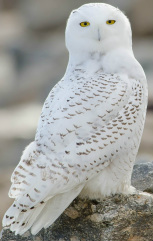
The Arctic tundra, a vast and seemingly desolate expanse, pulses with an intricate dance of life beneath its frozen veneer. Among its most enigmatic performers is the snowy owl, a creature of stark contrasts—its snowy plumage a camouflage against the endless white, its piercing gaze a sentinel over the delicate balance of an ecosystem on the edge of change. To the casual observer, these owls appear as mere predators, their presence a fleeting spectacle against the backdrop of an unforgiving landscape. Yet, their role extends far beyond the hunt; they are unsung architects of carbon cycling, their existence woven into the very fabric of the Arctic’s metabolic rhythms. To understand the snowy owl is to glimpse the hidden currents of life and death that sustain the North, where every breath, every meal, and every migration whispers a story of survival in a world teetering on the edge of thaw.
The Arctic’s Silent Metabolism: Carbon in the Permafrost
The Arctic is not a static wasteland but a dynamic reservoir of carbon, its permafrost a time capsule of millennia-old organic matter. Beneath the surface, frozen soils lock away nearly twice the carbon currently present in Earth’s atmosphere. Yet, this carbon is not inert; it is a ticking clock, its release governed by the whims of thaw and the voracity of microbial life. The snowy owl, though not a direct participant in microbial decomposition, exerts an indirect but profound influence on this subterranean pulse. By preying on lemmings and voles—rodents whose populations oscillate in dramatic cycles—the owl curtails their numbers, preventing overgrazing of vegetation that would otherwise accelerate permafrost degradation. In this way, the owl becomes an unwitting guardian of the carbon vault, its hunting patterns a subtle brake on the thaw’s advance.
The Lemming Paradox: A Keystone Species in Carbon’s Web
Lemmings, those unassuming harbingers of Arctic chaos, are the linchpins of the tundra’s carbon cycle. Their burrowing aerates the soil, their grazing stimulates plant regrowth, and their carcasses fertilize the earth. Yet, their populations are a double-edged sword. In boom years, their voracious appetites can denude the landscape, exposing the permafrost to sunlight and warmth. The snowy owl, as a primary predator, steps in to restore balance. By culling lemming numbers during peak years, the owl prevents the cascade of ecological collapse that would follow unchecked herbivory. This predatory stewardship ensures that the tundra’s vegetation remains a carbon sink rather than a source, its roots stabilizing the soil and its biomass sequestering atmospheric CO₂. The owl’s presence, therefore, is a silent contract between predator and prey, a pact that maintains the Arctic’s fragile equilibrium.
Feathers and Fossils: The Owl’s Role in Nutrient Recycling
Beyond the soil, the snowy owl’s influence permeates the Arctic’s nutrient cycles. Their pellets—regurgitated masses of indigestible fur and bone—are not mere biological waste but packets of concentrated nutrients. Scattered across the tundra, these pellets decompose, enriching the soil with nitrogen and phosphorus, elements critical for plant growth. In this way, the owl acts as a mobile fertilizer factory, its digestive system a conduit for the redistribution of vital minerals. The irony is palpable: a creature often seen as a harbinger of death becomes an agent of renewal, its very waste a lifeline for the plants that will, in turn, feed the herbivores that sustain the ecosystem. The owl’s role is thus cyclical, a testament to the interconnectedness of life and death in the Arctic’s grand design.
The Thaw’s Toll: How Climate Change Alters the Owl’s Dance
Yet, the Arctic is not what it once was. The relentless march of climate change has begun to unravel the snowy owl’s carefully choreographed existence. Warmer winters, erratic snowfall, and shifting prey availability have thrown the owl’s hunting strategies into disarray. Lemmings, once predictable in their population booms, now face erratic cycles, leaving owls to adapt or perish. The owl’s role as a carbon cycle regulator is thus under siege. With fewer lemmings to cull, vegetation may face renewed pressure, accelerating permafrost thaw and releasing stored carbon. The owl, once a stabilizer, becomes a victim of the very changes it inadvertently mitigates. This paradox underscores the fragility of the Arctic’s web—a system where every player, no matter how seemingly insignificant, holds the potential to tip the scales toward collapse or resilience.
The Owl’s Gaze: A Window into the Arctic’s Future
To study the snowy owl is to peer into the Arctic’s soul. Its piercing yellow eyes, unblinking and unyielding, reflect not just the landscape but the pulse of an ecosystem in flux. The owl’s migrations, its hunting grounds, its reproductive success—all are barometers of the Arctic’s health. In an era where the North is warming at twice the global average, the owl’s story is a cautionary tale. It is a reminder that the Arctic is not a monolith but a mosaic of interactions, where the fate of a single species can ripple through the carbon cycle, altering the trajectory of the entire region. The owl’s presence is a call to action, a plea to recognize the interconnectedness of life and the urgent need to preserve the delicate balance that sustains it.
The Unseen Symphony: Owls, Carbon, and the Arctic’s Breath
There is a poetry to the snowy owl’s role in the Arctic’s carbon cycle, a silent symphony played out in the frozen expanse. The owl’s hunting grounds are not just territories but stages in a grand performance, where every meal is a note in the composition of life. Its feathers, its pellets, its very existence are threads in the tapestry of the North, each contributing to the rhythm of carbon sequestration and release. To overlook the owl is to miss the melody of the Arctic—a melody that grows fainter with each passing year. The owl’s story is a testament to the power of the unseen, a reminder that the most profound impacts are often those that go unnoticed until the music stops.