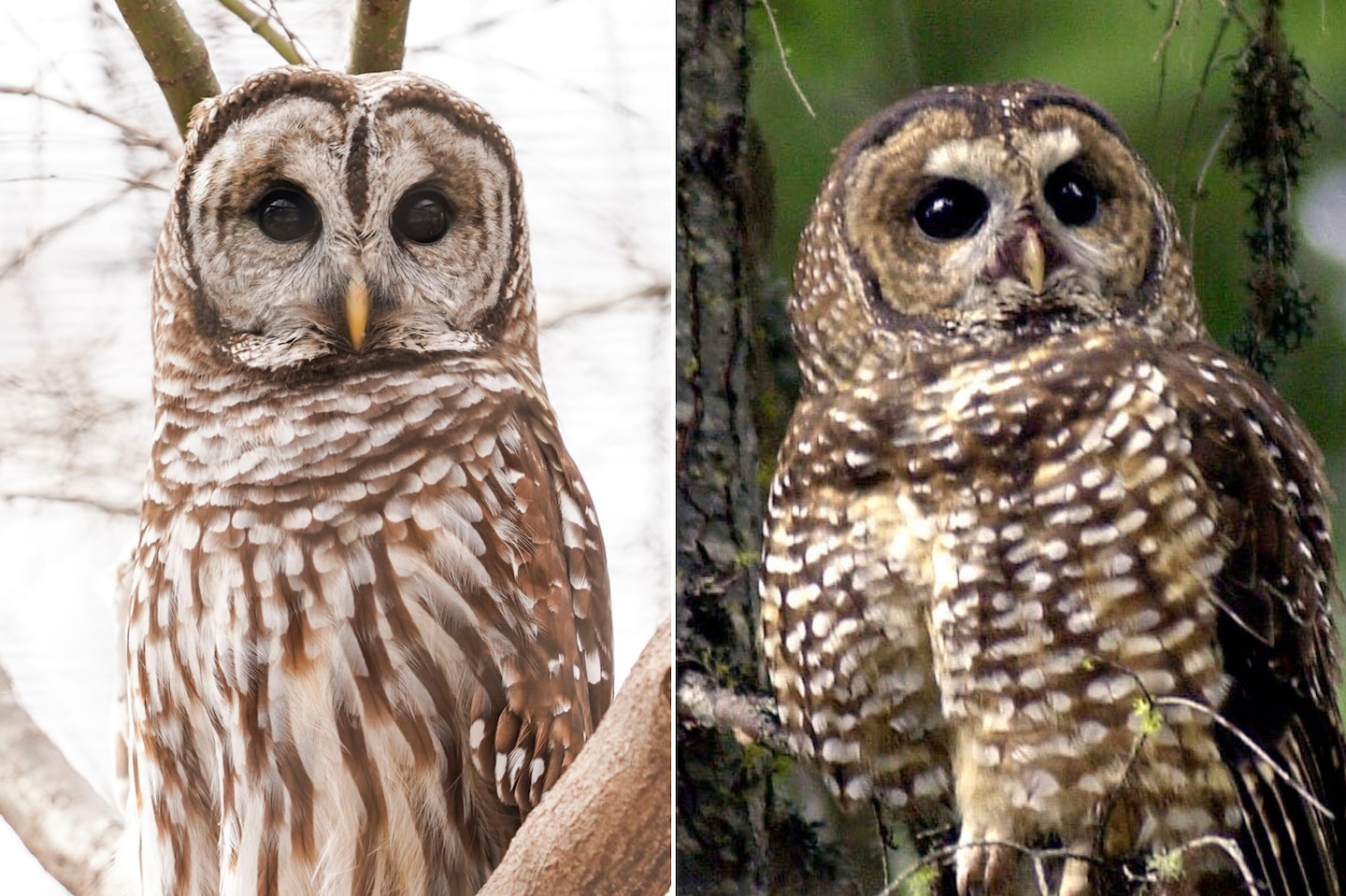
The silent sentinels of the forest, barred and spotted owls, have long been subjects of ecological fascination and conservation urgency. Their nocturnal habits and elusive nature make traditional observation methods nearly obsolete, but the advent of camera traps has revolutionized how researchers study their interactions. These unblinking mechanical eyes have peeled back layers of mystery, revealing the complex dynamics between these two owl species in ways previously unimaginable. From documenting territorial skirmishes to capturing the subtleties of coexistence, camera traps are not just tools—they are storytellers of the wild, whispering secrets of the night through pixels and infrared beams.
The Unseen Battles: Territorial Disputes and Aggression
Barred owls, with their boisterous calls and adaptable nature, have encroached upon the habitats of spotted owls, a species already teetering on the edge of decline. Camera traps have become the frontline witnesses to these silent wars, capturing the raw intensity of territorial disputes. The footage often reveals barred owls asserting dominance, their piercing yellow eyes locking onto intruders with unnerving precision. Spotted owls, smaller and more reclusive, are frequently seen retreating, their mottled plumage blending into the shadows as they yield to the larger, more aggressive invaders. These interactions are not mere anecdotes; they are data points that underscore the ecological displacement occurring in North America’s old-growth forests. The high-definition clarity of modern camera traps allows researchers to analyze body language, flight patterns, and even vocalizations, painting a vivid picture of the struggle for survival.
The Subtle Art of Coexistence: When Conflict Yields to Tolerance
Not all interactions between barred and spotted owls are fraught with tension. Camera traps have documented moments of uneasy truce, where the two species share space without overt aggression. These fleeting instances of coexistence are often tied to resource abundance—perhaps a particularly bountiful rodent population or a cluster of nesting sites. The footage reveals a delicate balance, where barred owls, despite their dominance, tolerate spotted owls when the ecological table is rich enough to feed both. Researchers have noted that spotted owls sometimes alter their hunting times to avoid barred owls, a behavioral adaptation that speaks volumes about the adaptability of these birds. Camera traps, with their ability to operate 24/7, have been instrumental in capturing these nuanced shifts in behavior, proving that nature’s conflicts are not always zero-sum games.
Technological Marvels: How Camera Traps Decode Owl Language
The sophistication of modern camera traps extends far beyond mere motion detection. Today’s devices are equipped with thermal imaging, night vision, and even AI-powered algorithms that can distinguish between species based on subtle visual cues. Some models utilize passive infrared sensors to detect body heat, ensuring that even the most stealthy owl is captured in its nocturnal wanderings. The data harvested from these devices is staggering in its granularity—researchers can track individual owls over years, mapping their territories, breeding cycles, and interactions with other species. The audio capabilities of some camera traps have also unlocked the secrets of owl communication, revealing how barred and spotted owls use calls to negotiate space, warn of predators, or signal mating readiness. This technological prowess transforms camera traps from passive observers into active participants in ecological research.
The Human Element: Ethical Considerations in Owl Surveillance
While camera traps offer unparalleled insights, their use raises ethical questions that cannot be ignored. The placement of these devices often requires intrusion into sensitive habitats, potentially disturbing nesting sites or altering animal behavior. Researchers must grapple with the paradox of invasive observation—how to gather data without becoming part of the problem. Some studies have shown that owls, particularly during breeding season, may abandon nests if they sense the presence of human-made equipment. The solution lies in meticulous planning: cameras are camouflaged, placed at strategic distances, and activated with minimal light pollution. The goal is to minimize disruption while maximizing knowledge. This ethical tightrope walk is a reminder that even the most advanced tools must be wielded with respect for the creatures they study.
From Data to Action: How Camera Traps Inform Conservation Strategies
The real power of camera traps lies in their ability to translate raw footage into actionable conservation strategies. The data they provide has been pivotal in shaping policies aimed at protecting spotted owls, from habitat restoration to targeted culling programs. By quantifying the frequency and intensity of barred owl incursions, researchers can advocate for targeted removals in critical spotted owl territories. The footage also serves as a compelling visual tool, bridging the gap between scientific research and public awareness. When policymakers and the public see the stark reality of these interactions—owls locked in silent combat, juveniles struggling to find food—they are more likely to support conservation efforts. Camera traps, in this sense, are not just tools of observation; they are catalysts for change.
The Future of Owl Research: AI, Drones, and Beyond
The frontier of owl research is being redrawn by emerging technologies. Artificial intelligence is being trained to analyze camera trap footage in real-time, identifying species, behaviors, and even individual owls with remarkable accuracy. Drones equipped with thermal cameras are now being deployed to survey vast forest canopies, complementing the ground-level data from camera traps. These innovations promise to fill in the remaining gaps in our understanding of owl interactions, from the impact of climate change on their habitats to the long-term effects of barred owl dominance. The future is one where the forest’s secrets are no longer hidden in the dark, but illuminated by the relentless gaze of technology.
The story of barred and spotted owls is a microcosm of the broader ecological challenges facing our planet. It is a tale of displacement, adaptation, and the fragile threads that bind species together. Camera traps have given us the means to listen to this story, frame by frame, in the quiet of the night. They remind us that conservation is not just about saving species—it is about understanding the intricate dance of life and ensuring that every creature, no matter how small or silent, has a place in the wild.