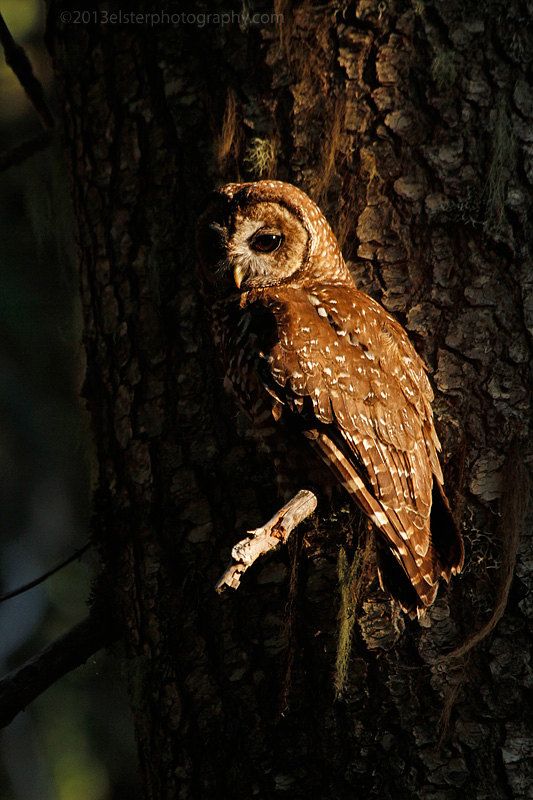
The forest breathes in hushed cadences, a symphony of rustling leaves and distant calls that echo through the ancient canopy. Here, in the twilight realm where dusk surrenders to night, the spotted owl reigns as a silent sovereign. Its presence is not announced with fanfare but revealed through the patient unraveling of time—each moment a thread woven into the tapestry of a perfect shot. To capture such a creature is not merely an act of photography; it is a meditation on stillness, a dialogue with the unseen, and a testament to the art of waiting.
The Owl as Muse: A Study in Patience and Presence
To wait for the spotted owl is to court the muse of the wild. This bird, cloaked in mottled plumage and eyes like polished obsidian, is not a subject to be rushed. It embodies the essence of patience, a creature that moves through the world with deliberate grace, its every action a calculated whisper. The photographer, too, must become a student of stillness, shedding the frenetic pulse of modernity to attune to the slower rhythms of nature.
Consider the owl’s hunting technique: it does not chase its prey but waits, suspended in the air like a feathered sentinel. The photographer must adopt a similar philosophy. The camera becomes an extension of the self, a third eye that sees not just with lenses but with intuition. Each rustle of a branch, each shift in the wind, becomes a clue—a silent language spoken in the language of the wild. To wait is not to endure but to participate in the unfolding mystery of the forest.
The Dance of Light and Shadow: Crafting the Illusion of Time
Light is the alchemist of the photographer’s craft, and in the realm of the spotted owl, it is a fickle partner. The golden hour, that fleeting window when the sun dips low and paints the world in amber, is not merely a time of day—it is a state of being. The owl, a creature of the crepuscular hours, thrives in this liminal space where day and night engage in a delicate waltz. To capture it is to freeze that dance, to trap the ephemeral glow in a frame that will outlast the moment itself.
Yet light is not the only player in this tableau. Shadow, too, has its role—a silent collaborator that adds depth and drama. The mottled feathers of the owl are not just camouflage; they are a canvas upon which light and dark paint their fleeting masterpiece. The photographer must learn to see in chiaroscuro, to embrace the interplay of illumination and obscurity. A well-placed shadow can turn a simple portrait into a story, a moment into a myth.
The Language of Silence: Communing with the Wild
Words fail in the presence of the spotted owl. It speaks not in chirps or screeches but in the language of silence—a silence so profound it becomes a presence unto itself. To wait for it is to enter into a pact of mutual respect. The photographer must become invisible, a ghost in the undergrowth, blending into the fabric of the forest until they are no longer seen as an intruder but as a silent witness to the owl’s world.
This communion requires more than technical skill; it demands a surrender of the ego. The photographer must listen with their entire being, attuning to the subtle shifts in the environment—the sudden stillness of the air, the cessation of bird calls, the way the light fractures through the leaves. These are the signs, the whispers of the owl’s approach. To rush is to break the spell; to wait is to become part of the forest’s heartbeat.
The Geometry of Waiting: Framing the Unseen
Patience is not passive; it is an active sculpting of space and time. The photographer must learn to frame the unseen, to anticipate the owl’s path before it materializes. This is where the art of composition becomes a form of divination. The rule of thirds, the golden spiral, the interplay of negative space—these are not rigid formulas but tools for unlocking the hidden order within chaos.
Consider the owl’s perch. A gnarled branch, a moss-covered trunk, the crook of an ancient tree—each offers a stage for the bird’s silent drama. The photographer must pre-visualize these spaces, imagining how the owl’s form will intersect with the lines of the frame. Will it be a silhouette against the sky, a study in contrast? Or will it emerge from the shadows, its eyes catching the light like twin embers? The geometry of waiting is a dance of anticipation, where every decision is a brushstroke in the making of a masterpiece.
The Reward of the Chase: When Patience Bears Fruit
There is a moment, elusive and fleeting, when the wait ends—not with a bang but with a breath. The owl appears, its presence announced not by sound but by the sudden stilling of the world around you. Its eyes lock onto yours, and in that gaze, time dissolves. The camera, poised and ready, captures not just an image but a fragment of eternity.
This is the reward of the chase: not the photograph itself, but the transformation it enacts. The photographer, once a mere observer, becomes a participant in the wild’s most intimate rituals. The owl, too, is changed—its trust in humanity, however fleeting, a testament to the power of patience. In that shared moment, the boundaries between artist and muse blur, and the forest reveals itself as a cathedral of quiet wonders.
The Legacy of the Wait: More Than a Picture
A photograph of a spotted owl is not merely a record of a moment; it is a manifesto of patience. It is a declaration that in a world obsessed with speed, there is still value in stillness. It is a reminder that the most profound connections are forged not in the rush of the present but in the depths of the wait.
To hold such an image is to carry a piece of the wild within you. It is to remember that the greatest art is not created in the studio but in the silent spaces between intention and reality. The spotted owl, with its piercing gaze and elusive nature, teaches us that the perfect shot is not about control—it is about surrender. It is about learning to wait, to listen, and to see the world not as it is in a single instant, but as it unfolds in the timeless dance of light, shadow, and patience.