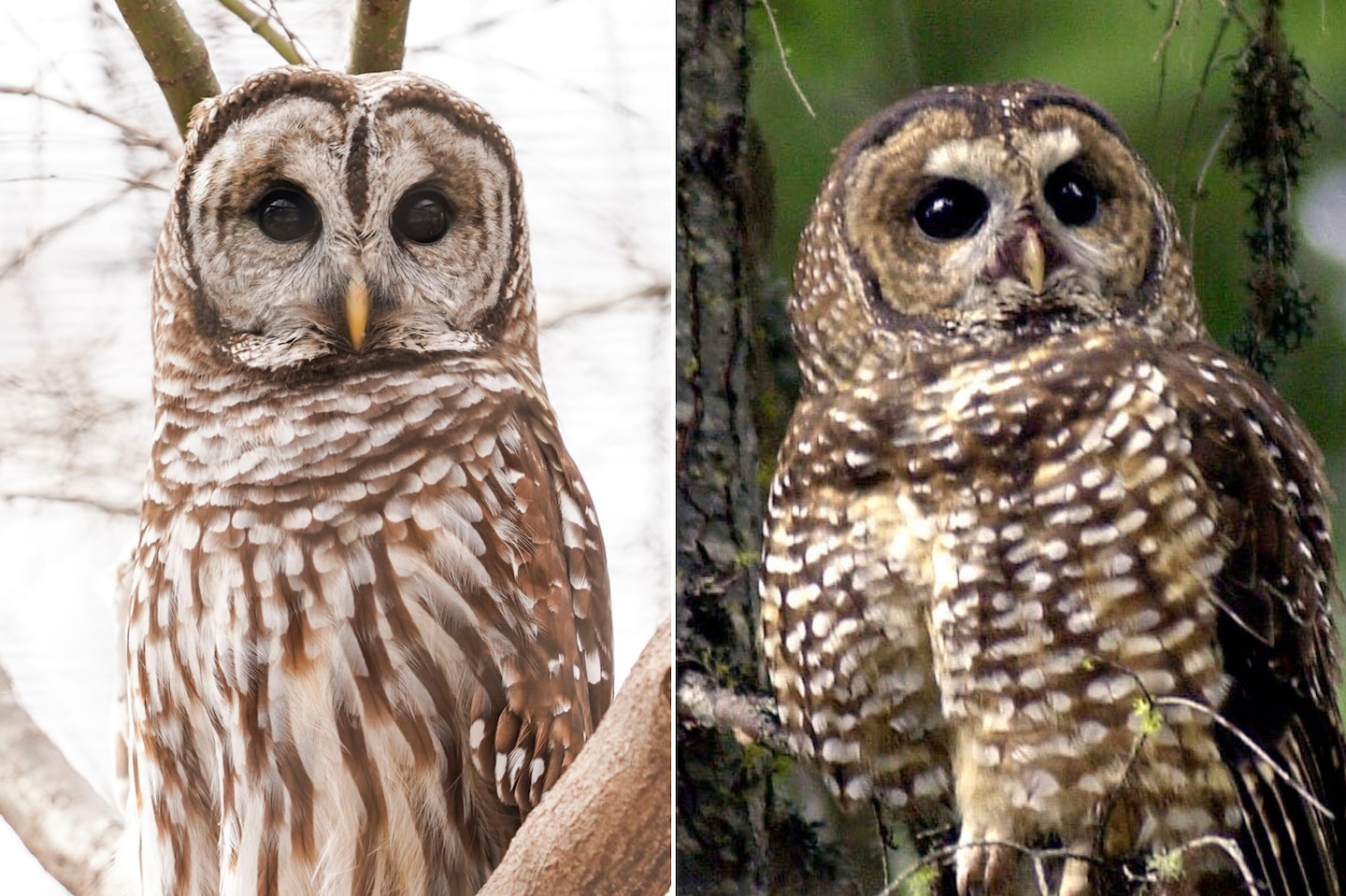
Could the answer to preserving one of North America’s most vulnerable raptors lie hidden deep within their DNA? The enigmatic dance between barred and spotted owls has long captivated ecologists, yet it also poses an intricate conservation puzzle. As these avian neighbors vie for survival, genetic research emerges as a beacon, illuminating secrets that could shape the future of both species and the ecosystems they inhabit. But how exactly does peering into the genetic code unravel the intertwined destinies of barred and spotted owls, and what challenges does this reveal for conservationists striving to tip the balance toward coexistence?
Unraveling the Genetic Fabric of Barred and Spotted Owls
The barred owl (Strix varia) and the spotted owl (Strix occidentalis) are more than just two species sharing woodland territories; their genomes carry the echoes of evolution and adaptation that define their identities. Genetic research, employing state-of-the-art sequencing technologies and molecular markers, delves into their DNA to discern subtle differences and startling similarities. These insights reveal patterns of divergence and gene flow, uncovering how the barred owl, originally native to eastern North America, expanded westward, encroaching into the spotted owl’s habitat in the Pacific Northwest.
By examining mitochondrial DNA and nuclear gene sequences, scientists can track historic population movements, assess genetic diversity, and detect hybridization events. These genetic footprints are crucial for understanding how invasive species dynamics play out at a microscopic level. The barred owl’s genome is a tapestry woven with the threads of adaptability, which has likely facilitated its rapid territorial expansion—posing a genetic threat to the more habitat-specialized spotted owl.
The Challenge of Hybridization: Nature’s Genetic Entanglement
One of the most unexpected revelations from genetic studies is the emergence of barred-spotted owl hybrids. These interbreeding episodes blur the taxonomic lines previously considered distinct, presenting a bewildering conundrum. Hybridization complicates conservation efforts by creating a genetic mosaic that can undermine the spotted owl’s unique evolutionary lineage.
Genetic analyses allow researchers to detect hybrids with precision, using genetic markers that distinguish parent species even in offspring. But the implications are profound: as hybrids proliferate, there’s a risk of “genetic swamping,” where the spotted owl’s genes are diluted, possibly eroding the species’ specialized adaptations honed over millennia. The conservation challenge now pivots to not only protecting a species but also preserving its genetic integrity.
Genomics in Conservation Decision-Making
How can genetic data transform how conservationists strategize interventions? The answer lies in translating genomic revelations into actionable policies. Genetic research equips wildlife managers with the ability to identify pure spotted owl populations, prioritize critical habitats for protection, and evaluate the feasibility of removing barred owls in particular regions.
This scientific precision has gradually permeated management plans, enabling more nuanced decisions that transcend simple population counts. For instance, targeted removal or controlled culling of barred owls in hotspot zones can be informed by genetic assessments identifying heavily hybridized populations versus genetically intact ones. Such genomic-informed actions aim to halt the erosive tide of invasive genetics while fostering conditions for the spotted owl to recover.
Exploring Adaptive Genetic Traits: Keys to Species Resilience
Genomic technologies do more than map lineage; they unravel adaptive genetic traits that confer survival advantages. Researchers are investigating how genetic variations influence traits like prey specialization, habitat preference, and reproductive success. For the spotted owl, many of these traits are tightly linked to old-growth forest ecosystems, making them exquisitely vulnerable to ecological change.
In contrast, the barred owl’s broader genetic repertoire suggests a more generalist approach, granting it flexibility across varied environments. Deciphering the genomic underpinnings of these adaptive traits isn’t just an academic exercise—it informs habitat restoration and conservation prioritization. By understanding what makes each species tick on a genetic level, conservationists can better tailor strategies to bolster the spotted owl’s resilience amidst shifting environmental pressures and competition.
Future Horizons: CRISPR and Genetic Rescue?
Looking ahead, could cutting-edge gene-editing technologies provide a new frontier in endangered species recovery? While ethical and ecological concerns abound, the notion of “genetic rescue” through biotechnological interventions tantalizes conservation biologists. Manipulating genomes to enhance disease resistance or environmental adaptability might one day tip the survival scales in favor of vulnerable species like the spotted owl.
Yet these possibilities invite caution. The complexities of ecological interactions and unintended consequences of genomic alterations demand rigorous research and deliberation. Even as science advances, the primal call of conservation remains to balance human intervention with respect for nature’s inscrutable processes.
Conclusion: The Genetic Code as a Compass for Conservation
Genetic research into barred and spotted owls charts a compelling narrative of competition, convergence, and potential coexistence embedded deep within their DNA. It reveals that the struggle between these owls is not merely ecological but profoundly genetic—a contest that shapes their futures and the landscapes they inhabit. As this field progresses, the nuanced insights from genomics offer a beacon of hope, illuminating corridors for more informed and sophisticated conservation approaches.
In the weaving of conservation’s tapestry, the genetic code is the compass guiding stakeholders through uncharted terrains. It challenges us to rethink traditional paradigms, to embrace complexity, and to strive for solutions that honor the delicate balance between preservation and the dynamic forces of nature itself. After all, perhaps the most profound secret the owls hold lies not in their call, but in their very genes—waiting to be understood and safeguarded for generations to come.