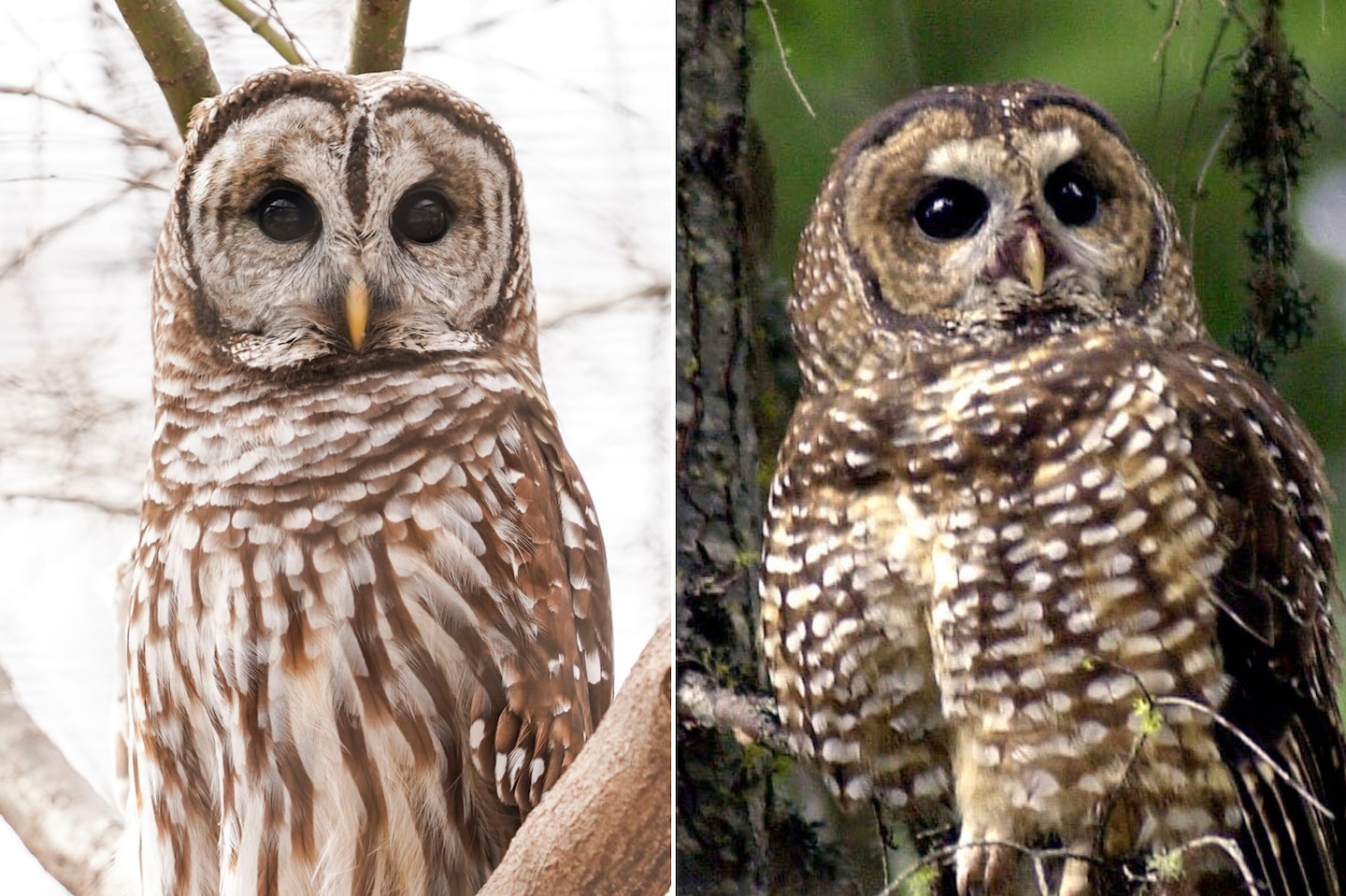
The delicate balance of ecosystems often hinges on the survival of a single species. In the dense, mist-laden forests of the Pacific Northwest, the spotted owl—a symbol of biodiversity and environmental health—faces an unprecedented threat: the encroachment of the barred owl. This scientific review delves deep into the complex and multifaceted impact barred owls exert on spotted owl populations, weaving together ecological insights, behavioral studies, and conservation challenges. Readers can expect a comprehensive exploration grounded in rigorous research, illuminated by ecological theory, and imbued with the urgency this issue demands.
Ecological Background: Understanding Spotted and Barred Owls
The spotted owl (Strix occidentalis) is an emblematic species of old-growth forests, relying on vast tracts of mature coniferous trees for nesting and hunting. Known for its elusive nature and haunting calls, the spotted owl’s presence signals intact forest ecosystems characterized by rich biodiversity and minimal disturbance. Conversely, the barred owl (Strix varia), originally native to eastern North America, has expanded its range westward over the past century. Unlike the spotted owl, which prefers dense, mature forests, barred owls display remarkable ecological plasticity, thriving in various habitats including fragmented and secondary forests.
This juxtaposition of habitat preference and adaptability underpins the complexity of their interaction. Barred owls’ expanding territory increasingly overlaps with that of spotted owls, exacerbating interspecies competition and threatening the latter’s survival. Understanding these foundational ecological distinctions is vital for grasping the ensuing conflict and its ramifications.
Competition for Resources: Territory, Food, and Nesting Sites
At the heart of the barred and spotted owl conflict lies intense resource competition. Both species are nocturnal predators, reliant on similar prey such as small mammals, birds, and insects. The barred owl’s broader diet and greater adaptability give it a competitive edge, allowing it to exploit a wider range of prey and habitats. This dietary flexibility often leads to the barred owl outcompeting the spotted owl for limited food resources, particularly in areas where prey populations are sparse or fragmented by human activity.
Territorial disputes further accentuate this antagonism. Barred owls tend to be more aggressive and dominant, often displacing spotted owls from prime nesting and roosting sites. The invasive nature of the barred owl introduces a novel dynamic, wherein the territorial boundaries are not merely blurred but aggressively redefined. This dislocation contributes to decreased breeding success for spotted owls, compounding population declines.
Behavioral Dynamics and Interspecific Interactions
The behavioral ecology of both species reveals a tapestry of interactions marked by competition, avoidance, and in some rare cases, aggression. Barred owls exhibit higher vocal activity, which may interfere with spotted owl communication, disrupting mating calls and territorial signaling. This acoustic interference can have cascading effects on reproduction and territory establishment.
Moreover, evidence suggests that barred owls do not merely coexist passively but actively exclude spotted owls through aggressive encounters. This type of interspecific dominance has profound implications for spotted owl behavior, forcing them into less suitable habitats and increasing their vulnerability to predation and environmental stressors.
Population Declines and Conservation Challenges
Spotted owls have experienced precipitous declines over recent decades, with barred owls playing a significant role in accelerating this trend. The interspecific competition exacerbates other threats to spotted owls, including habitat loss due to logging, wildfires, and climate change. Conservation efforts are complicated by the intricacy of balancing ecosystem health, federal protections, and the ethical considerations of intervening in natural processes.
One particularly contentious conservation strategy involves the managed removal or culling of barred owls to alleviate pressure on spotted populations. This approach, while scientifically supported in terms of population recovery metrics, raises ethical debates about human intervention and species management. The juxtaposition of science and morality crystallizes the profound dilemma faced by conservationists, policy makers, and local communities.
Ecological Ramifications of Barred Owl Control Measures
Targeted efforts to reduce barred owl numbers through removal programs have yielded critical insights into ecosystem dynamics. Removing barred owls from certain areas often results in a resurgence of spotted owl numbers, demonstrating the direct inhibitory role barred owls play. However, these interventions must be meticulously planned to avoid unintended ecological consequences such as prey population imbalances or shifts in predator-prey dynamics.
Furthermore, long-term ecological monitoring is essential to assess the sustainability and ethical justification of such measures. The complexity of ecosystem interactions necessitates an adaptive management framework that integrates ecological data, socio-political considerations, and emerging scientific knowledge.
Broader Implications for Biodiversity and Ecosystem Health
The plight of the spotted owl amid barred owl expansion is emblematic of broader ecological challenges faced worldwide: invasive species disrupting native populations, the cascading impact on biodiversity, and the profound influence of anthropogenic changes on natural habitats. The spotted owl’s decline serves as a sentinel warning, drawing attention to habitat fragmentation, climate vulnerability, and the fragility of specialized species.
Conservation efforts that prioritize the spotted owl also contribute to protecting vast tracts of old-growth forest, benefiting countless other species and preserving critical ecosystem services. The interplay between these two owl species thus underscores the interconnectedness of ecological health and the need for comprehensive, landscape-scale conservation strategies.
Future Research Directions and Conservation Strategies
Ongoing research aims to refine our understanding of barred and spotted owl interactions, focusing on genetic studies, habitat usage patterns, and population modeling. Emerging technologies such as GPS telemetry and bioacoustic monitoring offer unprecedented precision in tracking owl movements and vocalizations, enabling more nuanced management plans.
Promising conservation strategies emphasize habitat restoration, protection of critical old-growth stands, and community engagement to foster coexistence. Multi-disciplinary approaches integrating ecology, ethics, and socioeconomics are paramount. Adaptation to climate-induced habitat shifts will also become increasingly important, requiring preemptive measures to safeguard both spotted owl populations and the broader ecological communities they inhabit.
In sum, the impact of barred owls on spotted owl populations is a complex narrative with ecological nuance, urgent conservation implications, and profound lessons about coexistence in a rapidly changing world. This scientific review serves as a clarion call to recognize the intricate webs of life in our forests and the imperative to safeguard their fragile equilibrium.