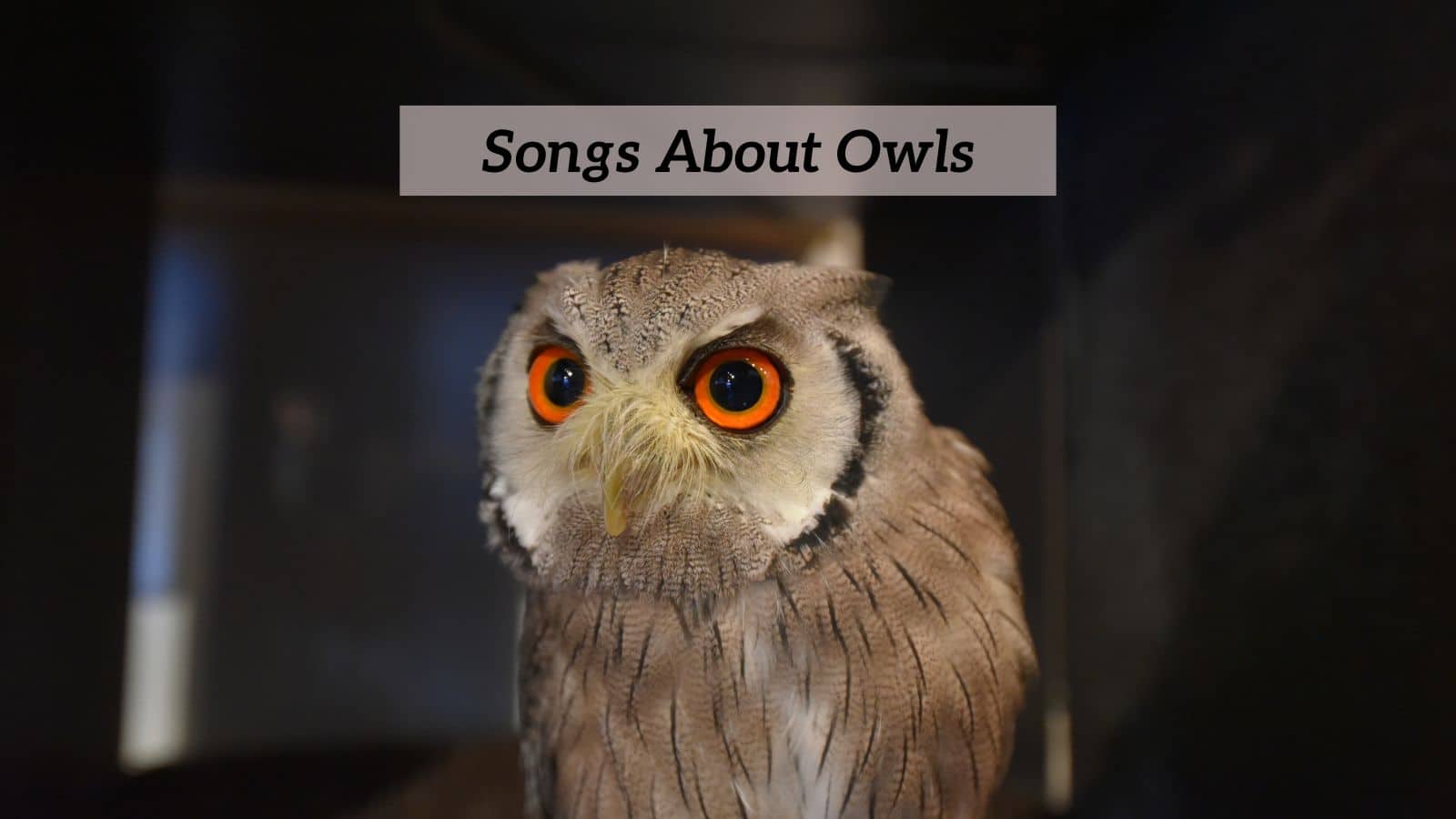
Owls have long captivated human imagination, their mysterious silhouettes gliding silently under the cloak of night stirring an enigmatic allure. Yet beyond their natural mystique, these nocturnal creatures have woven themselves into the fabric of music across eras and genres. From haunting melodies to uplifting anthems, owls inspire composers and songwriters alike, promising listeners a transcendence of the ordinary and a fresh perspective on both sound and symbolism. Delve with me into a world where feathers meet frequency, a realm where owls are not merely birds, but muses shaping the music we cherish.
The Owl as a Symbolic Muse in Musical Expression
Owls possess a rich symbolic tapestry—emblems of wisdom, mystery, solitude, and the uncanny. This symbolism seeps deeply into music, showing up in lyrics, album art, and compositions that evoke their ghostly presence. When composers channel the owl’s essence, they tap into a reservoir of profound metaphorical significance. This confers a layer of depth to their music, inviting listeners to experience not just sound but an evocative story. It’s this symbolic power that explains why the owl is not confined to niche genres but appears across folk ballads, jazz improvisations, and even modern pop.
Consider how the owl’s silent glide through shadowy spaces parallels the subtlety of tonal shifts and chromatic nuances in music. Composers often mimic this fluidity, creating movements that flutter softly across scales or employ unexpected pauses, mirroring the owl’s mesmerizing flight. This sonic embodiment of the owl’s enigma beckons listeners into realms of introspection and wonder, effectively transforming a musical piece into a nocturnal narrative of discovery.
Folk Traditions and Owls: Echoes of Nature and Nurture
Music rooted in folklore frequently embraces owls as icons bridging humanity with nature’s deeper mysteries. Traditional songs—from Appalachian ballads to Scandinavian chants—feature the owl as a harbinger of messages or a guardian of the night. These songs often depict owls with a duality: on one wing, wisdom and protection; on the other, ominous warnings and an eerie portent.
Why do these avian night-watchers hold such sway in folk music? The answer may lie in the intimate relationship ancient cultures had with the natural world. Before urbanization muffled the night’s sounds, owls were among the primal orchestrators of the nocturnal soundscape—a call signaling change, secrecy, and the unseen. Folk songs not only capture these aural cues but imbue them with narrative significance, imbuing the listener’s consciousness with ancestral echoes.
Moreover, the owl in folklore-infused music serves as a liminal figure, straddling the boundary between the tangible and the transcendental. Its presence in song invites an exploration beyond the mundane, promising spiritual insight disguised within melancholy or celebration.
Classical Compositions Inspired by Owls’ Mystique
In the realm of classical music, owls appear less as direct subjects and more as inspirations for atmosphere and texture. Composers across the Baroque, Romantic, and modern periods have utilized owl-like motifs to conjure moods of suspense, solemnity, or awe. From the fluttering trills that imitate wings to the sudden leaps mimicking a startled owl’s cry, these elements evoke the nocturnal avian mystique.
Some notable compositions weave the owl’s spirit into their thematic fabric, using its nocturnal persona to underscore concepts of introspection or the unknown. The pointed precision of certain woodwind passages, for instance, can be interpreted as sonic owl calls, embedding aural traces of these birds within complex harmonic structures.
This approach contrasts with folk simplicity, embracing sophisticated orchestration and thematic subtlety. The owl here becomes more than a literal reference—it embodies abstraction in sound and emotion, a catalyst for composer innovation and listener curiosity alike.
Owls in Contemporary Music: From Indie Rock to Electronic Beats
Modern music has embraced the owl in strikingly diverse ways. Indie artists use owl imagery to connote themes of awakening, solitude, and nocturnal reverie, often weaving atmospheric synths or acoustic guitars to simulate the owl’s haunting call. Electronic producers sample owl hoots or incorporate chilly, echoing effects to craft immersive soundscapes that echo the owl’s enigmatic character.
This proliferation of owl-themed music signals more than trend—it reflects a cultural yearning to reconnect with natural wonder and symbolic mystery amid a hyper-digital age. Owls, enshrouded in twilight and secrecy, offer a sonic refuge or a symbolic mirror through which artists and audiences confront themes of knowledge, survival, and transformation.
In pop culture, the owl frequently adorns single covers or album art, reinforcing the avian connection to introspective lyricism and unconventional wisdom. This multi-sensory engagement—combining visual, lyrical, and sonic elements—heightens the owl’s aura, leaving an indelible impression on music aficionados seeking depth beyond catchy hooks.
Notable Songs About Owls: A Diverse Catalogue
Among the lyrical tributes to owls, several stand out for their storytelling prowess and emotional resonance. Some songs celebrate the owl’s nocturnal vigilance, painting it as a guardian of secrets and forgotten memories. Others delve into darker realms, interpreting the owl as a symbol of loneliness or eerie forewarning.
The diversity of these songs, spanning genres and geographical origins, underscores the universal fascination with owls. Their motifs fluctuate from literal descriptions of the bird’s habits to metaphorical explorations of human experience—innate wisdom, the unveiling of hidden truths, or the tension between darkness and enlightenment.
This adaptability makes owl-themed songs compelling narrative vessels, inviting listeners to interpret and re-interpret layers of meaning with each listening. Such works leave behind the predictable, venturing into the twilight zone where imagination and reality intertwine.
The Owl’s Influence Beyond Songwriting: Musical Spaces and Atmospheres
Beyond direct references, owls permeate the intangible realms of ambience and mood within music. Many composers and producers harness the owl’s essence to construct atmospheres that evoke nighttime’s stillness, mystery, or suspense. Ambient music, film scores, and even video game soundtracks borrow owl-like sonorities—ethereal hoots, soft wingbeats, and ghostly echoes—to immerse audiences in immersive experiential worlds.
This interplay between nature’s sounds and human creativity transcends simple mimicry. It evokes emotional landscapes where the owl becomes a vehicle for heightened sensory perception, a sonic metaphor for the subconscious mind’s hidden corridors. Thus, the owl’s sonic signature enriches musical spaces, inviting audiences into contemplative states seldom accessed through conventional musical forms.
Conclusion: The Owl as an Everlasting Beacon of Musical Inspiration
The owl, in all its nocturnal glory, continues to enthrall musicians and listeners alike. Its potent symbolism, enigmatic calls, and graceful presence offer an inexhaustible wellspring of inspiration. From ancient folk melodies to avant-garde compositions, these birds remind us of music’s power to illuminate shadowy realms and shift perspectives.
Engaging with owl-inspired music is more than an auditory experience—it is a journey through myth, nature, and human consciousness. Each note, motif, and lyric becomes a beacon guiding us to rethink wisdom, mystery, and the silent beauty of the night. In this way, owls not only inhabit the skies but also soar through the boundless realm of sound, forever etching their legacy in music’s ever-evolving story.