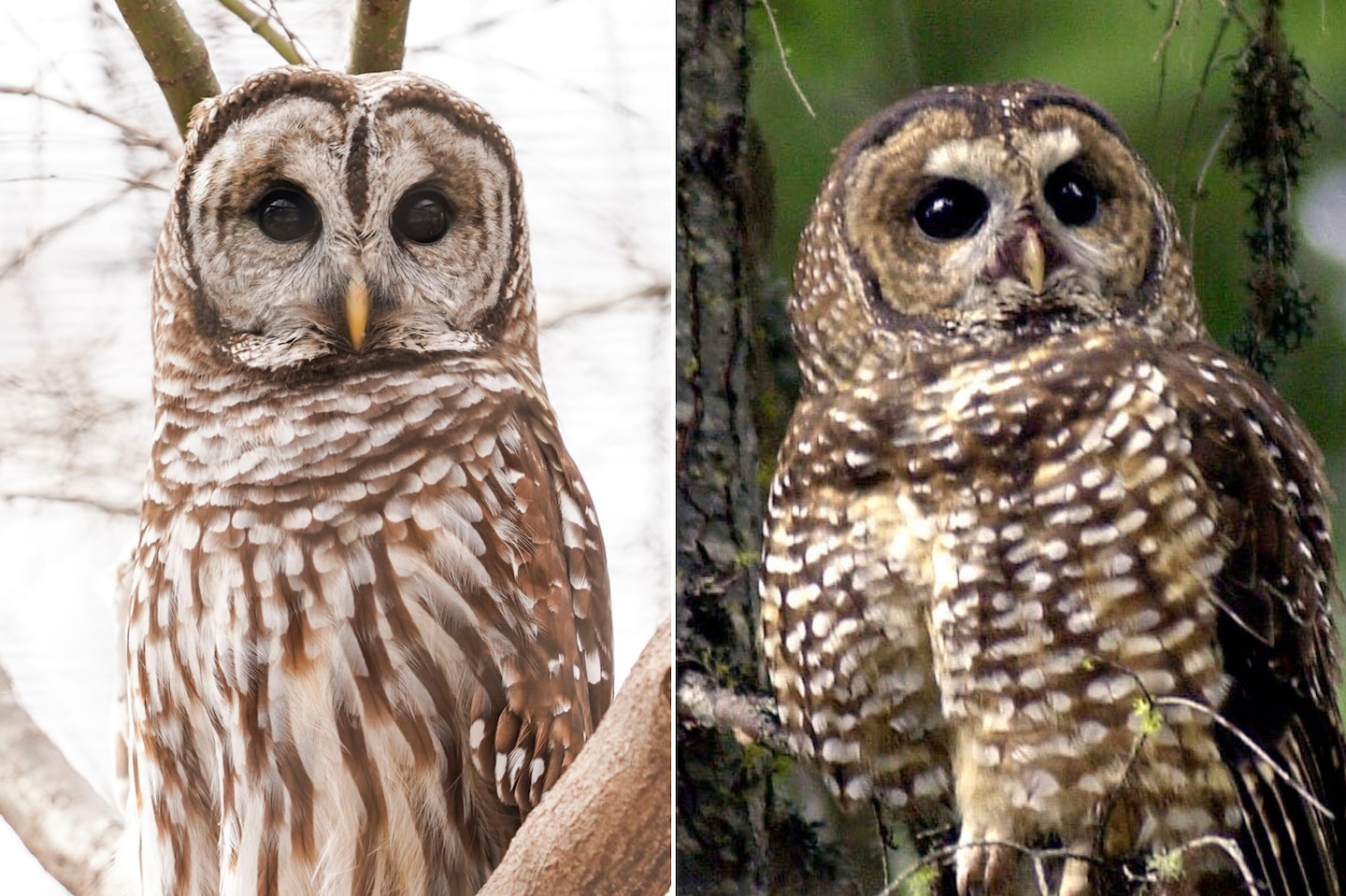
Can data truly decode the complex ballet between barred owls and their elusive cousins, the spotted owls? At first glance, it might seem improbable that vast oceans of digital information could untangle the mysteries of feathered wanderers deep within dense old-growth forests. Yet, in the burgeoning age of big data, this very challenge has become a thrilling frontier—one that promises to reshape conservation strategies and redefine how humans perceive the natural world.
Unraveling the Ecological Puzzle: Barred vs. Spotted Owls
The rivalry between barred and spotted owls is no mere tale of two species cohabiting the same forests; it is an intricate saga of overlapping habitats, competitive exclusion, and fragile coexistence. Barred owls, more aggressive and adaptable, have extended their range into the Pacific Northwest, encroaching on the spotted owl’s historically exclusive territories. This expansion threatens the survival of the spotted owl, a species already grappling with habitat loss. This ecological tension begs a critical question: how can conservationists precisely map and understand these dynamics without stepping into the forest themselves?
Big Data as the Modern-Day Forest Sentinel
Enter big data—a vast arsenal of ecological insights derived from remote sensors, satellite imagery, acoustic monitoring, and citizen science initiatives. These multifaceted data streams form a living, breathing tapestry of environmental signals. By analyzing patterns within these datasets, scientists can delineate habitat preferences, migratory corridors, and even subtle changes in breeding success. Big data acts as an omnipresent sentinel, chronicling the nuanced interplay between these two owl species with a breadth and granularity unattainable through traditional means.
Remote Sensing and Habitat Mapping: Seeing Beyond the Canopy
Technological advancements in remote sensing have revolutionized habitat mapping. High-resolution satellite images and LiDAR data carve out three-dimensional models of forest structure, canopy density, and understory complexity. These parameters are crucial as they directly influence owl habitat suitability. Through sophisticated algorithms, these datasets illuminate microhabitats favored by spotted owls—often older, denser forests—and contrast them with the more versatile habitats occupied by barred owls. This distinction enables a refined understanding not merely of where owls are, but why they choose these spaces.
Acoustic Monitoring: Listening to the Forest’s Hidden Dialogues
Owls are notoriously elusive, often masking their presence in the dense shadows. Acoustic monitoring technology transforms the nocturnal forest soundscape into an invaluable dataset. Autonomous recording devices capture owl vocalizations over months and miles, feeding continuous streams of audio data into analytic platforms. Machine learning algorithms then identify species-specific calls, estimate population densities, and detect shifts in owl presence over time. This audial census surpasses human limitations, painting a dynamic picture of the species’ spatial and temporal behaviors.
Integrating Citizen Science: The Power of Collective Observation
Big data’s strength is amplified when stitched with grassroots efforts. Citizen science projects engage birdwatchers and nature enthusiasts in reporting sightings, vocalizations, and nest locations. These real-time data points enrich big data repositories, filling in gaps that automated sensors may miss. Moreover, this collaboration fosters public stewardship and raises awareness about the conservation challenges faced by both owl species. By democratizing data collection, conservation becomes a shared narrative rather than an isolated scientific pursuit.
Predictive Modeling: Anticipating Ecological Futures
One of the most potent applications of big data lies in its ability to generate predictive models. Leveraging historical observations, climatic variables, and habitat data, scientists can forecast how changes—be it climate shifts, forest management policies, or species interventions—will sculpt the future distributions of barred and spotted owls. These models offer prescient insights that inform proactive conservation strategies, helping to mitigate conflicts and optimize habitat protection. Yet, the inherent uncertainty of ecological systems challenges the precision of these forecasts, reminding us of the forest’s enduring unpredictability.
Ethical Dilemmas and Data-Driven Conservation Decisions
With great data comes great responsibility. The revelations unearthed through big data investigations into barred and spotted owl habitats often lead to difficult conservation choices, including controversial measures like culling barred owl populations to protect spotted owls. This begs the question: can data justify such interventions, and at what ecological and ethical cost? Transparency and rigorous analysis must accompany every decision, ensuring that data serves not merely as a tool for intervention, but as a compass guiding the delicate balance between preservation and intrusion.
Future Horizons: The Evolution of Wildlife Big Data
The confluence of sensor technologies, artificial intelligence, and expansive datasets signals an exhilarating horizon for wildlife ecology. Future innovations may include real-time behavioral monitoring, genomic data integration, and even more nuanced environmental DNA analyses. These advances promise unprecedented clarity into the secret lives of barred and spotted owls, offering hope that coexistence might be engineered rather than enforced. As big data continues to evolve, so too does our capacity to embrace complexity, humility, and wonder in the stewardship of nature’s most enigmatic inhabitants.