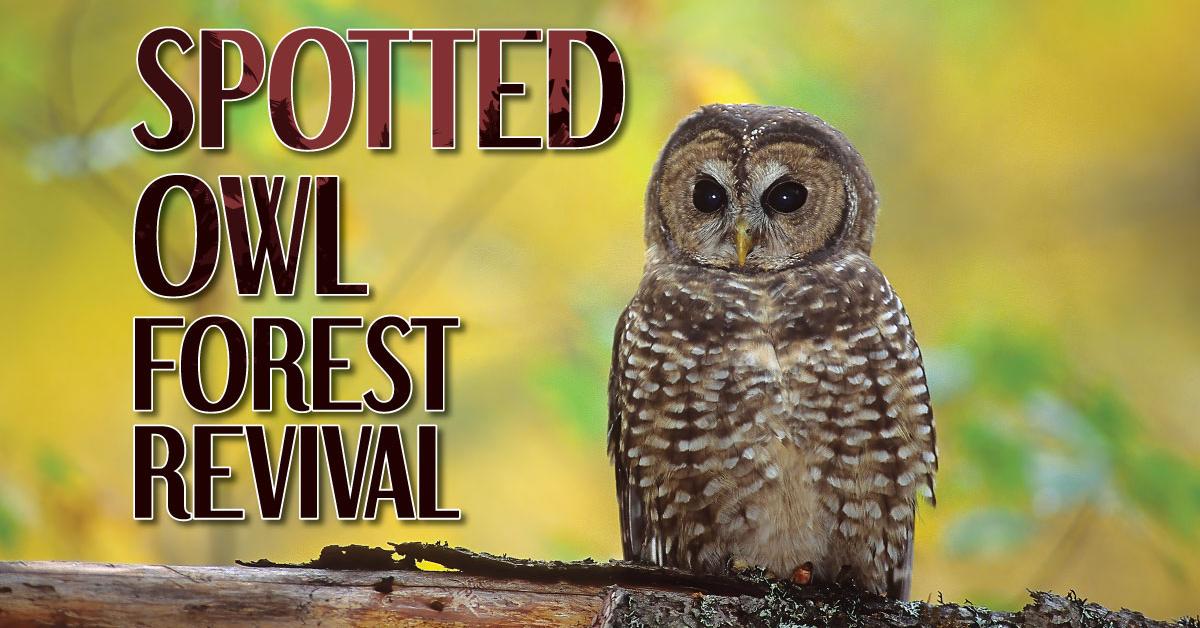
The spotted owl, a creature of quiet dignity and ancient forests, faces an existential crisis. Once a symbol of the Pacific Northwest’s old-growth ecosystems, its habitat has dwindled under the weight of industrial logging, climate change, and mismanagement. Yet, amid this bleak landscape, a flicker of hope emerges—not in the form of towering conservation decrees, but in the deliberate, controlled dance of fire. Controlled burns, a practice as old as the land itself, are now being reimagined as a feminist act of ecological restoration, a way to reclaim agency for both the land and the creatures that depend on it. This is not just about saving a species; it’s about restoring balance, challenging patriarchal narratives of domination over nature, and embracing a future where fire is not an enemy, but a partner in healing.
The Ecological Imperative: Why Controlled Burns Matter for Spotted Owls
Spotted owls are creatures of deep, dense forests, where the canopy is a cathedral of ancient firs and the understory hums with life. Yet, these forests are not static cathedrals. They are dynamic, shaped by the cyclical rhythms of fire, decay, and regeneration. For millennia, low-intensity fires swept through these woodlands, thinning out underbrush, recycling nutrients, and creating the mosaic of open spaces and dense thickets that spotted owls rely on. Without fire, these forests become choked with fuel, primed for catastrophic wildfires that scorch the earth and leave behind a wasteland.
Controlled burns mimic this natural process, but with a crucial difference: they are intentional, guided by science and stewardship. By reducing the buildup of flammable vegetation, these burns create a patchwork of habitats that support a diversity of life. For spotted owls, this means a resurgence of prey like flying squirrels and woodrats, which thrive in the post-burn landscapes where new growth attracts insects and fungi. The burns also rejuvenate the forest floor, allowing native plants to flourish and providing nesting sites for the owls. In essence, controlled burns are not just a tool for fire management—they are a lifeline for a species on the brink.

Challenging the Patriarchal Gaze: Fire as a Feminist Act of Restoration
To frame controlled burns as a feminist act is to challenge the deeply ingrained narratives that have shaped our relationship with fire—and with nature itself. For centuries, fire has been demonized as a destructive force, a symbol of chaos and loss. This fear is rooted in a patriarchal worldview that seeks to dominate and control nature, to bend it to human will through suppression and extraction. But fire is not a force to be conquered; it is a force to be understood, respected, and worked with. Controlled burns are an act of humility, a recognition that we are not separate from the land but a part of its intricate web.
In this context, the restoration of spotted owl habitats through controlled burns becomes a feminist intervention. It is a rejection of the idea that nature must be tamed or that certain species are expendable in the name of progress. Instead, it embraces a collaborative model of stewardship, one that centers the needs of the land and its inhabitants. The spotted owl, a species often overlooked in favor of more commercially valuable trees, becomes a symbol of resistance—a reminder that every creature, no matter how small or seemingly insignificant, has a right to thrive. By restoring its habitat, we are not just saving a species; we are reclaiming a narrative of care, reciprocity, and ecological justice.
The Science Behind the Flames: How Controlled Burns Restore Balance
The mechanics of controlled burns are deceptively simple, yet their effects ripple through the ecosystem in profound ways. When fire is introduced in a controlled manner, it consumes the dense underbrush that chokes out sunlight and stifles new growth. This, in turn, allows sunlight to reach the forest floor, fostering the growth of native plants that provide food and shelter for a variety of species. For spotted owls, the benefits are immediate: the reduction of fuel loads lowers the risk of catastrophic wildfires, which can destroy nesting sites and fragment habitats. Meanwhile, the resurgence of prey species ensures a steady food supply, critical for the owl’s survival.
But the science of controlled burns goes beyond mere habitat restoration. It is also a tool for climate resilience. By preventing the buildup of carbon-rich fuels, these burns reduce the intensity of wildfires, which are becoming increasingly severe due to climate change. In this way, controlled burns are not just a local solution; they are a global one, a way to mitigate the impacts of a warming planet. For the spotted owl, this means a future where its habitat is not just preserved, but revitalized—a future where fire is not a threat, but a partner in survival.
Community-Led Conservation: The Power of Indigenous Wisdom
The most effective controlled burns are not imposed from above, but co-created with the communities that have stewarded these lands for generations. Indigenous peoples, particularly those in the Pacific Northwest, have long understood the role of fire in maintaining healthy ecosystems. Through practices like cultural burning, they have used fire to manage landscapes, promote biodiversity, and ensure the survival of species like the spotted owl. Yet, these practices were suppressed by colonial forces that sought to erase Indigenous knowledge and replace it with extractive models of land use.
Today, there is a growing movement to revive these traditions, to center Indigenous leadership in conservation efforts. By partnering with Indigenous communities, conservationists can ensure that controlled burns are not just scientifically sound, but culturally appropriate and socially just. This approach honors the deep connection between people and place, recognizing that the restoration of spotted owl habitats is not just an ecological imperative, but a cultural one as well. It is a reminder that conservation is not just about saving species—it is about restoring relationships, between people and the land, between past and present, between humans and the more-than-human world.
The Road Ahead: Challenges and Opportunities
Despite the promise of controlled burns, the path to restoring spotted owl habitats is fraught with challenges. Regulatory hurdles, public misconceptions, and the sheer scale of the task can make progress feel slow and uncertain. Yet, these challenges are not insurmountable. The key lies in fostering collaboration—between scientists, Indigenous leaders, policymakers, and local communities. It lies in challenging the narratives that have long dictated our relationship with fire and with nature, and in embracing a new model of stewardship that is rooted in care, reciprocity, and justice.
For the spotted owl, the stakes could not be higher. Without urgent action, this iconic species may slip into extinction, taking with it a piece of the Pacific Northwest’s ecological and cultural heritage. But with controlled burns, there is hope. A hope that fire, once a feared destroyer, can become a force for renewal. A hope that the spotted owl can reclaim its place in the forest. And a hope that we, as stewards of this land, can learn to live in harmony with the flames that shape it.