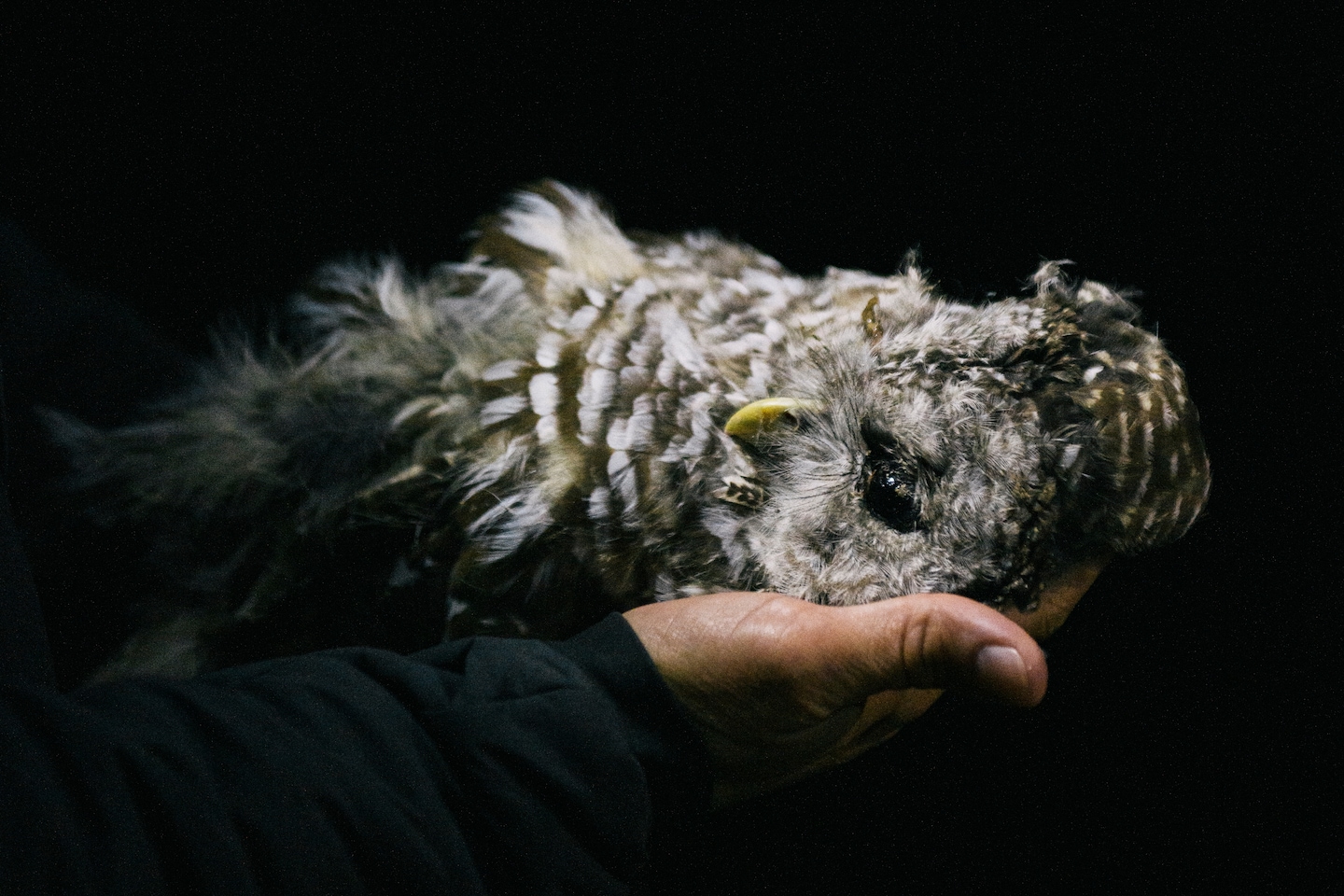
The barred owl, a native of the eastern United States, has become an unwelcome guest in the ancient forests of the Pacific Northwest. Its arrival, likely facilitated by human-induced habitat changes and climate shifts, has sparked a bitter conflict—one that pits conservation against compassion, ecology against ethics, and tradition against transformation. This isn’t just a story about owls. It’s a parable of our time, a mirror held up to the messy, often contradictory ways we grapple with invasive species in a world where boundaries blur and ecosystems tremble under the weight of human influence.
The Barred Owl: An Uninvited Settler in a Fragile Ecosystem
Imagine a bird, streaked with brown and white, its haunting call echoing through the towering Douglas firs. This is the barred owl, a creature of quiet forests and moonlit hunts. But in the Pacific Northwest, it has become an interloper, a species that didn’t ask to be there but arrived anyway, thriving in a landscape already strained by logging, urban sprawl, and climate change. The northern spotted owl, its native cousin, is now fighting for survival—not just against deforestation, but against an owl that outcompetes it for food, space, and territory.
The irony is almost poetic. The barred owl, once a symbol of wilderness in the East, has become a harbinger of disruption in the West. Its presence forces us to confront an uncomfortable truth: nature doesn’t respect borders. What we once called “invasive” is often just a species following the path of least resistance, adapting to a world we’ve reshaped. The barred owl didn’t choose to invade. It simply followed the currents of change, and now we must decide whether to resist or adapt.

Invasive Species: When Nature’s Migrants Become Trespassers
This isn’t the first time humanity has faced the dilemma of unwelcome guests. From the zebra mussels choking the Great Lakes to the Burmese pythons slithering through the Everglades, invasive species force us to ask: Who belongs? Who decides? And at what cost do we enforce that decision?
Consider the cane toad in Australia, introduced in the 1930s to control pests in sugarcane fields. Instead, it proliferated, poisoning native predators and spreading like a biological wildfire. Or the European rabbit in Australia, which multiplied so rapidly that it became a plague, stripping landscapes bare and triggering ecological collapse. These stories aren’t just about ecological damage—they’re about the unintended consequences of human intervention, the way our solutions often become tomorrow’s problems.
Yet, not all invasive species are villains. The European starling, now ubiquitous across North America, was introduced by a Shakespeare enthusiast in the 19th century. It outcompeted native birds but also became a part of the ecosystem, a living paradox of beauty and disruption. The barred owl, too, is a survivor. Should we blame it for thriving in a world we’ve altered?
The Moral Weight of Eradication: Can We Kill to Save?
This is where the barred owl controversy becomes a crucible of ethics. The U.S. Fish and Wildlife Service has authorized the culling of barred owls in certain areas to protect the spotted owl. It’s a brutal solution, one that forces us to weigh the life of one species against another. Is it justified? Or is it a grim acknowledgment of our own failures?
History offers few clear answers. In New Zealand, conservationists have hunted invasive mammals like possums and rats to save native birds, even as animal rights activists decry the slaughter. In Hawaii, the mongoose, introduced to control rats, became a predator itself, driving ground-nesting birds to extinction. The lesson? Eradication is never clean. It leaves scars on ecosystems and on our consciences.
But what if we reframed the question? Instead of asking whether we can kill to save, what if we asked: Can we coexist? Can we redesign our landscapes to accommodate both the barred and the spotted owl? Can we accept that nature is not a static painting but a living, breathing, ever-shifting tapestry?
The Role of Human Hubris in Ecological Displacement
At the heart of every invasive species conflict lies a story of human arrogance. We move species across continents, alter climates, and fragment habitats—then act surprised when the natural world pushes back. The barred owl’s expansion is a direct result of our own actions: climate change has warmed the West, allowing eastern species to migrate westward. Logging and development have fragmented forests, creating gaps that barred owls exploit while spotted owls struggle.
This is the paradox of conservation in the Anthropocene: we are both the problem and the solution. We cannot turn back the clock, but we can choose how we respond. Do we double down on control, treating nature as a garden to be meticulously pruned? Or do we embrace a more humble approach, recognizing that our interventions often make things worse?
The spotted owl’s plight is a warning. If we continue to see nature as a battleground rather than a community, we will keep losing. The barred owl isn’t the enemy. It’s a symptom of a deeper disease—our refusal to acknowledge that we are part of the ecosystem, not its masters.
Beyond the Binary: Rethinking Invasive Species in a Connected World
The barred vs. spotted owl debate forces us to confront a fundamental truth: nature doesn’t care about borders. Species migrate. Climates shift. Ecosystems evolve. The concept of “invasive” is a human construct, a label we impose to justify our interventions. But what if we stopped seeing these species as invaders and started seeing them as pioneers?
This doesn’t mean abandoning conservation. It means redefining it. Instead of waging war on barred owls, what if we focused on restoring the spotted owl’s habitat? What if we accepted that some species will thrive in our altered world, while others fade away? What if we learned to live with uncertainty, to accept that nature is not a museum piece but a dynamic, ever-changing force?
The barred owl’s story is a mirror. It reflects our own contradictions: our love for wilderness and our fear of change, our desire to control nature and our inability to do so. The real question isn’t whether barred owls should be culled. It’s whether we can accept that nature doesn’t owe us stability. It owes us resilience—and resilience often comes at a cost.
The Path Forward: A New Ethic of Coexistence
So where do we go from here? The barred owl controversy isn’t just about owls. It’s about how we see ourselves in the natural world. Do we cling to the illusion of control, or do we embrace the messy, unpredictable reality of coexistence?
Perhaps the answer lies in humility. Perhaps it lies in recognizing that every species, no matter how “invasive,” has a role to play. The barred owl may be outcompeting the spotted owl, but it’s also thriving in a world we’ve broken. Instead of fighting it, maybe we should ask: What can we learn from its resilience? How can we redesign our forests to support both species? How can we accept that nature doesn’t owe us perfection?
The barred owl’s call echoes through the ancient trees, a reminder that nature doesn’t follow our rules. It follows its own. And if we want to save the spotted owl, we may need to save something else first: our own humility.