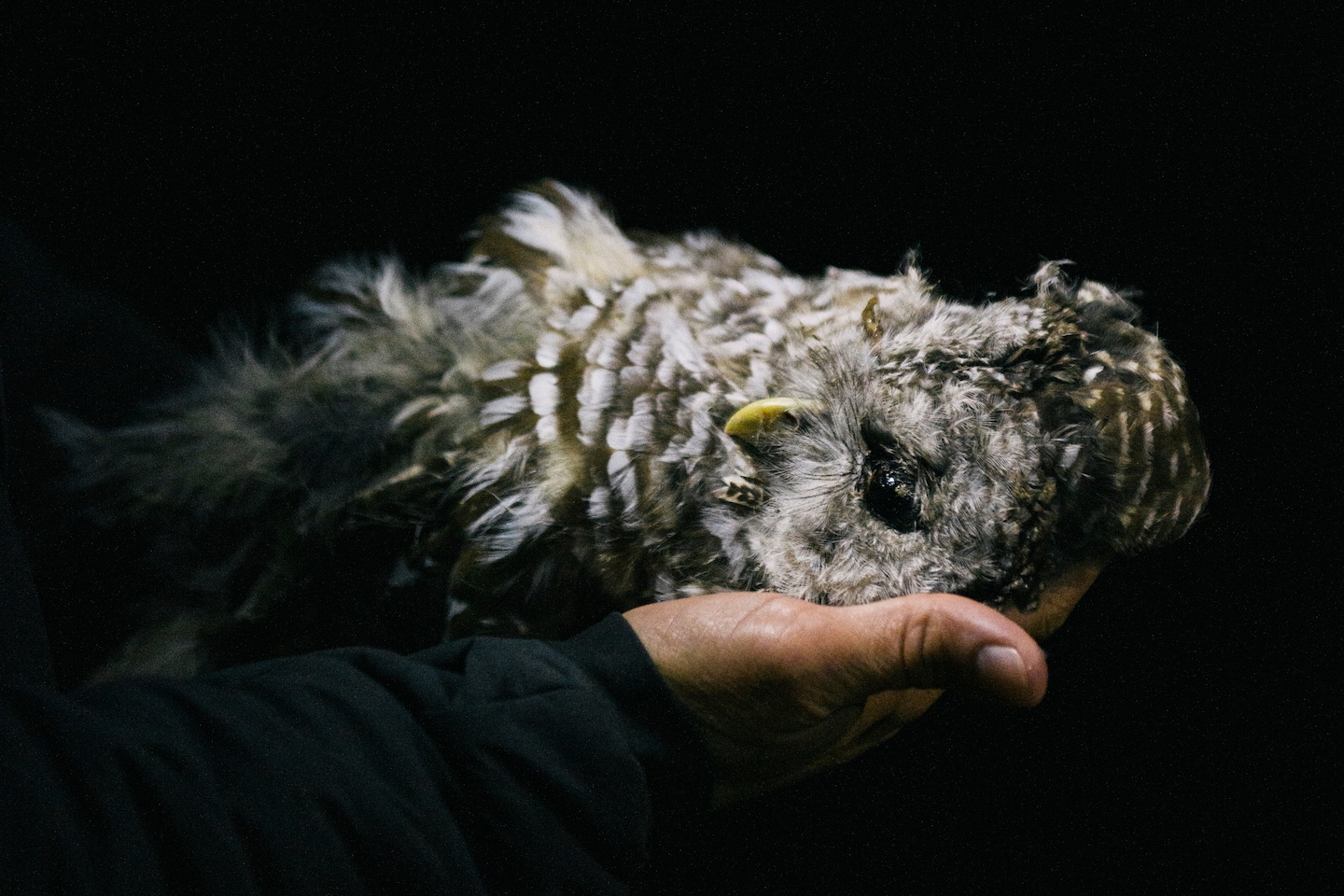
The barred owl, a charismatic and adaptable bird, has become an unwelcome guest in the Pacific Northwest. Its relentless expansion into the territories of the threatened northern spotted owl has sparked a controversial debate: should we cull barred owls to save their endangered cousins? Enter the Lacey Act, a century-old law with far-reaching consequences, now ensnaring this ecological dilemma in its legal web. But what happens when conservation collides with legislation? How does the Lacey Act, designed to protect wildlife, inadvertently complicate efforts to control an invasive species? Let’s unravel this tangled narrative.
The Lacey Act: A Legal Tapestry Woven with Good Intentions
The Lacey Act, enacted in 1900, stands as a bulwark against the illicit trade of wildlife, plants, and their derivatives. Its original purpose was noble: to curb poaching and smuggling, ensuring that species like the American bison or the passenger pigeon wouldn’t vanish due to unchecked exploitation. Over time, the Act expanded its reach, now encompassing invasive species management—a twist of fate that would later ensnare barred owl control efforts.
At its core, the Lacey Act prohibits the transport of certain species across state lines without proper permits. For barred owls, this means that even if their removal is ecologically justified, any relocation or lethal control must navigate a labyrinth of federal regulations. The law, in its zeal to prevent ecological harm, has inadvertently created a paradox: the very species it seeks to protect may suffer because its saviors are hamstrung by bureaucracy.
Barred Owls: The Unwitting Villains of the Pacific Northwest
The barred owl, native to eastern North America, has staged a remarkable invasion. Climate change, deforestation, and human-altered landscapes have greased the wheels of its westward expansion. Now, this adaptable predator competes with the northern spotted owl, a species already teetering on the brink of extinction. The U.S. Fish and Wildlife Service has sanctioned limited culling of barred owls in critical spotted owl habitats—a desperate measure, but one fraught with ethical and legal complexities.
Yet, here’s the rub: the Lacey Act doesn’t distinguish between native and invasive species when it comes to transport restrictions. So, while barred owls are culled in Oregon, transporting their carcasses—or even relocating them—requires permits that can take months to secure. Conservationists find themselves in a Kafkaesque scenario: they must act swiftly to save a species, but the law demands patience they don’t have.
The Permit Predicament: A Bureaucratic Quagmire
Imagine this: a wildlife biologist, armed with data showing that barred owl removal boosts spotted owl survival rates, applies for a permit to cull 3,000 barred owls over five years. The process drags on. Months pass. Meanwhile, barred owl populations surge, and spotted owl numbers continue their downward spiral. The Lacey Act, in its rigid framework, has turned into an unintended obstacle—a bureaucratic speed bump on the road to ecological recovery.
Worse still, the Act’s penalties for non-compliance are severe. Unauthorized transport of barred owls, even for conservation purposes, could result in hefty fines or criminal charges. This chilling effect discourages even well-intentioned interventions. Conservationists, already walking a tightrope between ethics and ecology, must now also tiptoe through a minefield of legal risks.
Could the Lacey Act Be Reformed to Save the Spotted Owl?
The question lingers like a shadow over the forest canopy: can the Lacey Act evolve to meet modern conservation challenges? Some argue for targeted exemptions—fast-tracking permits for invasive species control in critical habitats. Others propose amending the Act to prioritize ecosystem-level protections over rigid species-by-species restrictions. But reform is a double-edged sword. Any loosening of regulations risks opening the door to exploitation, turning the Lacey Act’s noble intentions into a sieve.
Perhaps the solution lies in a hybrid approach: streamlining permits for conservation-driven culling while maintaining strict oversight for commercial activities. Or maybe, as climate change accelerates species migrations, we need entirely new frameworks—ones that balance legal rigor with ecological urgency. The barred owl dilemma forces us to confront an uncomfortable truth: sometimes, the laws meant to protect nature become its unintended adversaries.
The Human Dimension: Ethics and Empathy in the Crosshairs
Beyond the legal and ecological layers, there’s a human story here. Barred owls, after all, are not malevolent invaders but survivors adapting to a changing world. Their presence in the Pacific Northwest is a symptom of broader environmental upheaval—deforestation, urban sprawl, and climate shifts that have reshaped ecosystems. To vilify them is to ignore the deeper, systemic failures that allowed this crisis to unfold.
Conservationists grappling with the Lacey Act’s constraints must also wrestle with moral ambiguity. Is it ethical to kill one species to save another? What does it say about our relationship with nature when our best-laid plans are stymied by laws designed to protect it? These questions don’t have easy answers, but they demand our attention. The barred owl’s story is not just about birds and bureaucrats—it’s about us, and our fraught attempts to coexist with the wild world.
A Call to Rethink: Beyond the Lacey Act’s Shadow
The barred owl crisis is a wake-up call—a reminder that conservation is not a static science but a dynamic, often messy endeavor. The Lacey Act, for all its virtues, was not crafted with invasive species management in mind. As ecosystems unravel under the weight of human influence, our laws must evolve too. Perhaps it’s time to ask: are we protecting nature, or are we protecting the idea of nature as it once was?
The barred owl doesn’t care about permits or politics. It thrives, adapts, and expands. Meanwhile, the northern spotted owl hangs by a thread. The Lacey Act, in its current form, offers no easy solutions. But in its rigidity, it forces us to confront a harder truth: conservation is not just about saving species. It’s about saving the very framework that allows us to do so—before the laws we rely on become the chains that bind us.