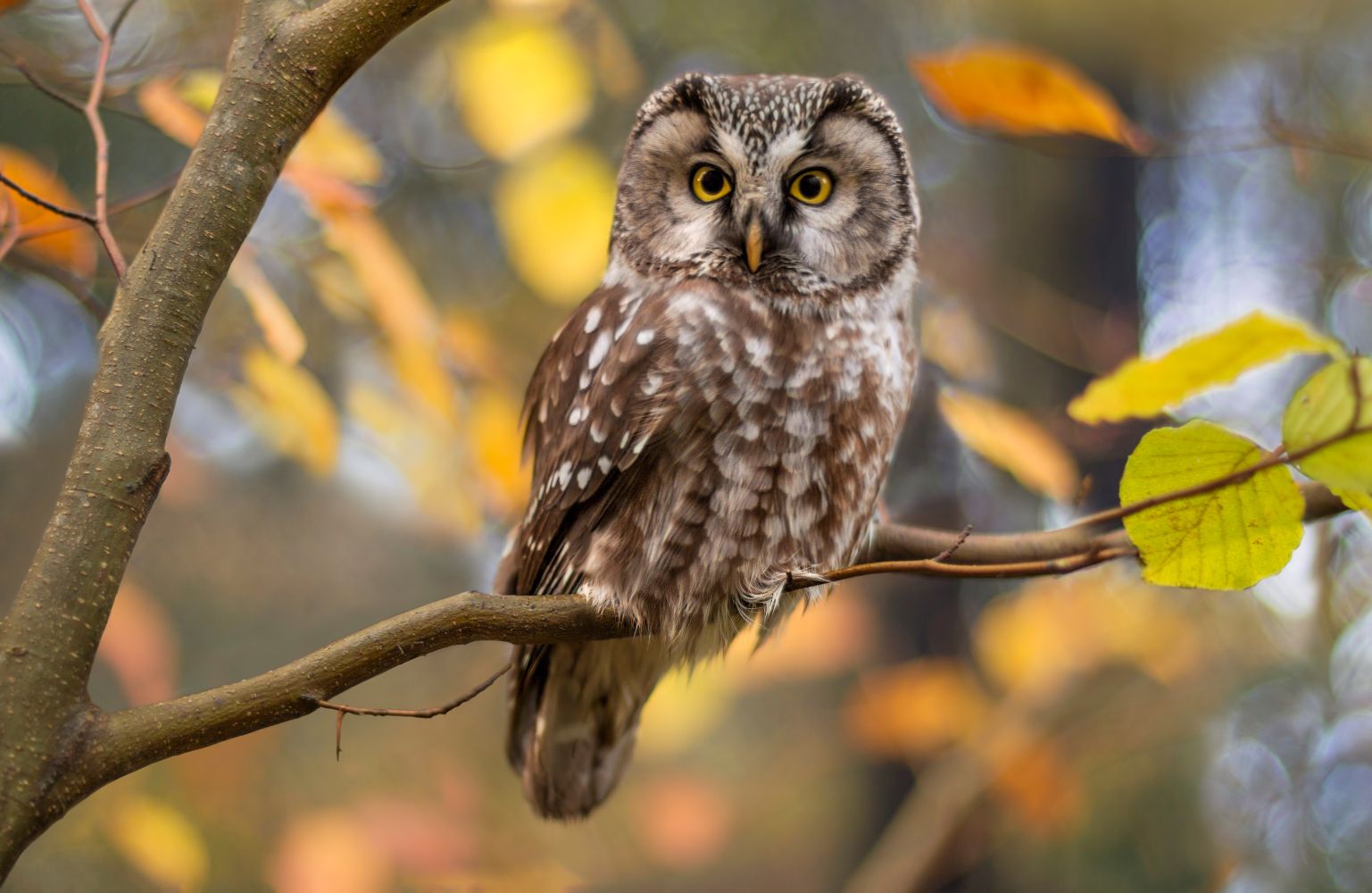
In the hushed twilight of rural landscapes, where the earth breathes deeply and the stars stitch themselves into the velvet cloak of night, a silent sentinel perches on the gnarled branch of an ancient oak. Its golden eyes, pools of ancient wisdom, scan the undulating fields with a patience that borders on the divine. This is the owl—neither myth nor mere creature, but a living paradox: a hunter whose presence is as much a balm to the land as it is a whisper of the wild’s untamed heart. To coexist with owls in these shared spaces is not merely an act of tolerance; it is an invitation to reimagine our relationship with the natural world, to step beyond the rigid confines of human dominion and into a dance of mutual respect.
The Owl as Ecological Architect: A Silent Symphony of Balance
Owls are not mere spectators in the theater of rural life; they are its unseen choreographers. With each silent wingbeat, they orchestrate a symphony of ecological balance, their predation a masterclass in natural pest control. A single barn owl, for instance, can devour over 3,000 rodents in a year—each one a silent thief of grain, a vector of disease, a scourge upon the farmer’s labor. Yet their role extends far beyond the utilitarian. By thinning rodent populations, they inadvertently protect the soil’s delicate microbiome, the unseen web of fungi and bacteria that sustains the land’s fertility. To welcome owls is to embrace an ally whose very existence is a testament to the interconnectedness of all life. It is to acknowledge that the farmer’s field and the owl’s hunting ground are not separate realms, but threads in the same tapestry.
Dispelling the Shadows: Owls as Harbingers of Myth and Misconception
Yet for all their ecological grace, owls remain shrouded in the fog of human fear and folklore. They are cast as omens of doom, as silent omens of death, their haunting calls misinterpreted as laments rather than the language of the wild. This mythos is a prison of our own making, one that blinds us to the owl’s true nature. The hoot of a great horned owl is not a dirge, but a declaration—a territorial proclamation as vital to the owl’s survival as the farmer’s plow is to his harvest. To coexist with owls is to shatter these illusions, to recognize that their presence is not a curse, but a blessing in feathered disguise. It is to understand that the night, far from being a void, is a world teeming with life—and owls, with their unblinking gaze and silent flight, are its most eloquent ambassadors.
Designing a Landscape of Coexistence: Practical Steps for Rural Harmony
Coexisting with owls demands more than passive acceptance; it requires active stewardship. The first step is to cultivate a landscape that whispers, rather than shouts, to these nocturnal neighbors. Old barns with gaping eaves become impromptu nesting sites, while untrimmed hedgerows offer sanctuary for fledglings. The farmer’s field, too, can be reimagined—not as a monoculture to be defended, but as a mosaic of habitats where owls and crops share the stage. Leaving patches of wild grass uncut, for instance, provides cover for voles and mice, the owl’s preferred prey, while also fostering biodiversity. Even the humble fence post can be transformed into a perch, a vantage point from which the owl surveys its domain. These are not concessions to the wild, but collaborations—a way of farming that acknowledges the land’s other inhabitants as partners, not pests.
The Language of Light: Illuminating the Night Without Disrupting the Wild
Human encroachment into the night’s domain often comes with the harsh glare of artificial light, a blinding intrusion that disorients and disorients the owl’s finely tuned senses. Yet light need not be the enemy of coexistence. The key lies in its judicious use. Motion-activated, low-wattage LED lights can deter predators like raccoons or domestic cats without disturbing the owl’s hunting grounds. Alternatively, warm, amber-hued bulbs mimic the gentle glow of moonlight, less jarring to the nocturnal eye. The goal is not to banish darkness, but to temper its extremes—to create a night that is neither a void nor a glare, but a space where owl and human can both thrive. This is the art of balance: a reminder that coexistence is not about domination, but about finding the middle path where both species can move without fear.
Children of the Dusk: Educating the Next Generation of Stewards
The future of owl-human coexistence lies not in the hands of policymakers or conservationists alone, but in the curious minds of children who see the world with unfiltered wonder. Rural schools can become incubators of this ethos, weaving lessons on owl ecology into their curricula. Imagine a classroom where students learn to identify owl pellets, dissecting them to uncover the bones of their prey—a hands-on lesson in the circle of life. Or where night hikes become a rite of passage, where the hoot of an owl is met not with fear, but with reverence. These are not just educational exercises; they are acts of rebellion against the desensitization of modern life, a reclaiming of the wild as a living, breathing entity worthy of awe. By fostering this connection early, we plant the seeds of a future where owls are not feared, but celebrated—a future where the rural landscape is not a battleground, but a shared home.
The Owl’s Gift: A Call to Reclaim Our Place in the Natural World
To coexist with owls is to confront a profound truth: that we are not the center of the universe, but one thread in an infinite tapestry. Their presence is a challenge, a gentle nudge to expand our perspective, to see the land not as a resource to be exploited, but as a community to which we belong. In their silent flight, their unblinking gaze, their refusal to be tamed, owls embody the wild’s resilience—a reminder that nature does not bend to our will, but invites us to dance with it. This is the promise of coexistence: not a surrender of human ambition, but a redefinition of it. It is an acknowledgment that the farmer’s field and the owl’s hunting ground are not separate, but intertwined—a single, breathing ecosystem where each creature, from the smallest vole to the tallest oak, plays a vital role. To live alongside owls is to embrace a humbler, richer way of being. It is to remember that the night is not a void to be feared, but a world to be explored—and that in its shadows, we are never truly alone.