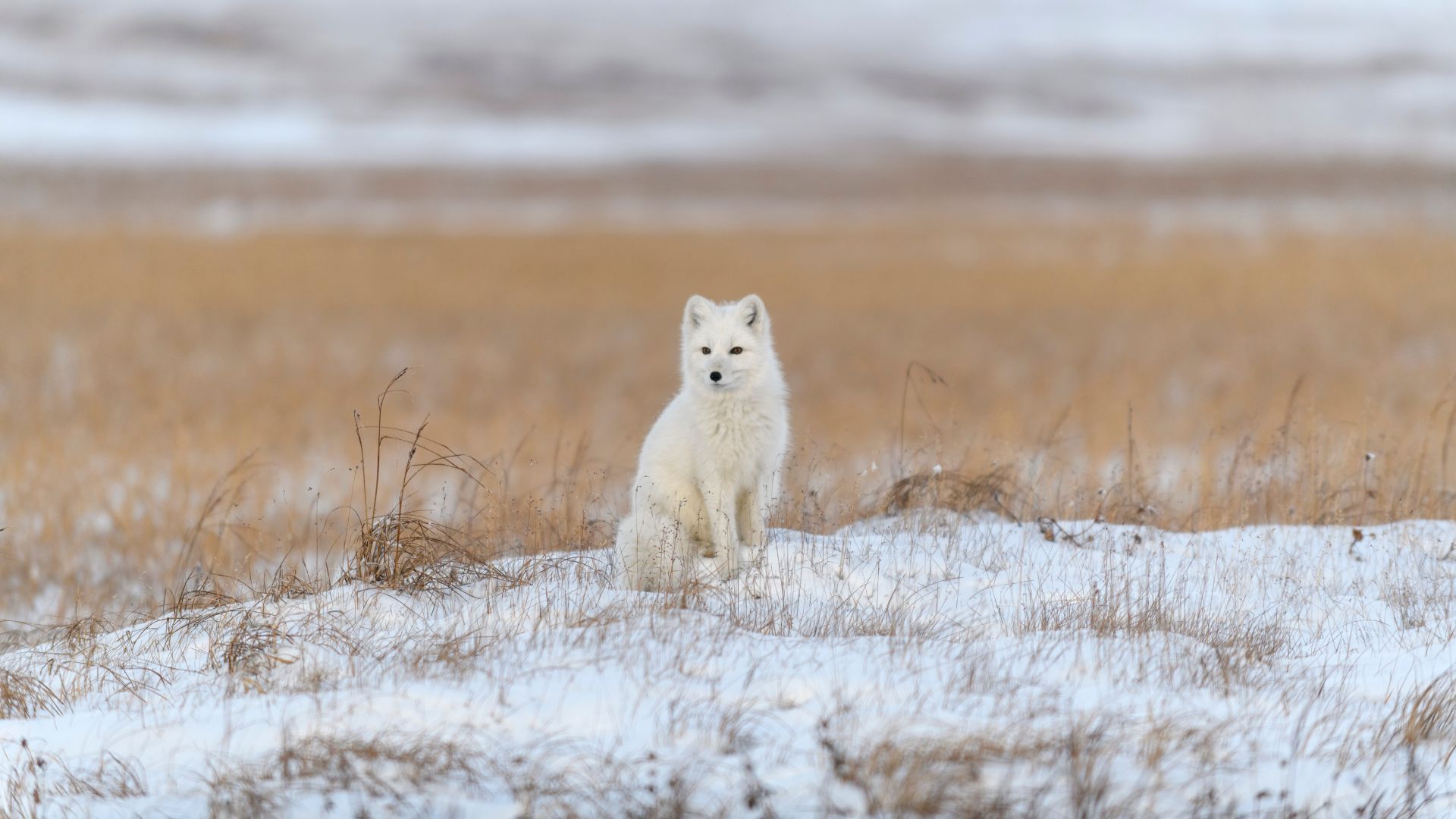
What if the silent sentinels of the Arctic tundra—those ethereal, snow-plumed owls that drift like whispers across the frozen expanse—found their ancient hunting grounds paved over with steel and concrete? The snowy owl, a creature of mythic resilience, now faces an existential quandary: the creeping tide of urbanization clawing at the edges of its domain. As Arctic cities burgeon under the relentless march of progress, the delicate balance of this icy ecosystem trembles on the brink. How does the encroachment of human ambition reshape the life of a bird that has, for millennia, ruled the polar night?
The Arctic’s Fragile Canvas: Where Urbanization Meets Wilderness
The Arctic is not just a place; it is a living, breathing paradox—a realm of extremes where temperatures plummet to inhospitable lows and daylight flickers like a dying ember for half the year. Yet, beneath this stark beauty lies a web of interdependence, finely tuned over epochs. The snowy owl, with its piercing golden eyes and feathered talons, is a keystone species, a guardian of the tundra’s fragile equilibrium. But when the first bulldozers roll in, flattening the mossy hummocks where lemmings burrow, the ripple effects are as unpredictable as they are devastating.
Urbanization in the Arctic is not merely the construction of buildings; it is the fracturing of a frozen mosaic. Roads carve through the permafrost like scars, pipelines snake through migratory paths, and the hum of generators drowns out the whisper of the wind. Each intrusion is a domino, toppling the delicate balance that sustains the snowy owl’s prey—lemmings, voles, and the occasional Arctic hare. Without these small mammals, the owl’s survival becomes a gamble against starvation. The Arctic’s canvas, once a seamless tapestry of snow and stone, now resembles a patchwork quilt stitched with human ambition—and the snowy owl is left grasping at the fraying edges.
The Illusion of Coexistence: When Cities Inhale the Wild
Proponents of Arctic urbanization often tout the mantra of “sustainable development,” as if progress and preservation could ever waltz in perfect harmony. But the reality is far grittier. Cities in the Arctic are not mere oases of modernity; they are voracious entities, consuming the surrounding wilderness at an alarming rate. The snowy owl, a creature of wide-open spaces, finds itself hemmed in by the encroaching glow of streetlights, the cacophony of construction, and the scent of diesel fumes. What happens when a bird evolved to hunt under the aurora borealis must now navigate the blinding glare of a parking lot?
Consider the phenomenon of “light pollution.” In the perpetual twilight of the Arctic winter, artificial illumination disrupts the owl’s circadian rhythms, confusing its hunting patterns. Studies suggest that snowy owls, like many nocturnal predators, rely on the natural darkness to ambush prey. But in the shadow of a growing city, the night is no longer their ally. The owl’s once-predatory prowess is dulled by the unnatural glow, leaving it vulnerable to starvation or displacement. And what of the noise? The Arctic is not silent, but the symphony of the tundra—wind through grass, the crunch of snow underfoot—is being replaced by the relentless drone of machinery. Can a bird that communicates in haunting, echoing calls adapt to a world where its voice is drowned out by the roar of progress?
The Domino Effect: How Urban Sprawl Rewrites the Food Chain
The impact of Arctic urbanization extends far beyond the snowy owl itself. It is a domino effect, a cascade of consequences that begins with the destruction of habitat and ends with the unraveling of an entire ecosystem. Lemmings, the owl’s primary prey, depend on the tundra’s vegetation—mosses, lichens, and sedges—to survive the long winter. When urban sprawl strips away these plants, the lemming population dwindles. Fewer lemmings mean fewer meals for the owl. But the ripple doesn’t stop there. Arctic foxes, which compete with owls for prey, may also suffer. And what of the plants themselves? When the soil is compacted by heavy machinery, when the permafrost thaws prematurely, the entire foundation of the Arctic’s food web trembles.
Even the owl’s nesting sites are not safe. Traditionally, snowy owls nest on the ground, scraping out shallow depressions in the tundra. But as human activity increases, these sites are trampled, or worse—repurposed. The owl’s eggs, once hidden among the grasses, are now at risk of being crushed underfoot. And if the owl is forced to relocate, it may find itself in competition with other predators, or worse, in the path of oncoming traffic. The Arctic is not a limitless frontier; it is a finite space, and every inch claimed by humanity is an inch stolen from the wild.
The Human-Wildlife Conflict: When Progress Meets Predator
Perhaps the most insidious challenge facing the snowy owl is the growing tension between human development and wildlife survival. As Arctic cities expand, so too does the likelihood of human-wildlife conflict. Snowy owls, driven from their traditional hunting grounds, may venture closer to urban areas in search of food. This brings them into direct contact with humans—and the results are rarely peaceful. Owls, misunderstood and often feared, may be shot as pests. Their nests, if discovered, could be destroyed to make way for construction. And in a cruel twist of irony, the owl’s striking beauty—its snowy plumage, its piercing gaze—may even make it a target for poachers or collectors.
The Arctic is not just a frontier for industry; it is a frontier for human attitudes. In a world where wildlife is increasingly seen as an obstacle to progress, the snowy owl becomes a casualty of our relentless expansion. But what happens when the last snowy owl falls silent? What happens when the Arctic’s silent sentinels are no more? The loss of this species would not only be an ecological tragedy but a cultural one—a severing of the ancient bond between humans and the wild.
Can the Arctic’s Ghosts Survive the Thaw?
The question lingers, heavy with consequence: Can the snowy owl—and the Arctic itself—survive the relentless march of urbanization? The answer is not yet written, but it is being inked in the permafrost beneath our feet. Conservation efforts, though often underfunded, offer a glimmer of hope. Protected areas, wildlife corridors, and community-led initiatives can provide sanctuaries for the owl and its prey. But these measures are bandages on a wound that grows deeper with every passing year.
The Arctic is not just a resource to be exploited; it is a living entity, a testament to the resilience of life in the face of adversity. The snowy owl, with its golden eyes and snow-white plumage, is a symbol of that resilience—a creature that has thrived in one of the harshest environments on Earth. But survival is not guaranteed. It requires a shift in our collective mindset, a recognition that progress without preservation is not progress at all. The Arctic’s future is not a question of if we can build there, but whether we can afford to lose what already exists.
The snowy owl does not ask for much. Just space. Just silence. Just the chance to hunt under the endless Arctic sky. The question is not whether we can afford to give it that—but whether we can afford not to.