Have you ever found yourself peering into the twilight woods, wondering which mysterious silhouette belongs to the Barred Owl and which to the Spotted Owl? This question, playful on the surface, unfolds into a deeper debate filled with ecological mysteries, astonishing behaviors, and crucial conservation concerns. The Barred Owl vs. Spotted Owl debate is not merely a quest for identification—it is a compelling narrative of nature’s intrigue and balance, packed with surprises and challenges that provoke both curiosity and critical thought.
Unraveling the Identity: Distinguishing Barred and Spotted Owls
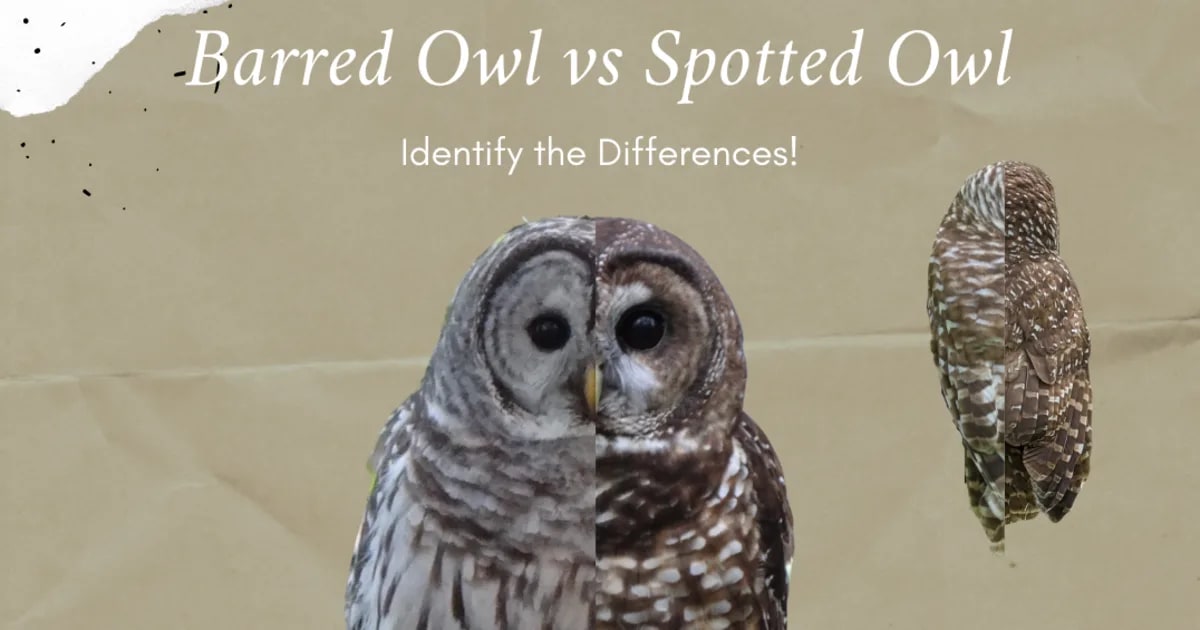
At first glance, telling a Barred Owl from a Spotted Owl might appear straightforward. Yet, these cousins of the nocturnal realm are deceptively similar, cloaked in mottled patterns that blend seamlessly into their forested abodes. The Barred Owl (Strix varia), known for its regal “Who cooks for you?” call, boasts horizontal barring on its chest and intricate vertical streaks on its belly. In contrast, the Spotted Owl (Strix occidentalis) showcases a more elegant array of white spots scattered across its darker chest and wings, a pattern that has earned it a delicate and elusive reputation.
The challenge amplifies in dim light conditions, where subtle plumage nuances dissolve into the shadows. Size also plays a sly trick—although the Barred Owl is generally larger, overlapping size ranges can blur the lines of distinction. Vocalizations provide another clue. While the Barred Owl’s call is rhythmic and distinct, the Spotted Owl’s voice is softer and more varied, filling the night air with haunting melodies.
Ecological Niches and Habitat Preferences
Diving deeper than mere appearance, the two owls carve out unique ecological territories. The Barred Owl is a versatile generalist, thriving across various habitats from dense woodlands to suburban parks. Its adaptability is showcased by an omnivorous diet that extends beyond small mammals to amphibians and even crayfish. This dietary flexibility fortifies the Barred Owl’s hold across eastern North America.
The Spotted Owl, by contrast, epitomizes specialization. Preferring old-growth forests with towering conifers and thick understory, it depends heavily on stable, mature ecosystems. Its hunting strategy revolves around stealth and patience, predominantly preying on small mammals such as woodrats and flying squirrels. This specificity renders it especially vulnerable to habitat loss and fragmentation, linking its fate indelibly to forest conservation efforts.
A Battle Not Just of Wings: The Interspecies Competition
When habitats intersect, the narrative enters a complicated chapter of competition and conflict. The Barred Owl’s expansion westward, once limited by geographical barriers, has sparked intense rivalry with the Spotted Owl, especially in the Pacific Northwest. This colonization is more than a geographical curiosity; it represents a bioecological challenge that threatens the Spotted Owl’s survival.
Barred Owls exhibit aggressive dominance over overlapping territories, often displacing Spotted Owls from prime nesting sites. Their broader diet and adaptable habits give them a competitive edge, exacerbating the pressure on Spotted Owl populations. This phenomenon highlights how shifts in species distribution, driven by climate change and human influence, can disrupt delicate ecological equilibriums.
Conservation Perspectives: Challenges and Strategies
In the tangled web of conservation, the Spotted Owl emerges as a flagship species, symbolizing the struggle to preserve old-growth forests and biodiversity. Protection strategies have included habitat preservation, legal safeguards, and active management of Barred Owl populations, such as experimental removals to alleviate competitive pressures. These efforts underscore the complexity of managing two sympatric species entwined by competition and habitat use.
This conservation dilemma also raises philosophical and ethical inquiries: to what extent should human intervention mediate natural competition? While the Spotted Owl’s plight often commands sympathy, the Barred Owl’s role as a native species adapting to changing conditions cannot be discounted. Conservationists grapple with balancing ecological integrity, species survival, and the unpredictable nuances of nature’s trajectory.
The Broader Implications: Understanding Biodiversity and Ecological Dynamics
Beyond the specifics lies a universal lesson about biodiversity and ecosystem dynamics. The tale of the Barred and Spotted Owls illustrates how species interactions shape community structures and how shifts in those interactions ripple through environments. It reminds us that ecosystems are not static—rather, they are canvases of constant flux, challenged by natural forces and human impact alike.
Understanding these owls’ interplay fosters a deeper appreciation for conservation as an adaptive, evolving practice. It encourages us to think holistically, recognizing that preserving biodiversity transcends protecting a single species—it involves nurturing resilient systems capable of weathering change while sustaining a symphony of life.
In the End: Who Wins the Owl Debate?
So, who wins in the Barred Owl vs. Spotted Owl debate? The answer is as elusive as the owls themselves. It is less a question of victory and more a call to vigilance, empathy, and action. Both owls tell stories, carried on wings of feathered mystery, of survival, adaptation, and coexistence. Their saga invites us to look closer into the twilight forests—not just to differentiate the barred from the spotted—but to engage with the intricate balances that sustain life’s wild web.